
Turkey’s broadcasting watchdog has told media outlets to cover this week’s NATO summit in Ankara from a “national security” perspective and warned that their broadcasts are being monitored, raising fresh concerns over media pressure ahead of the high-profile gathering.
According to Turkish Minute, The Radio and Television Supreme Council (RTÜK) issued the warning before the July 7-8 summit, which will bring leaders of NATO’s 32 member states to the Turkish capital under heavy security, road closures and a citywide ban on demonstrations.
In a statement posted on X, RTÜK described the summit as an important international diplomatic event at which Turkey would display “the dignity of our state and the hospitality of our noble nation” to the world.
The council said broadcasters should take into account “the public interest and our national security perspective” in news and discussion programs during the summit.
It also said “all broadcast flows” were being monitored by RTÜK experts “with due care” because of the importance of the summit.
The wording is likely to deepen concerns that broadcasters are being warned against coverage that could cast the summit or the government’s handling of it in a negative light.
The warning comes as Turkey is already facing criticism over media access, detentions and sweeping restrictions imposed in Ankara before the summit.
Several independent Turkish media outlets, including the T24 online newspaper, the Cumhuriyet daily, the ANKA news agency and Sözcü TV, were denied accreditation to cover the summit, sparking criticism from press organizations.
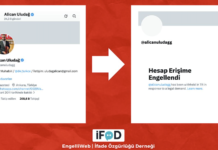
NATO spokesperson Allison Hart said on June 25 that for summits and ministerial meetings held outside NATO headquarters, the alliance relies on assessments by the host country when deciding journalists’ access to the meeting site.
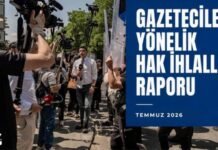
The pressure on the media has coincided with the detention of journalists ahead of the summit.
Buse Söğütlü, international news editor at T24, and Ceren Erdoğdu, a journalist at OdaTV, were detained on Sunday for reasons that were not immediately clear, according to their outlets. Söğütlü’s lawyer, Erman Öztürk, told Agence France-Presse that the detention appeared to be linked to the NATO summit.
Erol Önderoğlu, Turkey representative for Reporters Without Borders (RSF), condemned what he called “indiscriminate, arbitrary and chaotic operations launched ahead of the NATO summit,” saying they “clearly threaten the reputation and safety of journalists.”
RTÜK has long been criticized by opposition politicians and press freedom groups for imposing fines, program suspensions and temporary broadcast bans on critical and opposition-leaning television stations.
The regulator says its penalties are based on violations of broadcasting rules, while critics say they are applied selectively and have become a tool to pressure broadcasters that criticize the government.
In recent years the watchdog has repeatedly targeted channels such as Halk TV, TELE 1 and Sözcü TV, including during politically sensitive periods such as the crackdown that followed the arrest of İstanbul Mayor Ekrem İmamoğlu in March 2025.