A high-level European Union visit to Ankara ahead of next week’s NATO summit has exposed a shift in the bloc’s approach to Turkey, with EU officials emphasizing security, migration, energy and defense cooperation as critics warn that democracy and human rights concerns are being pushed to the margins, Turkish Minute reported.
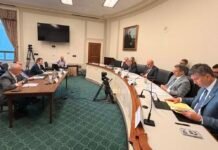
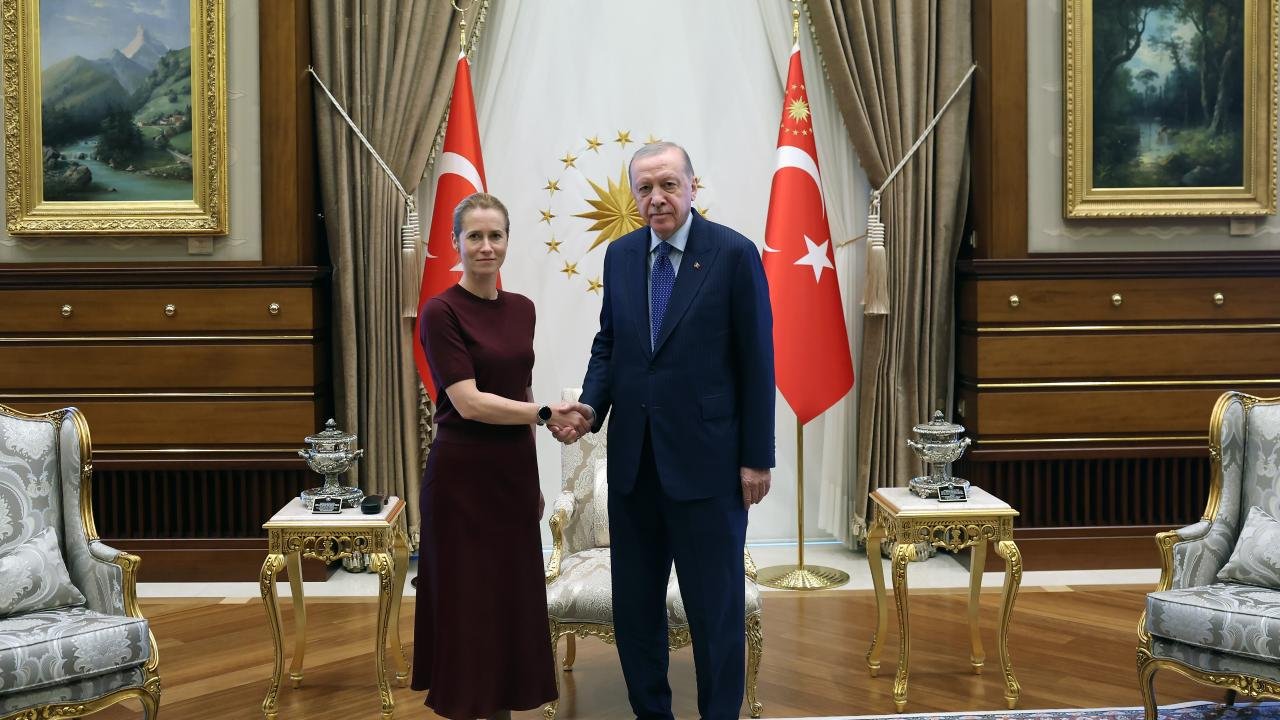
According to Bünyamin Tekin’s report, EU foreign policy chief Kaja Kallas and commissioners Marta Kos and Magnus Brunner visited Ankara on Monday and Tuesday for meetings with Turkish officials, including President Recep Tayyip Erdoğan and Foreign Minister Hakan Fidan.
The visit came days before Turkey hosts leaders from the 32 NATO member states in Ankara on July 7 and 8, a summit expected to focus on alliance unity, defense spending, Ukraine and Europe’s role in its own security. Turkey’s large military, growing defense industry, location on the Black Sea and role in migration management have made Ankara more valuable to Brussels as Europe faces Russia’s war in Ukraine and doubts over US security commitments.
But the tone of the visit drew criticism from politicians, diplomats, rights groups and commentators who said the EU executive was treating Turkey mainly as a strategic partner while reducing public pressure over Erdoğan’s authoritarian rule.
Kallas wrote on X that Turkey is “a key partner on security, migration, and energy, as well as an EU candidate country,” adding that she and Erdoğan had discussed strengthening relations, “good neighbourly relations,” Ukraine, the Middle East and preparations for the NATO summit. The message sparked a backlash on social media, with posts accusing Kallas of ignoring Turkey’s domestic crackdown, its disputes with EU member states Greece and Cyprus and Ankara’s ties with Moscow.
The official joint statement issued after the Fidan meeting did include one reference to rights, saying the EU side stressed, in the context of enlargement, the need to strengthen the rule of law, protect fundamental rights and ensure democratic standards. Yet most of the statement focused on cooperation on trade, migration, security and energy, among other areas, and the two sides agreed to schedule new high-level dialogue before the end of the year on economy, trade, migration and security, health, science, innovation and agriculture.
For critics, the balance of the statement showed that Turkey’s EU candidacy remains part of the language of diplomacy, while the working relationship has moved toward a partnership based on security and regional necessity.
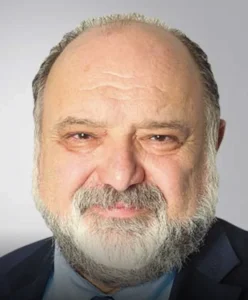
Turkish academic Eser Karakaş, who has written extensively on EU-Turkey relations, told Turkish Minute that the composition of the delegation itself showed how Brussels now approaches Ankara. “The presence of the foreign policy commissioner and the enlargement commissioner is normal, but they also brought the commissioner responsible for migration,” Karakaş said. “This is disturbing from the start. The government may want this very much, but if I were Turkey, I would not accept a relationship at this level framed through migration.”
Karakaş said the EU’s current approach to Turkey is not surprising, but the debate inside Turkey often misses the main point. “It is entirely a domestic politics issue,” he said. “For more than 30 years I have said this. Turkey-EU relations are not a matter of diplomacy. They are not a matter of foreign policy. They are a matter of Turkey’s internal politics.”
Karakaş said Turkey’s own record gives the EU little basis to revive the accession process. “The owners of the human rights violations, of the failure to implement Constitutional Court decisions, of throwing Article 90 of the constitution almost into the trash, of keeping people in prison despite court rulings, of opening an investigation into a young comedian for making satire, are us,” he said. “By us, I mean Turkey.” Article 90 gives international rights treaties precedence over domestic law, a provision rights lawyers often cite when Turkey fails to implement European Court of Human Rights rulings.
Karakaş said the EU is not “as pure as the driven snow,” but questioned whether Brussels still has the power to transform Turkey. “I am now doubtful that the EU has the power to transform such a Turkey,” he said. “It is also very clear that it will not take any step toward opening negotiation chapters one by one again in order to change this Turkey.”
The accession talks have been at a standstill since 2018 over concerns about the rule of law, judicial independence and fundamental rights. Turkey has remained a candidate country on paper, but the membership process no longer drives the relationship as it once did.
Karakaş pointed to Turkey’s official EU strategy documents, saying files central to the accession process are presented in a way that obscures what the EU expects from Turkey. He singled out public procurement, competition and social policy as areas where Turkey could show progress even without the removal of political obstacles. “In public procurement they again skipped the file,” he said. “That is of course the most sensitive issue for them, because the [ruling Justice and Development Party] AKP government has always revolved around public procurement.” He said the competition chapter was also important because it covers state aid: “Turkey uses state aid without calculation and without limits, trampling on all competition rules. What can the EU do when you do not show progress in these three files?”
Karakaş said his view might sound sympathetic to the EU, but he insisted the main responsibility lies with Turkey. “What will happen if the EU mentions human rights? Will they release Selahattin Demirtaş from prison because the EU mentions human rights? Will they release Osman Kavala?” he asked, referring to the former co-chair of the pro-Kurdish Peoples’ Democratic Party and the jailed businessman and philanthropist whose detention has defied European Court of Human Rights rulings. Kavala has been jailed since 2017 and was sentenced to aggravated life in prison in the Gezi Park trial. Demirtaş has been jailed since 2016 despite European court rulings calling for his release.
Karakaş said Turkey’s path to the EU also depends on the Cyprus dispute, which has divided the island since Turkey’s 1974 military intervention and remains one of the main obstacles in the accession process. “The road to the European Union passes through Cyprus as much as it passes through Diyarbakır,” he said, using the largest city in Turkey’s Kurdish-majority southeast as shorthand for the Kurdish issue. “What are they doing on this issue? Nothing. Absolutely nothing.”
Karakaş said Turkey’s current record makes EU membership impossible. “With what Turkey is doing, its membership in the European Union is not even on the table,” he said. “If the EU were to accept Turkey in this form, then I would not want that EU.” He said Turkey must return to the Copenhagen political criteria, the democratic and legal standards required of candidate countries, before any credible membership track can resume. “We are now not only insufficiently meeting the Copenhagen political criteria. We are completely outside them,” he said. “To return there, to implement the Copenhagen political criteria and to open the negotiation files one by one, this is the work of political groups in Turkey. Diplomats cannot solve this among themselves.”
Karakaş also criticized the Turkish opposition for treating foreign policy as separate from domestic democratic principles, taking aim at a slogan used by the main opposition Republican People’s Party (CHP), that it is an opposition party at home but a “Turkey party” abroad. “If mistreatment in prisons in Turkey comes before the Parliamentary Assembly of the Council of Europe in Strasbourg, or if freedom of expression in Turkey comes up there, will the CHP remain neutral? Will it not vote against Turkey?” he asked. “A political party must say almost the same thing everywhere.”

Haşim Tekineş, a researcher at the Belgium-based instituDE think tank and a former Turkish diplomat, offered a related but different reading. He told Turkish Minute that a rapprochement between the EU and Turkey was normal given the regional security climate but that Turkey is increasingly seen less as a future member of the bloc and more as an outside actor with which Europe can cooperate on selected issues.
Tekineş said the shift began after 2016, following a failed coup which led to a sharp authoritarian turn, and that Turkey was increasingly treated as a military and security actor rather than a candidate moving toward membership.
Tekineş underlined that relations recovered after 2020 through what he called “transactionalism,” with Turkey seen as an external partner similar to Tunisia or Egypt rather than a country moving into the EU’s political family. He said Turkey’s disputes with Greece and Cyprus, its handling of Sweden and Finland’s NATO bids and Erdoğan’s past rhetoric had contributed to mistrust in Europe that helps explain the EU’s caution about bringing Ankara deeper into European defense structures.
The latest visit also highlighted a split between the European Parliament, which continues to issue stronger criticism of Ankara, and the EU executive, which has focused more on cooperation. On June 17 the parliament adopted a report on Turkey by 381 votes in favor, 107 against and 171 abstentions, warning that Turkey was missing the current opening in EU enlargement policy because of the lack of democratic reforms. The report, prepared by rapporteur Nacho Sánchez Amor, called on Kallas to consider sanctions against Turkish officials accused of rights violations, including Justice Minister Akın Gürlek, a former İstanbul chief public prosecutor whom opposition politicians and rights groups have linked to politically sensitive prosecutions of opposition figures. Turkey rejected the report as biased and said the judiciary is independent.
The contrast between the parliament’s report and the Ankara visit was highlighted by Namık Tan, a former Turkish ambassador to Washington and CHP lawmaker, who said the AKP government was trying to cover its weak EU record with talk of a “positive agenda” while ignoring the parliament’s findings on backsliding in human rights, rule of law and judicial independence. Tan also warned that a short-term EU focus on migration, the customs union and security could turn into a second-tier approach to Turkey, treating the country as if democratic standards were not expected of it.
That concern has grown ahead of the NATO summit. Human Rights Watch said Turkish courts sent 178 people to pretrial detention after mass raids before the summit, while 34 others were put under house arrest. The detainees included political activists, lawyers, an academic, a journalist and environmental volunteers. Prosecutors said the operations targeted the activities of terrorist organizations, without linking the detentions to the summit. Human Rights Watch said the raids showed Turkey’s “ruthless intolerance” of freedom of speech and assembly.
Press freedom groups have raised separate concerns after dozens of journalists from several Turkish outlets were denied accreditation for the summit. Cumhuriyet, Sözcü, ANKA, T24 and Medyascope were among the outlets whose reporters were denied access. NATO said it relies on the host country for assessments of domestic journalists and was in contact with Turkish authorities.
Reuters also reported that NATO allies have grown silent on Turkey’s rights record since a 2021 diplomatic crisis over Kavala, when 10 Western ambassadors called for his release and Erdoğan threatened to declare them persona non grata before the crisis was defused. Since then, and especially since Russia’s 2022 invasion of Ukraine, Western governments have largely avoided public criticism of Turkey’s democratic backsliding while seeking closer security ties, Reuters reported, citing diplomats and analysts.
Tekineş said the 2021 crisis may have taught both sides the limits of confrontation, but the deeper change came from a broader recognition that Europe has limited leverage over Turkey’s domestic politics, while Ankara has also learned how far it can push in its dealings with Europe.
Turkey wants visa facilitation, customs union modernization, access to European defense initiatives and greater recognition of its strategic role. The EU wants help on migration, energy routes, Black Sea security, Ukraine, the South Caucasus and defense.
For rights groups and opposition figures, treating Turkey as a partner of necessity while muting public criticism risks normalizing a system in which courts are used against opposition politicians, journalists face pressure and civil society operates under threat of prosecution.
According to Karakaş the deeper problem is that Turkey itself has stopped doing what EU membership requires while still expecting to be treated as a candidate country.
For EU officials, the likely answer is that engagement is not endorsement and that Turkey is too important to isolate. But the Ankara visit made clear that Brussels is now managing a practical policy in which Ankara is treated as a regional power whose cooperation is needed even as democratic standards erode.