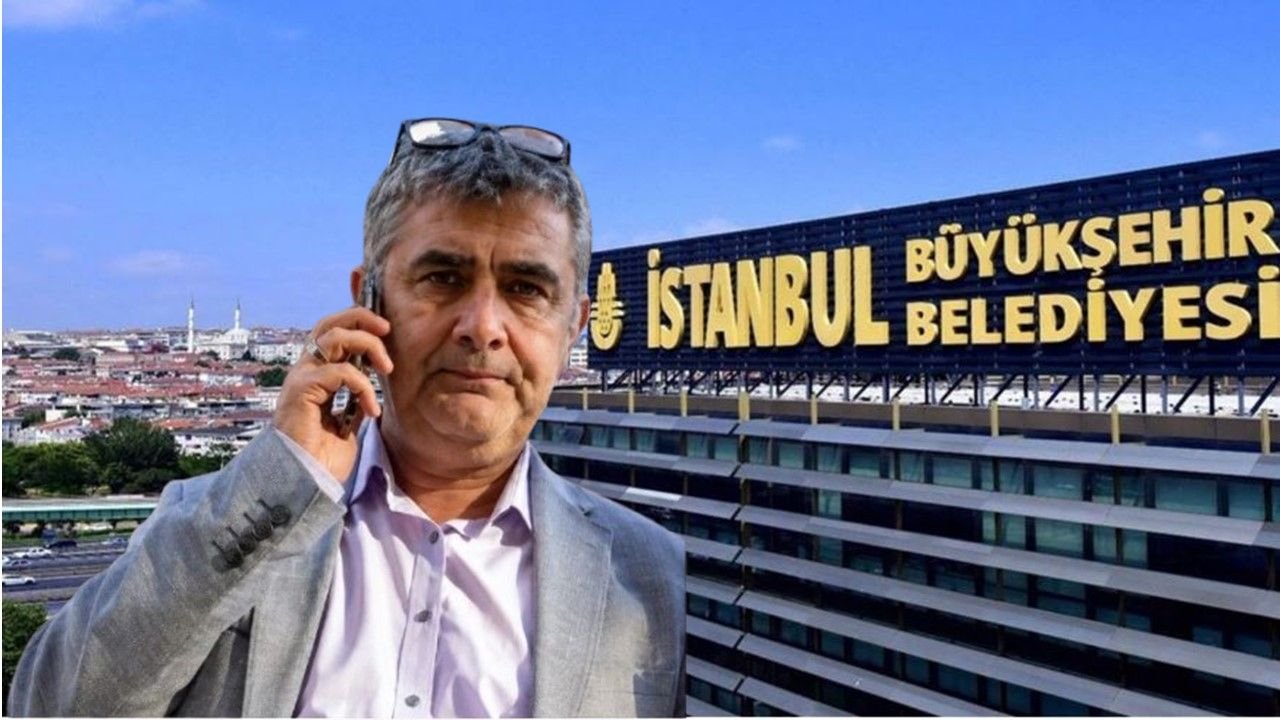
An opposition lawmaker in the Turkish Parliament has asked the interior minister whether police officers, other public officials or people connected to state institutions played a role in the abduction of an executive at an opposition-run İstanbul municipal company, raising questions about a possible enforced disappearance if state involvement is established.
Ömer Faruk Gergerlioğlu, a lawmaker from the pro-Kurdish Peoples’ Equality and Democracy Party (DEM Party), submitted a parliamentary question Thursday after Erhan Karaal was beaten and forced into a vehicle outside his İstanbul home in front of his family, according to Turkish Minute.
“This incident is too serious to be considered merely an allegation of an ordinary kidnapping,” Gergerlioğlu said in the question addressed to Interior Minister Mustafa Çiftçi.
Gergerlioğlu asked whether any public official, serving or former police officer, private security worker or person connected to a government institution had been involved in the abduction.
Under international law, an enforced disappearance involves an abduction or other deprivation of liberty by state agents or people acting with state authorization, support or acquiescence, followed by concealment of the victim’s fate or location.
An abduction carried out by private individuals without state involvement would not meet that definition.
Karaal is an executive at İstanbul Culture Inc., a company owned by the İstanbul Metropolitan Municipality. Prosecutors and current Turkish news reports identified him as deputy general manager. The company’s 2024 annual report listed him as finance director, and the company had not clarified whether he had since been promoted.
Karaal’s wife, Ayşe Karaal, said the family was preparing to go to the waterfront when he left their apartment with one of their daughters at about 9 p.m. Wednesday in İstanbul’s Maltepe district.
She said two men got out of a nearby vehicle, struck her husband on the head and forced him inside as he called for police.
She said four or five people were inside the vehicle. Another daughter witnessed the abduction from a window, while a neighbor also saw what happened.
Some reports said the assailants put a black hood or bag over Karaal’s head.
A witness recorded the vehicle’s model and license plate. Police later found the vehicle to which the plate belonged, but Karaal’s wife said officers told the family that it had not been driven for three days.
The family believes the kidnappers used another vehicle of the same make, model and color with a cloned license plate.
Karaal’s phone last transmitted a signal from an open area in İstanbul’s Kartal district, according to his wife. No authority had announced that he had been found as of publication.
The İstanbul Anadolu Chief Public Prosecutor’s Office confirmed that Karaal had been abducted by unidentified people and said police had been instructed to find him and arrest the suspects.
Karaal’s lawyer, Tayfun Taşlıoğlu, said prosecutors had imposed a confidentiality order on the investigation and had not provided the family with information about what police had found.
Taşlıoğlu said Karaal had no known enemies, debts or financial disputes. He said the family had considered whether the abduction could be connected to procurement procedures at İstanbul Culture Inc. but stressed that the motive and the abductors’ identities remained unknown.
Gergerlioğlu asked what time police received the first report and what action officers took in the minutes and hours that followed.
He asked whether İstanbul police established a special team or crisis center, whether investigators had determined Karaal’s last known location and whether police had collected all available footage from government cameras, apartment buildings, businesses and private security systems.
The lawmaker also asked whether investigators had identified the assailants, reconstructed the vehicle’s route and examined license plate recognition records, bridge and highway crossings, fuel station records, parking records and mobile phone data.
He asked whether the plate had been cloned, whether police had questioned the owner of the genuine vehicle and whether the abduction was being investigated as an organized crime operation.
Gergerlioğlu also asked whether Karaal had previously reported threats, surveillance, pressure or another risk to his safety.
He asked whether police had taken statements from Karaal’s daughter and the neighbor who witnessed the abduction and whether authorities had provided psychological support and protection for the family.
Several of Gergerlioğlu’s questions concerned Karaal’s position as a defendant in the prosecution of jailed İstanbul Mayor Ekrem İmamoğlu and hundreds of other municipal officials and employees.
Karaal is being tried without detention in the case, which prosecutors describe as an investigation into corruption and fraudulent municipal contracts.
İmamoğlu, President Recep Tayyip Erdoğan’s main political rival, and the other defendants deny the accusations. They say the case was constructed to remove İmamoğlu from politics and dismantle the municipal administration elected by İstanbul voters.
Gergerlioğlu asked whether the abduction was intended to interfere with that trial, force Karaal to make a statement, influence testimony, destroy evidence, silence defendants or intimidate other people named in the case.
He also asked whether the abduction was designed to produce a public narrative about the İstanbul municipality prosecution.
Gergerlioğlu questioned how several people could abduct Karaal from outside his home and remain untraced in İstanbul, a city covered by police cameras and automated license plate recognition systems.
He asked whether the Interior Ministry had opened an administrative investigation into possible negligence, an intelligence failure or deliberate inaction by public officials.
The possibility of an enforced disappearance carries added weight in Turkey.
During the 1980s and ’90s, many people “disappeared” in Turkey’s predominantly Kurdish areas. The practice had been long gone until it reappeared in the wake of an attempted coup against Turkish President Erdoğan on July 15, 2016.
Dozens of enforced disappearances have been reported in Turkey since the abortive putsch, with more than 20 of the victims reporting, after they were found, that they were subjected to torture during the time they were “missing.”
The victims of those enforced disappearance cases were mostly alleged followers of the Gülen movement, which is inspired by the late Muslim cleric Fethullah Gülen and targeted by the president since the corruption investigations of December 17-25, 2013, which implicated then-prime minister Erdoğan, his family members and his inner circle.
Erdoğan’s Justice and Development Party (AKP) government also labels the faith-based group as a terrorist organization and accuses them of masterminding the attempted coup, despite both Gülen and his followers’ strong denial of involvement in the abortive putsch or in any terrorist activities.