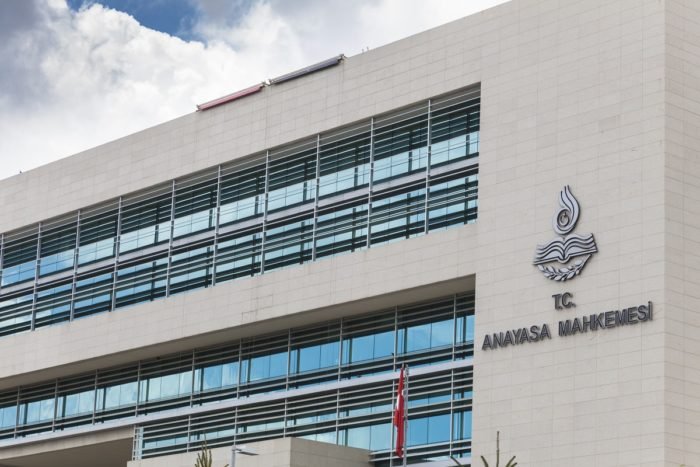
Turkey’s Constitutional Court has ruled that preventing an inmate from giving a visitor a handmade bracelet in the traditional Kurdish colors violated his right to freedom of expression, the ANKA news agency reported.
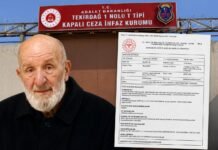
Tufan İlbaş, an inmate at Tekirdağ High Security Prison, had been granted permission in June 2022 to make handicrafts with beads in his cell. The following month, prison authorities prevented him from giving a visitor a bracelet he had made in yellow, red and green, colors traditionally associated with Kurdish identity and culture.
İlbaş challenged the restriction, saying the colors had cultural significance for him and that prison authorities had provided no legal basis for preventing the bracelet from being taken outside the facility.
The Tekirdağ 2nd Enforcement Judge rejected his complaint based on the prison administration’s claim that he had made the bracelet without authorization, despite a document showing that he had been permitted to engage in beadwork.
Enforcement judges are specialized bodies headed by a single judge that oversee issues related to the execution of sentences, including reviewing prison administration decisions and ruling on inmates’ applications or complaints. Their decisions can be appealed to the relevant high criminal court.
The Tekirdağ 1st High Criminal Court subsequently rejected his appeal, prompting his application to the Constitutional Court.
The court said handicrafts can serve as a means of expressing thoughts and feelings and therefore fall within the scope of freedom of expression, adding that prisoners retain this right while incarcerated.
The Constitutional Court found that prison authorities and lower courts had failed to provide sufficient justification for the restriction or demonstrate that it met a pressing social need.
It ordered a retrial and awarded İlbaş TL 20,000 (about $420) in non-pecuniary damages.
The court sent a copy of the ruling to the Tekirdağ 2nd Enforcement Judge for the case to be reconsidered in order to remedy the violation.
Kurds in Turkey have faced terrorism-related investigations and prosecutions for wearing or carrying folkloric or cultural items featuring red, yellow and green, colors widely associated with Kurdish identity and used in symbols of the outlawed Kurdistan Workers’ Party (PKK).
The PKK, designated as a terrorist organization by Turkey and its Western allies, has waged an insurgency against the Turkish state since 1984 but said in May 2025 it would disband and end its armed campaign.
In recent years, people in predominantly Kurdish cities have been detained or convicted over clothing featuring the three colors, with authorities citing their alleged association with the PKK.
Turkey’s broadly worded counterterrorism laws have long drawn criticism from rights groups for allowing conduct with little apparent connection to violence to be prosecuted as terrorism-related offenses.