Syrian migrant women, children and LGBTQ+ people in Istanbul are facing growing barriers to health care, education and legal protection as fears of deportation and pressure to return home deepen insecurity among migrants, a Turkish migrant solidarity group said in a new report.
The report by Göçmen Mülteci Dayanışma Ağı (Migrant Refugee Solidarity Network) says recent administrative practices and migration policies have made it harder for some Syrians to access basic services, particularly those already at greater risk of discrimination, poverty or abuse. The findings are based on in-depth interviews with about 50 people in different parts of Istanbul.
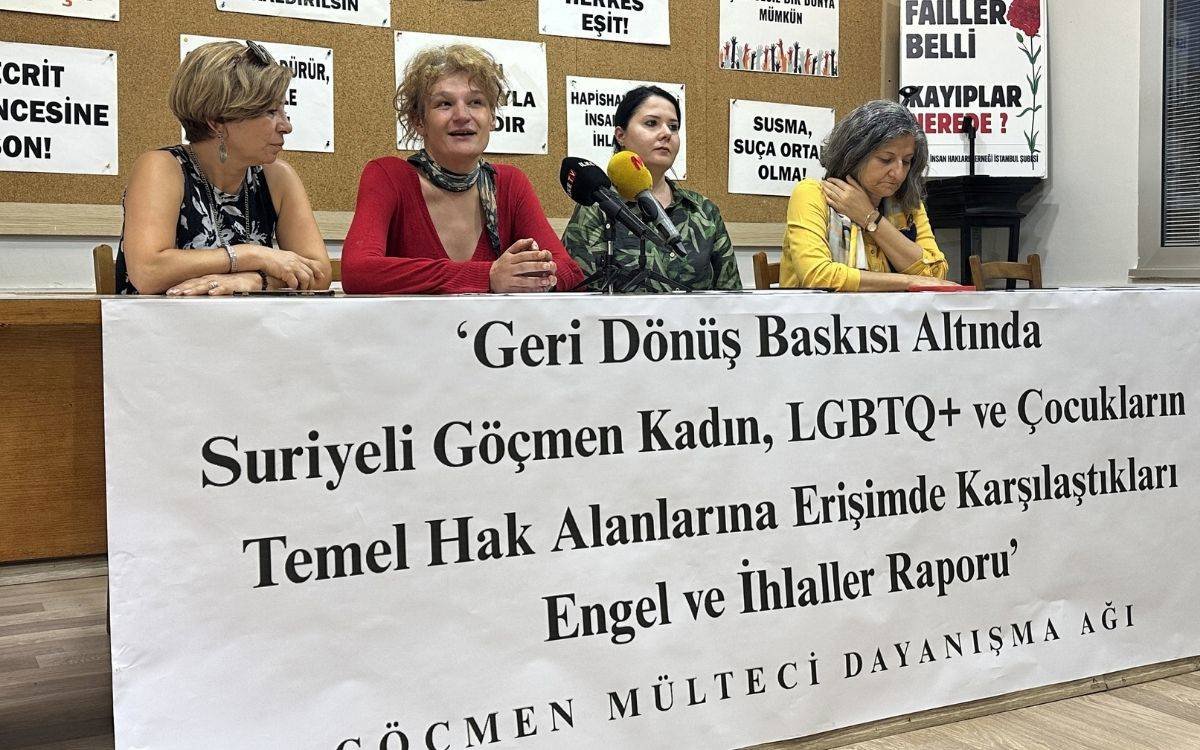
The report, titled “Barriers and Violations Faced by Syrian Migrant Women, LGBTQ+ People and Children Under Pressure to Return,” was presented at a news conference at the Istanbul branch of the Human Rights Association.
Özgün Özata of the Migrant Refugee Solidarity Network said the research focused on how rights that exist on paper are often weakened in daily life.
“We wanted to see how the rights violations we read about on paper affect people’s lives in practice,” Özata said. “We observed that they have very dramatic consequences.”
The report says the number of Syrians under temporary protection in Turkey has fallen from 3.7 million to 2.9 million. Turkish authorities describe returns to Syria as voluntary, but the group said its field observations point to a different reality, with many migrants feeling pushed to leave because of poverty, address registration problems, bureaucratic obstacles and legal uncertainty.
“What we observe, and what academic studies and civil society research show, is that there is no real voluntary return,” Özata said.
Health care is one of the report’s main concerns. The group said some Syrians have been redirected from family health centers to migrant health centers, while new fee practices have made care harder to obtain for low-income families.
Özata said migrants have faced fees of about 3,000 Turkish lira per person, a cost many families cannot afford. The group said Istanbul has 33 migrant health centers, which it described as insufficient for the city’s needs.
The lack of access affects pregnancy monitoring, childhood vaccinations, chronic illness treatment and regular medication, the report said.
Özata described one Syrian family in which children, parents and a grandmother had symptoms resembling pneumonia but could not afford to visit a family health center and could not reach a migrant health center.
“As a result, people try to treat themselves with whatever means they have and with secondhand information,” Özata said.
The report also highlighted cases in which women faced humiliation or discrimination while seeking medical care. Özata said one migrant woman who sought an abortion at a migrant health center was accused of “immorality” because, due to bureaucratic records in Turkey, she was not shown as living in the same household as her husband.
Women also face barriers to justice, the report said. Migrant women who experience domestic violence may avoid police or courts because they fear being misunderstood, detained or deported. Language barriers, lack of interpreters and limited knowledge of legal procedures further restrict access to protection mechanisms.
The report said those fears grew especially after Turkey’s withdrawal from the Istanbul Convention, a Council of Europe treaty aimed at combating violence against women and domestic violence.
Özata said that in one case involving a woman who had suffered violence, the first question asked when help was sought was whether she had a residence permit.
“The first question should have been about protecting the woman,” Özata said.
The report said Syrian children also face bullying, exclusion and psychosocial problems in schools. The group called for stronger counseling and support services, warning that children who leave school face greater risks of social exclusion and informal work.
The report also raised concerns about conditions in removal centers, where migrants can be held during deportation or other immigration procedures. It cited overcrowding, lack of legal support, limited access to interpreters and problems obtaining health care.
The group also said many families are struggling to meet basic needs as living costs rise in Istanbul. Özata said researchers found families living below the hunger threshold and relying on solidarity networks for food.
The Migration Solidarity Network said migration policy should not be shaped only by security and administrative measures but should also be based on human rights, social cohesion and trust.