A Belgian appeals court has recognized a former teacher from Turkey as a refugee, ruling that his past ties to the faith-based Gülen movement and Turkey’s continuing crackdown on the group establish a risk of prosecution even when an applicant has no existing arrest warrant, active investigation or prior detention.
The Council for Alien Law Litigation, Belgium’s asylum appeals court, reversed a December 23, 2024, decision by Belgium’s asylum office and granted refugee status to an unnamed Turkish applicant in a January 13 ruling that has been recently made public.
The court said the risk faced by the applicant must be assessed through the cumulative effect of several factors, including a person’s past role in Gülen-linked institutions, dismissal by emergency decree, appearance in judicial documents concerning others, social and economic exclusion and continuing operations in Turkey against people linked or perceived as linked to the movement.
The Gülen movement, inspired by Islamic scholar Fethullah Gülen who lived in exile in the United States until his death in October 2024, is renowned worldwide for its contributions to education, social welfare and interfaith dialogue.
The Turkish government, however, accuses the movement of orchestrating a failed coup on July 15, 2016, a charge the movement strongly denies.
Turkey dismissed roughly 130,000 public-sector workers by emergency decree after the 2016 coup attempt, although the Belgian ruling cites country information putting the number at more than 152,000.
The Belgian asylum office had argued that more than 65 percent of those dismissed had not faced later investigations or criminal proceedings, suggesting that the applicant did not face a current risk.
The appeals court turned that reasoning around, pointing that the same figures meant that about 35 percent of dismissed public employees had faced criminal proceedings, exposing the applicant to a high risk, or about one in three.
The court said this contradicted the asylum office’s conclusion that there was no basis to fear future prosecution.
The applicant, whose name and personal details were removed from the public ruling, said he feared arrest, torture and death if returned to Turkey because of his links to the Gülen movement.
According to the ruling, he was introduced to the movement as a university student in Turkey, lived in movement-affiliated houses, attended religious discussion meetings known as sohbets and later had responsibilities in the community while studying in Cyprus from 2003 to 2007.
He then worked in Central Africa as a teacher, dormitory director and deputy school director at a school linked to the movement before returning to Turkey in 2012 to work at a Gülen-affiliated private school in Bursa, a city in northwestern Turkey.
After the 2016 coup attempt, the school was closed by emergency decree and the applicant and his wife, who also taught there, were dismissed.
He said police searched his home in August 2016 and later summoned him for questioning about school administrators.
He also said he and his wife were identified as movement members by people around them, faced rejection and discrimination, gave lessons to children of detained friends and distributed aid to families affected by arrests.
After working in a grocery store from 2018 to 2023, he passed exams to work in private security in January 2024, but authorities in Bursa refused to issue him a professional card.
He left Turkey legally in February 2024, traveled through North Macedonia and Greece, arrived in Belgium on March 25, 2024, and applied for international protection three days later.
Belgium’s asylum office rejected his application, saying he had not shown a current and personal risk of persecution, citing the absence of prosecution in the eight years after the coup attempt, his ability to obtain a passport and leave Turkey legally and its finding that his social and economic problems did not rise to the level of persecution.
The appeals court disagreed.
It said the delay in leaving Turkey could not reasonably be treated as evidence that he had no fear, noting that he said his passport was canceled after his dismissal, that a later passport request was refused and that he had to leave his wife and children behind because of financial constraints and the young age of his children.
The court also said the absence of prosecution before his departure did not remove the possibility of future risk, especially in a political context where investigations can be opened retroactively.
It said arbitrary arrests of members of the Gülen movement and people suspected of links to it are continuing, with Turkish authorities accusing them of propaganda or efforts to restructure the movement.
The court also cited the applicant’s continuing involvement in Belgium, including participation in meetings and public activities organized by FEDACTIO, a Belgian federation linked to Turkish civil society groups.
Turkish authorities view Gülen followers abroad as a potential threat and exert pressure on countries where communities linked to the movement are present, the ruling noted, citing official country information.
The court said the applicant’s risk factors had to be weighed together.
Those factors included deposits in Bank Asya, a bank associated with the movement before it was seized by the Turkish government, his stay in movement houses, participation in sohbets, past teaching jobs in Gülen-linked schools, work as a dormitory director and deputy school director abroad, aid to families of imprisoned friends, failure to overturn his dismissal in Turkey and the appearance of his name in judicial documents concerning former colleagues.
The court said a global assessment of those cumulative factors, in the context of continuing repression in Turkey, was enough to justify a well-founded fear of persecution.
The court also rejected the asylum office’s finding that the applicant had not suffered social and economic exclusion serious enough to matter under refugee law.
It said that people accused of Gülen links face surveillance, dismissal, exclusion from public service and financial barriers, including problems opening bank accounts, taking out loans or selling property.
Taken together, the court said, such measures could make return to Turkey intolerable under the protections of the Geneva Refugee Convention.
The court found that the applicant’s fear was linked to political opinion, whether real or imputed by Turkish authorities.
It also said the Turkish state was the main source of persecution, making effective protection by Turkish authorities illusory.
“The refugee status is granted to the applicant,” the court ruled.
The decision’s reasoning could affect similar cases because it says the risk analysis cannot be limited to whether Turkey has already issued an arrest warrant, opened a case or detained the person before departure.
Human Rights Watch said in its 2026 report on Turkey that thousands of people still face detention, investigations and unfair trials on terrorism charges over alleged links to the movement, with many subjected to arbitrary imprisonment after mass removals from civil service jobs and the judiciary.
The European Court of Human Rights also found in 2023 that Turkey violated the rights of former teacher Yüksel Yalçınkaya in a conviction linked to alleged membership in the movement.
The Strasbourg court found violations of the right to a fair trial, the right not to be punished without law and freedom of association.
It said the case revealed a systemic problem in Turkey’s terrorism convictions.
Turkish President Recep Tayyip Erdoğan has targeted followers of the Gülen movement, inspired by the late Muslim cleric Fethullah Gülen, since corruption investigations in December 2013 implicated him as well as some members of his family and inner circle. He dismissed the probes as a Gülenist conspiracy and later designated the movement a terrorist organization in May 2016, intensifying a sweeping crackdown after a coup attempt in July of the same year that he accused Gülen of orchestrating. The movement denies involvement in the coup attempt or any terrorist activity.
According to the latest figures from the justice ministry, more than 126,000 people have been convicted for alleged links to the movement since 2016, with 11,085 still in prison. Legal proceedings are ongoing for over 24,000 individuals, while another 58,000 remain under active investigation nearly a decade later.
In addition to the thousands who were jailed, scores of other Gülen movement followers had to flee Turkey to avoid the government crackdown.
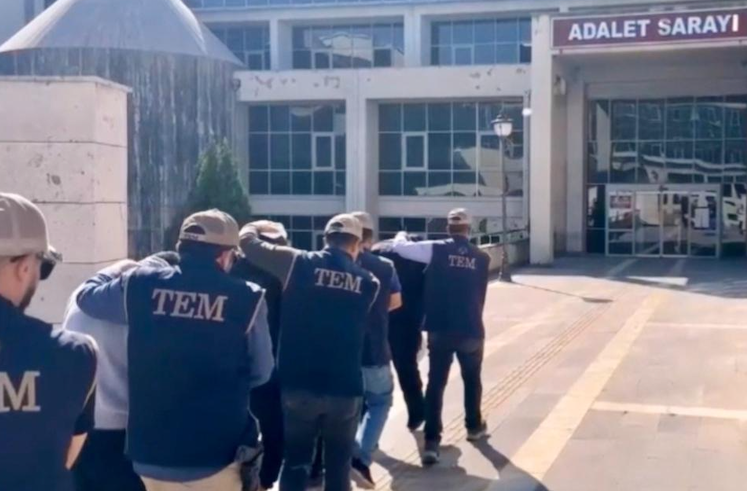
Turkish authorities continue to announce operations against people accused of Gülen links a decade after the coup attempt.
Turkey’s interior ministry said on June 11 that police had detained 80 people in 12 provinces in an İzmir-based operation targeting alleged current structures of the movement.
This article is republished from Turkish Minute.