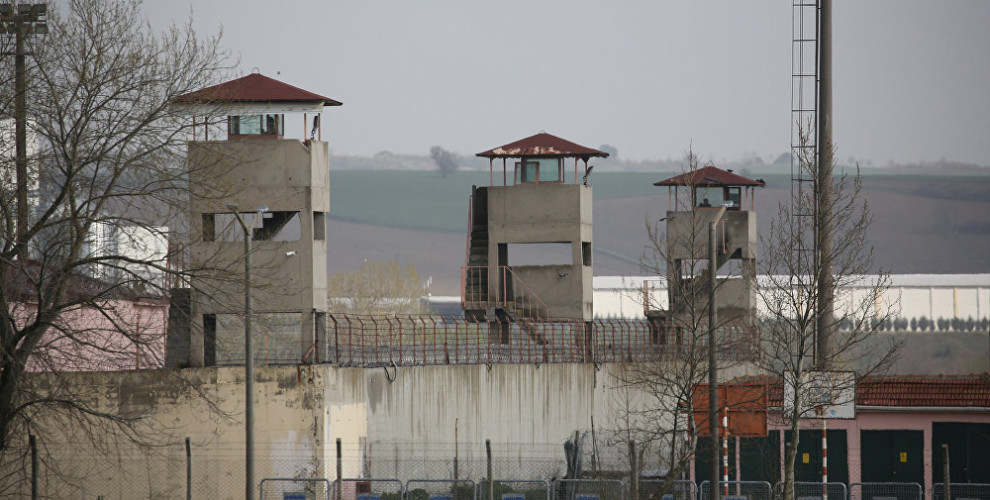
Turkey’s prison population reached 421,583 as of June 1, more than 116,000 above the country’s official prison capacity, Turkish Minute reported, citing data from the Ministry of Justice’s Directorate General of Prisons and Detention Houses.
The official capacity of Turkey’s prisons stands at 304,390, meaning the current population is about 138 percent of capacity.
According to the ministry’s figures, 356,878 of those held in prisons are convicted inmates, while 64,705 are pretrial detainees.
The data also showed that 4,673 minors were being held in Turkish detention facilities, either as detainees or convicts, spending the Eid al-Adha holiday behind bars.
Of the total prison population, 117,661 people are being held in “open” prisons, while 303,922 are in “closed” penal institutions.
The figures point to a deepening overcrowding problem in Turkey’s prison system, where the number of inmates has for years exceeded official capacity.
Ministry data also show a steady decline in the amount of space available per inmate. The average area per prisoner, excluding sports halls and exercise yards, fell from 29.2 square meters in 2023 to 24.6 square meters in 2024 and 24 square meters in 2025.
Turkey’s prison population now exceeds the population of 34 provinces, including Amasya, Rize, Yalova and Artvin.
The overcrowding comes amid growing pressure on Turkey’s judicial system. According to Justice Ministry data, the average duration of criminal trials has reached 248 days, while civil cases take an average of 243 days. The number of case files handled by each prosecutor is also approaching 1,500.
Council of Europe data also show that Turkey is not merely above the European average but an outlier in several key prison indicators. According to the 2025 SPACE I report, Turkey had 392,456 inmates on January 31, 2025, the highest total among the 51 prison administrations covered by the report. Its non-adjusted prison population rate stood at 458.1 inmates per 100,000 inhabitants, also the highest figure in the table and more than four times the European median of 110.1.
Turkey also recorded the sharpest year-on-year increase in its imprisonment rate among the prison systems listed in the report. From January 2024 to January 2025, Turkey’s rate rose by 29 percent, ahead of Montenegro at 22 percent, Luxembourg at 20 percent, Sweden at 15 percent, Greece at 14 percent and Croatia at 11 percent.
The same pattern appears in the report’s adjusted figures, which exclude certain categories of inmates to make comparisons between countries more consistent. Turkey’s adjusted prison population was listed at 386,271, corresponding to an adjusted prison population rate of 450.9 per 100,000 inhabitants. Both figures were the highest recorded in the table, far above the European adjusted median of 108.0 and the average of 119.7.
The Council of Europe also put Turkey in the “very high” category for prison density, a measure showing the number of inmates per 100 available prison places. Turkey was also listed in the “very high” category for the ratio of inmates per staff member, another indicator pointing to the strain on the prison system.
The report defines the “very high” category as covering prison administrations whose score is more than 25 percent above the European median. Taken together, the figures show Turkey leading the Council of Europe table in total prison population and both adjusted and non-adjusted prison population rates, while also ranking among the worst performers on prison density and staffing pressure.
The current total reflects ongoing arrests over protests against the jailing of İstanbul Mayor Ekrem İmamoğlu, Turkish President Recep Tayyip Erdoğan’s main political rival, as well as an ongoing crackdown on the faith-based Gülen movement, inspired by the late Turkish-Islamic scholar Fethullah Gülen, and people associated with the Kurdish political struggle for recognition.