A Turkish court has ordered an access ban on an investigative news series examining the business activities of global visa processing giant VFS Global’s Turkish subcontractor and its alleged ties to former foreign minister Mevlüt Çavuşoğlu, citing national security and public order concerns.
The İstanbul 9th Criminal Magistrate of Peace issued the order on Monday, covering the five-part series by journalist Canan Coşkun, several related news reports and Coşkun’s social media posts about the investigation. Following the court order, Coşkun shared archive links to the series on X.
Coşkun wrote the “Visa Empire” series as the Turkey leg of an international investigation into VFS Global’s operations worldwide, coordinated by Lighthouse Reports and involving 14 media outlets from 12 countries.
Founded in 2001, VFS Global is a multibillion-dollar company controlled by US private equity firm Blackstone, operating more than 4,000 application centers in 167 countries and processing visas on behalf of 70 governments.
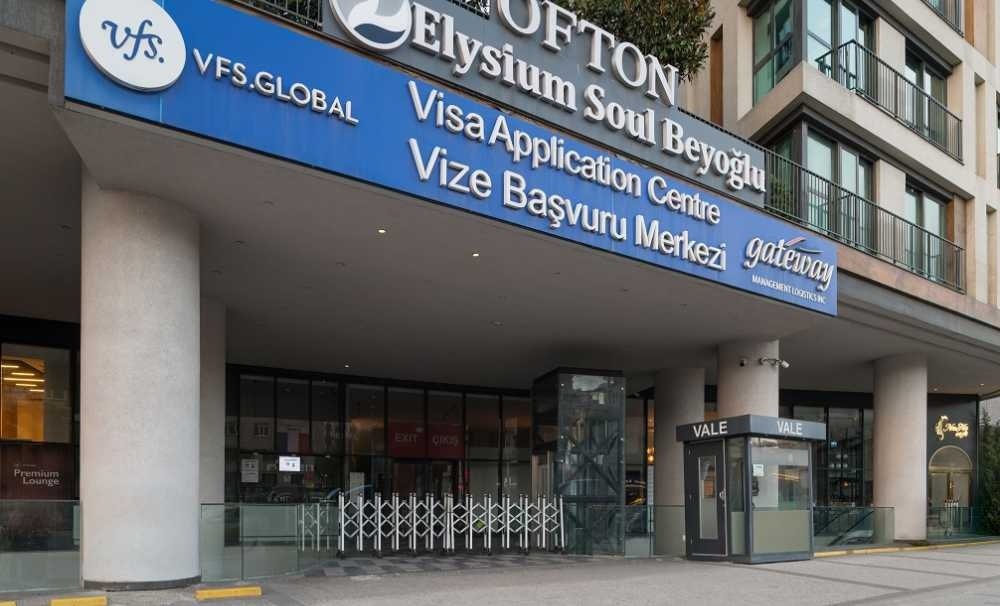
Coşkun’s reporting focused on the dominance of VFS Global and its local subcontractor, Gateway Visa Services, in Turkey’s visa application market, as well as problems faced by applicants and the business activities and political connections of Gateway’s owner, businessman Halis Ali Çakmak.
According to the series, Gateway Visa Services was established after Çakmak transformed his air conditioning company into a visa services business in 2009. The company was authorized to operate in Iraq in 2016 by then-foreign minister Çavuşoğlu and later expanded its position after a 2019 regulation gave the foreign minister authority to authorize visa service providers.
The company, which won 44 public tenders between 2010 and 2023, subsequently became the dominant player in the sector, the report said. The series also reported that a February 2021 regulation authorized private intermediary companies to process residence permit applications, creating another area in which Gateway could operate.
The series also described links between Çakmak and figures close to the ruling Justice and Development Party (AKP), including an agreement under which he took over the operation of a university in Antalya province for 25 years from the Hamdullah Emin Paşa Foundation, whose board of trustees includes Çavuşoğlu.
The report added that Çavuşoğlu’s wife, Hülya Çavuşoğlu, serves on the board of trustees of the institution, renamed Alanya University in 2022.
Coşkun’s reporting also included allegations that visa applicants in Turkey paid intermediaries as much as €300 to secure appointments and that sensitive personal information was exposed through security weaknesses in the Premium Lounge service.
The broader Lighthouse Reports investigation alleged that VFS Global steered applicants toward costly optional services, presented some services as if they were mandatory and faced concerns related to appointment availability, personal data protection and corruption. It also examined claims that appointments were blocked through automated bots and third-party agencies before being resold to applicants.
The series further alleged that applicants were steered toward insurance products sold through Emaa and Gravis, two companies founded by Çakmak, on promises that their premiums would be reimbursed in the event of rejection, but those promises were not fulfilled.
The report said the rejection rate for visa applications submitted from Turkey rose from 3.9 percent in 2015 to 14.6 percent in 2025. Approximately 1.5 million applications had been rejected over the past decade, resulting in an estimated €511 million in non-refundable application fees.
Following publication of the investigation, opposition İYİ Party lawmaker Burak Dalgın submitted parliamentary questions to Foreign Minister Hakan Fidan, asking how many complaints the ministry had received about visa services in the past three years and whether Turkish authorities had raised concerns about VFS Global with EU and Schengen member states.
Dalgın also requested information on safeguards and oversight mechanisms aimed at protecting the personal data of Turkish citizens.
The access ban also drew criticism from Reporters Without Borders (RSF), whose Turkey representative, Erol Önderoğlu, said the court’s access ban decision reflected “the tragicomic level censorship has reached in Turkey.”
Turkish authorities blocked access to 740,624 domain names and 8,762 news reports in 2024, according to the Internet Censorship Report.
The US-based democracy watchdog Freedom House’s “2025 Freedom on the Net” report placed Turkey among the five countries with the steepest long-term declines in internet freedom. The organization cited broad censorship practices and intensified digital controls over the past 15 years, giving Turkey a score of 31 out of 100, putting it in the bottom tier of the 72 countries assessed.