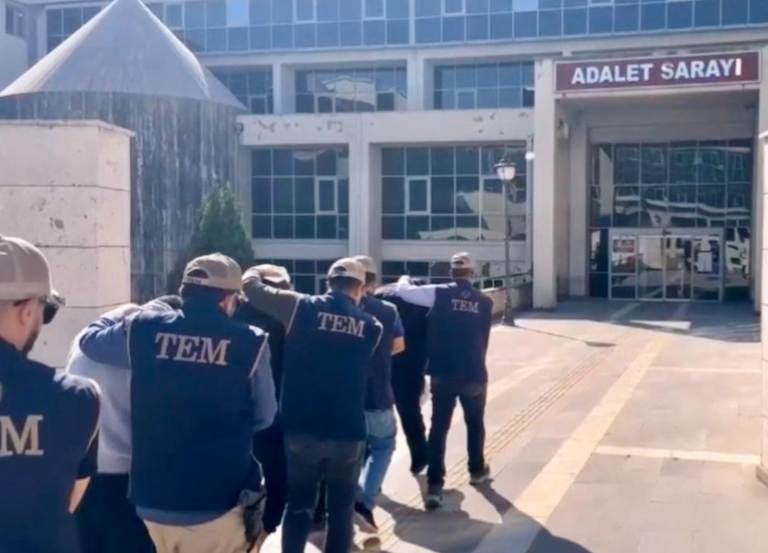
Turkish authorities detained 24 people, including seven public officials, in coordinated raids across 11 provinces on Monday over alleged ties to the faith-based Gülen movement, the TR724 news website reported.
The raids were carried out by counterterrorism police under the direction of prosecutors in the western province of Izmir.
Turkish President Recep Tayyip Erdoğan has targeted followers of the Gülen movement, inspired by the late Muslim cleric Fethullah Gülen, since corruption investigations in December 2013 implicated him as well as some members of his family and inner circle. He dismissed the probes as a Gülenist conspiracy and later designated the movement a terrorist organization in May 2016, intensifying a sweeping crackdown after a coup attempt in July of the same year that he accused Gülen of orchestrating. The movement denies involvement in the coup attempt or any terrorist activity.
Authorities accused the detainees of maintaining connections to the movement through alleged use of the ByLock encrypted messaging application, financial transactions linked to Gülen-affiliated networks and contact with other suspected members of the group.
Turkish authorities have considered ByLock to be a secret tool of communication among supporters of the Gülen movement since the coup attempt on July 15, 2016, despite a lack of evidence that ByLock messages were related to the abortive putsch.
Although the European Court of Human Rights (ECtHR) has in many cases made clear that use of the ByLock messaging app does not constitute a criminal offense, detentions and arrests of individuals continue in Turkey for their alleged use of the ByLock application.
Police operations were conducted simultaneously in cities including Istanbul, Ankara, Izmir and Gaziantep.
According to the latest figures from the justice ministry, more than 126,000 people have been convicted for alleged links to the movement since 2016, with 11,085 still in prison. Legal proceedings are ongoing for over 24,000 individuals, while another 58,000 remain under active investigation nearly a decade later.
In addition to the thousands who were jailed, scores of other Gülen movement followers had to flee Turkey to avoid the government crackdown.