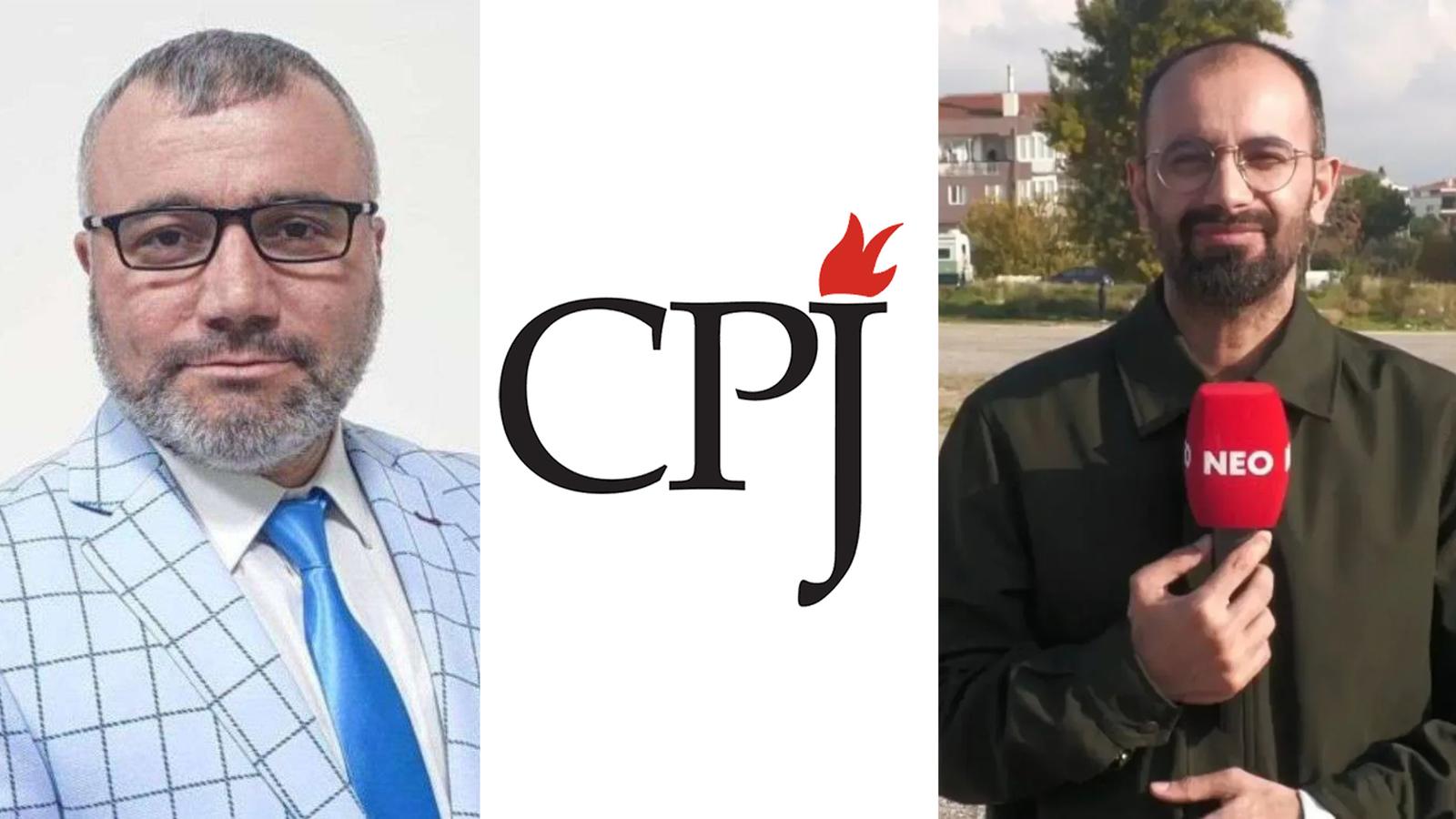
Turkish authorities must end their improper and excessive use of the country’s disinformation law to target journalists, the Committee to Protect Journalists (CPJ) said on Tuesday, calling for the release of local journalist Mehmet Yetim, Turkish Minute reported.
Yetim, the editor-in-chief of local broadcaster Kulis TV, was detained in a dawn raid on April 18 in the southeastern province of Şanlıurfa and arrested a day later pending trial on charges of “publicly spreading disinformation.”
The charges stem from a social media post about a reported knife attack at a school. Although Yetim later deleted the post and issued a correction after it emerged that no one had been injured, screenshots of the original post circulated online, leading to his arrest, according to his lawyer, İbrahim Halil Aydın.
“Turkey keeps arresting journalists over claims of spreading disinformation, which, even if they were true, wouldn’t be considered a crime unless they caused concern, fear, or panic among the public,” said Özgür Öğret, CPJ’s Turkey representative.
“Journalist Mehmet Yetim, who corrected his faulty reporting, didn’t cause any of those things. Turkish authorities must release Yetim and stop arresting journalists under this law,” he added.
Aydın said he has appealed the arrest, noting that even if Yetim were convicted and given the maximum sentence of three years, he would likely not serve time in prison due to parole provisions for first-time offenders.
The case is linked to an April 17 incident at Dumlupınar Middle School in Şanlıurfa, where an assailant entered the premises with a knife. The incident came days after a school shooting in the province that left 16 people injured and another deadly school attack in neighboring Kahramanmaraş, heightening public sensitivity.
In his initial post, Yetim reported that a parent had attacked a teacher and that a deputy principal had been injured.
He later told prosecutors he had shared information circulating online, removed the post once details became clearer and issued a correction, adding that he had no intention of misleading the public.
His arrest has sparked criticism from opposition politicians and press freedom groups, who described it as an attempt to intimidate journalists.
In a separate case, journalist Turgay Kılıç was briefly detained on April 17 over social media posts related to the school attacks in Şanlıurfa and Kahramanmaraş, according to the soL Haber news website.
Kılıç denied the accusations in his statement to prosecutors in İzmir, saying he made the posts in his capacity as a journalist. He was later released under judicial supervision.
The Journalists’ Union of Turkey criticized Kılıç’s detention, saying the use of Article 217/A of the Turkish Penal Code — commonly known as the disinformation law — continues to pose a threat to press freedom and freedom of expression.
Introduced in late 2022, the law requires prison sentences of one to three years for those found guilty of publicly spreading false information in a way that causes concern, fear or panic among the public.
Although officials said at the time that the law would not be used against journalists, it has since become one of the most frequently employed legal tools against the media.
CPJ said it had contacted the Şanlıurfa Chief Public Prosecutor’s Office for comment but had not received a response.
Turkey has long faced criticism over press freedom. According to the Expression Interrupted platform, 27 journalists are currently behind bars in the country. In the 2025 World Press Freedom Index published by Reporters Without Borders (RSF), Turkey ranked 159th out of 180 countries.