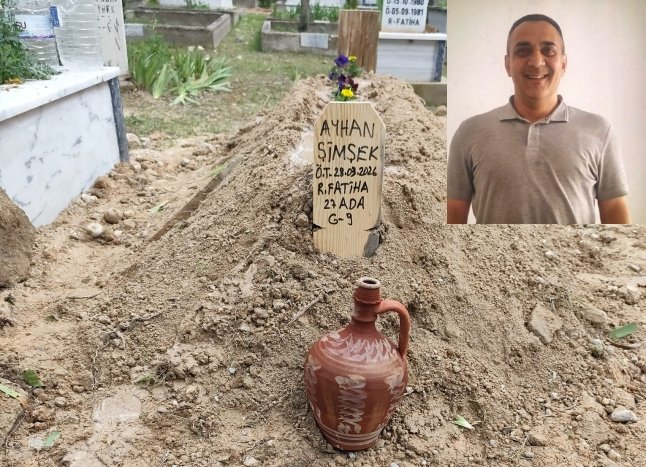
A Turkish primary school teacher who was dismissed by an emergency decree after a 2016 coup attempt and later acquitted of all charges has died while still awaiting reinstatement to his job, despite a court ruling that reopened his case.
According to the TR724 news website, Ayhan Şimşek, 49, died on March 28 in the western province of Denizli after being diagnosed with stomach cancer about seven months earlier. He is survived by his wife and two children.
Şimşek was dismissed from his teaching position under an emergency decree issued in 2016 as part of a sweeping purge of public sector workers following the failed coup.
Şimşek was accused of acts that Turkish authorities treated as evidence of links to the faith-based Gülen movement, including depositing money in the now-shuttered Bank Asya, belonging to a teachers union, donating to a charity and making payments to companies and institutions later shut down by decree after the 2016 coup attempt. He was later acquitted, with the court ruling that none of those acts constituted a crime.
Turkish President Recep Tayyip Erdoğan has targeted followers of the Gülen movement, inspired by the late Muslim cleric Fethullah Gülen, since corruption investigations in December 2013 implicated him as well as some members of his family and inner circle. He dismissed the probes as a Gülenist conspiracy and later designated the movement as a terrorist organization in May 2016, intensifying a sweeping crackdown after the failed coup in July of the same year that he accused Gülen of orchestrating. The movement denies involvement in the coup attempt or any terrorist activity.
Despite the acquittal, Şimşek was not reinstated. He pursued his case through administrative courts, eventually appealing to the Council of State, Turkey’s top administrative court.
The Council of State overturned a lower court ruling that had rejected his reinstatement request, citing an incomplete review, and sent the case back for reconsideration. The process was ongoing at the time of his death.
After losing his teaching position, Şimşek worked at various jobs to support his family, including cleaning carpets and working in a bakery, according to a friend.
“He worked in heavy jobs like carpet washing and carrying flour in a bakery. There was still a possibility he could return to his job after the Council of State ruling,” the friend said.
Following the coup attempt, the Turkish government declared a state of emergency (OHAL) that remained in effect until July 19, 2018. During this period, the government carried out a purge of state institutions under the pretext of an anti-coup fight by issuing a number of government decrees, known as KHKs. Over 130,000 public servants, including 4,156 judges and prosecutors, as well as more than 24,000 members of the armed forces were summarily removed from their jobs for alleged membership in or relationships with “terrorist organizations” by emergency decree-laws subject to neither judicial nor parliamentary scrutiny.
Former public servants were not only fired from their jobs but also banned from working again in the public sector and getting a passport to seek employment abroad. The government also made it difficult for them to work formally in the private sector. Notes were put on the social security database about dismissed public servants to deter potential employers.
Şimşek’s cancer progressed rapidly following his diagnosis. He had gone to the hospital for chemotherapy shortly before falling ill and dying later that night, the friend said.
His administrative case was still pending before a regional administrative court in Ankara.