International press and human rights organizations have called on the European Union to overhaul its visa policies for Turkish journalists, saying the current system isolates reporters and restricts press freedom, Turkish Minute reported.
In a joint letter on Thursday, the International Press Institute (IPI), Media Freedom Rapid Response (MFRR) partners and a coalition of press freedom and human rights groups raised concerns about longstanding visa barriers facing journalists from Turkey.
The letter said the issue was repeatedly raised during a recent international press freedom mission to Turkey, highlighting what the groups described as a “critical contradiction” between the EU’s commitment to supporting independent media in candidate countries and visa policies that obstruct journalists’ professional mobility.
The groups said pressure on Turkey’s media remained strong in 2025, continuing a long pattern of hostility toward independent journalism.
The country had the second-highest number of press freedom violations documented on the Council of Europe’s Safety of Journalists Platform and the third most on the Mapping Media Freedom database.
They said independent reporting has increasingly been criminalized through vaguely defined “disinformation” and “terrorism” charges, along with arbitrary detentions, police violence and fines targeting critical outlets.
Against this backdrop, the groups stressed that a streamlined visa process is a “vital lifeline” for Turkish journalists, enabling them to build international networks, participate in training and fellowships and collaborate with foreign media.
However, they said the current visa regime, marked by lengthy, costly and unpredictable procedures, is contributing to the professional isolation of journalists.
According to the letter, applicants can wait up to six months to secure a visa appointment, followed by processing times of up to two additional months, often preventing them from attending international events.
Journalists also report receiving visas valid only for single trips or facing unexplained rejections. Freelancers are particularly affected due to a lack of institutional recognition, with some directed to apply for business visas but later rejected for failing to provide corporate registration documents not applicable to independent journalism.
The groups also talked about the financial burden created by repeated applications and high costs, especially for freelance journalists and small media outlets, warning that such barriers weaken cross-border cooperation.
Calling for action, the organizations urged EU institutions to recognize that journalistic mobility serves the public interest and should not be treated as a routine bureaucratic matter.
They proposed the creation of a targeted “visa corridor” for recognized media professionals and called on the European Commission to establish a dedicated facilitation mechanism, issue long-term multiple-entry visas, simplify documentation requirements and expedite processing times for time-sensitive professional activities.
“Ensuring journalistic mobility is not a radical innovation,” the letter said, describing it as a practical step to support independent media and democratic accountability.
The letter was signed by a wide range of organizations, including IPI, the European Centre for Press and Media Freedom, the European Federation of Journalists, the International Federation of Journalists, IFEX, the Media and Law Studies Association, PEN International and several PEN affiliates.
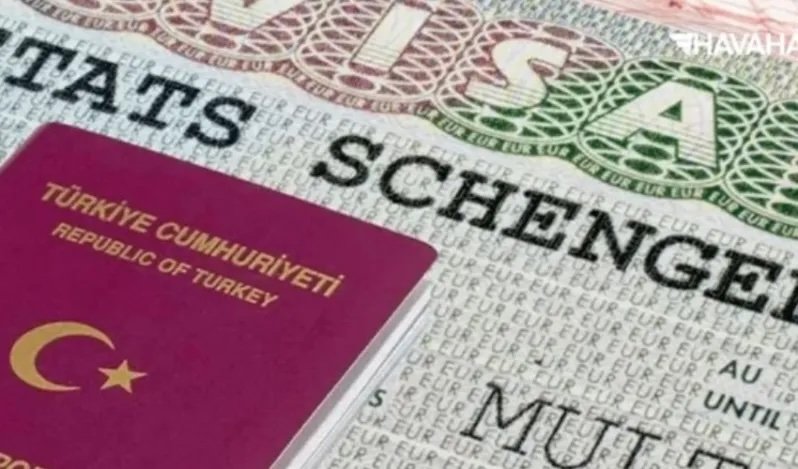
Despite some reforms, frustration over the Schengen process remains widespread in Turkey, fueled by long delays and rising rejection rates in recent years.
In 2024 Turkey ranked second among all Schengen visa applicant countries, with more than 1.17 million applications, according to EU statistics. More than 1 million were approved, while the refusal rate dropped to 14.5 percent, down from 16.1 percent in 2023.
Foreign Minister Hakan Fidan has criticized the current system for restricting mobility and harming EU–Turkey relations.
Ankara continues to push for the full revival of the visa liberalization process as part of broader efforts to improve ties with Brussels.