
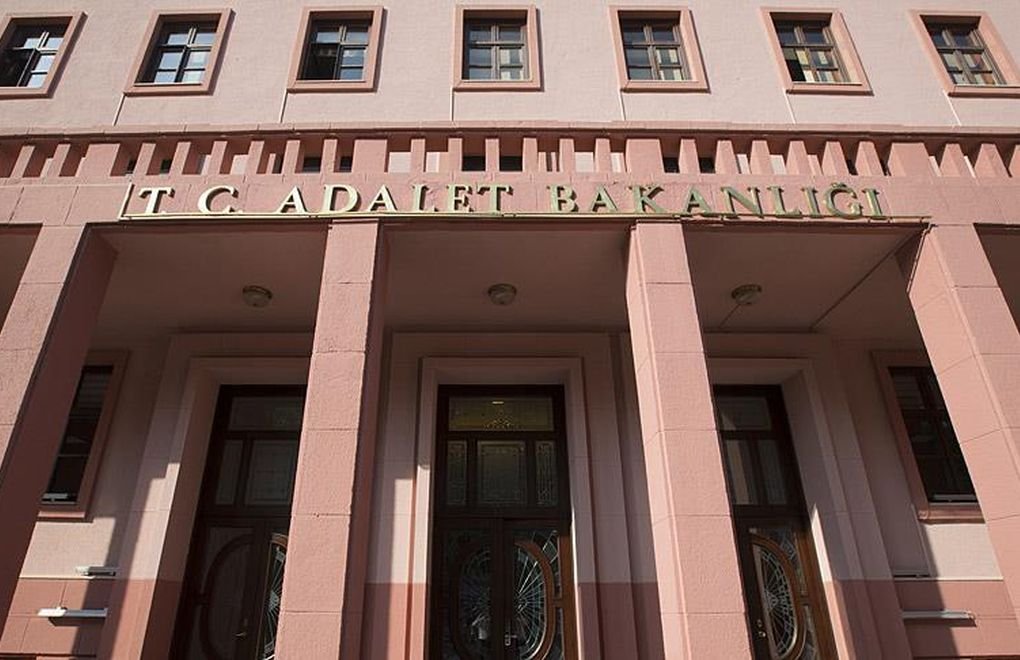
Turkey’s Justice Ministry is drafting legislation that would impose time, location and security restrictions on meetings between lawyers and detainees held on terrorism and organized crime charges, Turkish Minute reported, citing the pro-government Türkiye newspaper.
According to the report the proposed regulation is intended to prevent prisons from becoming “coordination centers for organizational activities.” The sources said authorities have identified cases in which alleged group leaders continued to issue instructions from prison.
The report follows recent remarks by Justice Minister Akın Gürlek, a former İstanbul chief public prosecutor who was appointed to the Cabinet on February 11. Speaking on a television program after taking office, Gürlek said there was a “legal gap” in the current rules governing lawyer visits to detainees.
“There is a legal gap regarding detainees,” Gürlek said. “There is a distinction between detainees and convicts. A lawyer can visit a detainee even at 3 a.m. The law needs to be amended. They come to prisons at 8 in the morning and leave at night. There is a gap in the rules on meetings with lawyers and the exchange of notes.”
Under the model being drafted, lawyers would no longer be able to meet with detainees without prior scheduling, the newspaper reported. Prison administrations would set the time and place of visits. The proposal would also introduce an appointment system and additional identity verification and security checks.
The sources said similar practices exist in the United States and some Western European countries. They said lawyer visits for terrorism and organized crime detainees are considered confidential in principle in those countries but may be subject to restrictions on grounds of public safety.
A comparative table published by Türkiye said lawyer-client communications in the US can be monitored by order of the attorney general in exceptional cases. In Belgium glass partitions and appointment requirements may be imposed under a special security regime. Germany and the Netherlands allow document inspections and visual surveillance in terrorism cases. Norway and Sweden do not permit any monitoring of lawyer visits.
The ministry said it is studying United Nations documents, Council of Europe regulations, the European Prison Rules, the approach of the Committee for the Prevention of Torture (CPT) and the European Union’s Access to a Lawyer directive.
Ministry sources also cited European Court of Human Rights (ECtHR) case law as justification. They argued that while lawyer-client confidentiality is a fundamental principle in ECtHR rulings, limited interference is permissible for national security and crime prevention, provided it is subject to independent judicial oversight and proportionality.
However, the ECtHR’s own rulings against Turkey paint a different picture.
In its 2005 Grand Chamber judgment in Öcalan v. Turkey, the court described the right to confidential communication with a lawyer as “one of the basic requirements of a fair trial in a democratic society.” It found Turkey in violation of Article 6 of the European Convention on Human Rights (ECHR). The violations included the inability to communicate with lawyers out of the hearing of officials, limits on the number and length of visits and delayed access to the case file.
In its 2014 ruling in Öcalan v. Turkey (No. 2), the court accepted limited restrictions on individuals convicted of terrorism offenses to the extent “strictly necessary to protect society against violence.” That case, however, concerned a convict, and the legal framework under review applied to convicted prisoners. The ministry’s proposed regulation targets detainees who have not yet been convicted.
The most recent ruling came on June 6, 2023, in Demirtaş and Yüksekdağ Şenoğlu v. Turkey. The ECtHR found that the surveillance of prison meetings between former Peoples’ Democratic Party (HDP) co-chairs Selahattin Demirtaş and Figen Yüksekdağ and their lawyers violated Article 5, Paragraph 4 of the ECHR.
The seizure of documents exchanged during those meetings was also found to be a violation. The court held that domestic courts had failed to demonstrate exceptional circumstances justifying a departure from attorney-client confidentiality. It said the breach had deprived the applicants of effective legal assistance.
The proposed regulation has also attracted sharp criticism from the legal community. Following Gürlek’s remarks, 80 provincial bar associations across Turkey issued a joint statement on February 14 under the title “The Right to Defense Must Not Be Touched.”
The statement said, “From the moment an investigation begins until individuals regain their freedom, lawyers are the sole important representatives and helpers of individuals against all kinds of restrictions. Let us not forget: People whose freedom has been restricted are not slaves, they are individuals.”
The bar associations said they “do not accept statements that disregard and effectively target lawyers, who are the representatives of independent defense.”
Ministry sources say the regulation does not aim to weaken the right to defense but to “eliminate concrete risks in the fight against terrorism and organized crime.”
The legislation is expected to soon be finalized and shared with the public. The ultimate decision rests with the Turkish Parliament.