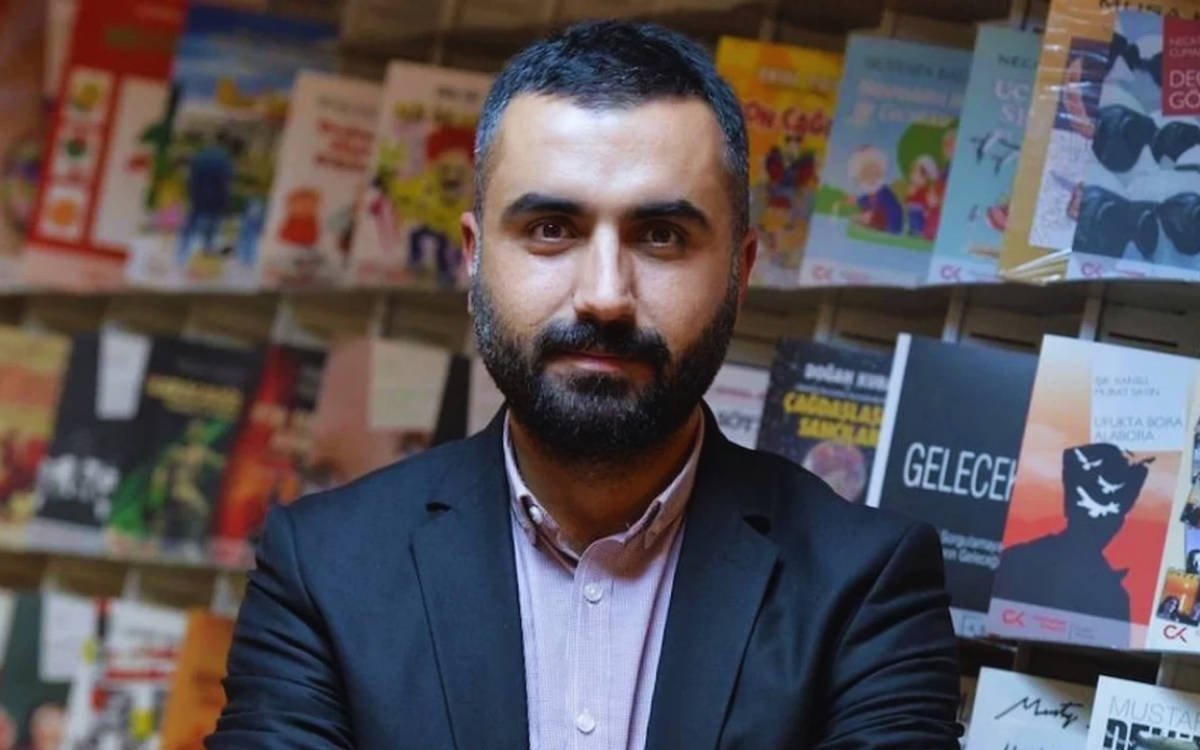
A Turkish court on Friday ordered the arrest of journalist Alican Uludağ, a reporter for Deutsche Welle’s Turkish service, on charges of insulting President Recep Tayyip Erdoğan in his social media posts, sparking widespread condemnation and renewing concerns about press freedom in Turkey.
According to the T24 news website, the İstanbul Criminal Magistrate of Peace ruled that 22 posts shared by Uludağ on social media constituted repeated and public insults of President Erdoğan. The court ordered Uludağ’s arrest citing flight risk, the possibility of destroying or concealing evidence and a strong suspicion of witness tampering.
The İstanbul Chief Public Prosecutor’s Office had initially ordered Uludağ’s detention on accusations of “insulting the president” and “dissemination of misleading information,” though he was ultimately arrested only on the insult charge. Uludağ was detained in Ankara on Thursday and later transferred to İstanbul.
Prosecutors pointed to Uludağ’s 2024 report on the release of six Islamic State in Iraq and the Levant (ISIL) defendants as part of the case file, arguing that his coverage amounted to misleading information and insult. The defendants had been tried for their alleged involvement in the June 28, 2016, attack at İstanbul’s Atatürk airport, which killed 45 people and injured 236 others. They were released after the Supreme Court of Appeals overturned their aggravated life sentences on the grounds that the original rulings were unfair, excessive and lacked sufficient justification.
Turkey’s anti-disinformation office claimed the six defendants were not the perpetrators of the airport attack, while Uludağ defended his reporting by sharing a news report from the state-run Anadolu news agency indicating that five of the six released defendants had been tried for their direct involvement in the attack.
The arrest prompted immediate backlash from foreign officials, international organizations and press freedom bodies.
Germany’s minister of state for culture and media, Wolfram Weimer, described the detention as unacceptable, saying “My call is clear: Alican Uludağ must be released immediately. Journalism is not a crime.”
Nacho Sánchez Amor, the European Parliament’s Turkey rapporteur, said in a post on X that the detention demonstrated the “reality of democratic standards in Turkey,” describing the situation as “depressing.”
The International Press Institute (IPI) and 13 partner organizations issued a joint statement condemning the arrest, calling on the authorities to release Uludağ immediately and urging an end to the judicial harassment of journalists.
Erol Önderoğlu , the Reporters without Borders (RSF) representative in Turkey, said the case signaled a worsening climate for media freedom. “Uludağ’s detention shows how media freedom in Turkey is being pushed into an even more difficult future,” he said.
Press groups in Turkey also condemned the arrest. The Contemporary Journalists Association (ÇGD), the Turkish Journalists Association (TGC) and the Turkish Journalists Union (TGS) issued separate statements calling for Uludağ’s release.
Known for his reporting on human rights violations and corruption cases, Uludağ received awards from the Contemporary Journalists Association in 2019, the Turkish Journalists Association in 2020 and the Germany-based Friedrich Naumann Foundation in 2021.
Journalists in Turkey operate in an increasingly restrictive environment, particularly those reporting on politically sensitive issues or criticizing the government or its political allies. They are frequently targeted through prosecutions under laws criminalizing “insulting public officials,” “disinformation” and “disseminating terrorist propaganda.”
According to Expression Interrupted, a press freedom monitoring group, 33 journalists are currently behind bars in Turkey. The country’s deteriorating media landscape was further pointed out in the 2025 World Press Freedom Index published by Reporters Without Borders (RSF), where it was ranked 159th out of 180 nations.