
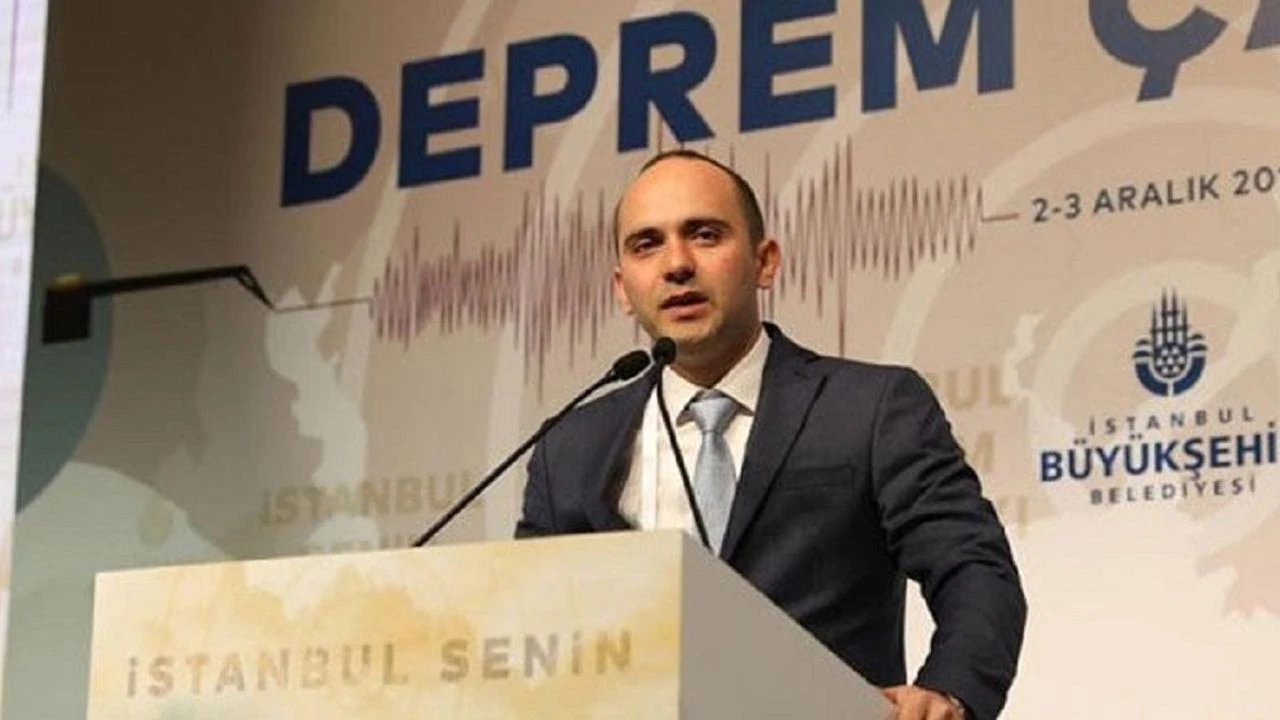
Tayfun Kahraman, a city planner imprisoned over the 2013 Gezi Park protests, has been hospitalized again following an acute relapse of multiple sclerosis (MS), prompting his wife to renew calls for the implementation of a Constitutional Court ruling in his case ordering a retrial, Turkish Minute reported.
Kahraman, who has been in custody since April 25, 2022, was transferred from Silivri Prison to İstanbul University’s Cerrahpaşa Faculty of Medicine Hospital for treatment on Wednesday.
In a post on X, his wife, Dr. Meriç Demir Kahraman, said he had initially been referred to Cerrahpaşa Hospital for treatment of an acute MS attack but was returned to prison after only undergoing an MRI.
“We learned that he was taken back to prison after only an MRI was performed and that he will be referred again to Cerrahpaşa Hospital as soon as possible for examination by the physicians overseeing his treatment, who were also at the hospital yesterday,” she wrote.
Referring to the Constitutional Court’s ruling, she said that had the decision been implemented, she would have accompanied Tayfun to the hospital and discussed his condition with his doctors.
“Not one thing more, not one thing less; we only want justice,” she said.
Kahraman had been convicted in April 2022, along with eight officials and activists, of allegedly aiding an attempt to overthrow the government in connection with the 2013 Gezi Park protests. He received an 18-year sentence, which was upheld on appeal in December 2022 by the Istanbul Regional Court and again in September 2023 by Turkey’s Supreme Court of Appeals.
On July 31, 2025, Turkey’s Constitutional Court ruled that city planner Tayfun Kahraman’s right to a fair trial had been violated and ordered a retrial.
The İstanbul 13th High Criminal Court rejected the order for a retrial, arguing that the Constitutional Court, by issuing its ruling upon an individual application, was acting like an appeals court and had “overstepped its authority.” The court also denied requests to halt the execution of the sentence and to release Kahraman.
The İstanbul Medical Chamber had previously warned about the risks associated with Kahraman’s illness. Osman Küçükosmanoğlu, head of the chamber, said MS is a chronic, progressive disease that can cause sensory loss and that relapses can lead to permanent damage.
“Kahraman already has neurological involvement. He has numbness and weakness in his legs as a result of previous relapses,” Küçükosmanoğlu said, warning that the symptoms may worsen and that a relapse can lead to permanent consequences.
The Gezi Park protests, which began over an urban development plan in central İstanbul in the summer of 2013 and spread to other cities in Turkey, posed a serious challenge to the rule of then-prime minister and current president Recep Tayyip Erdoğan. They were suppressed by the government of Erdoğan, who later labelled the protests as a “coup attempt” against him.
The refusal of local courts and the Supreme Court of Appeals to abide by Constitutional Court decisions has been sparking widespread criticism of the Turkish judiciary for its perceived lack of independence.
Many observers argue that there is no longer a meaningful separation of powers in the country and that members of the judiciary are under the control of the government and cannot make judgments based on the law.
Supporting concerns about judicial independence, Turkey was ranked 118th among 142 countries in the World Justice Project’s 2025 Rule of Law Index.