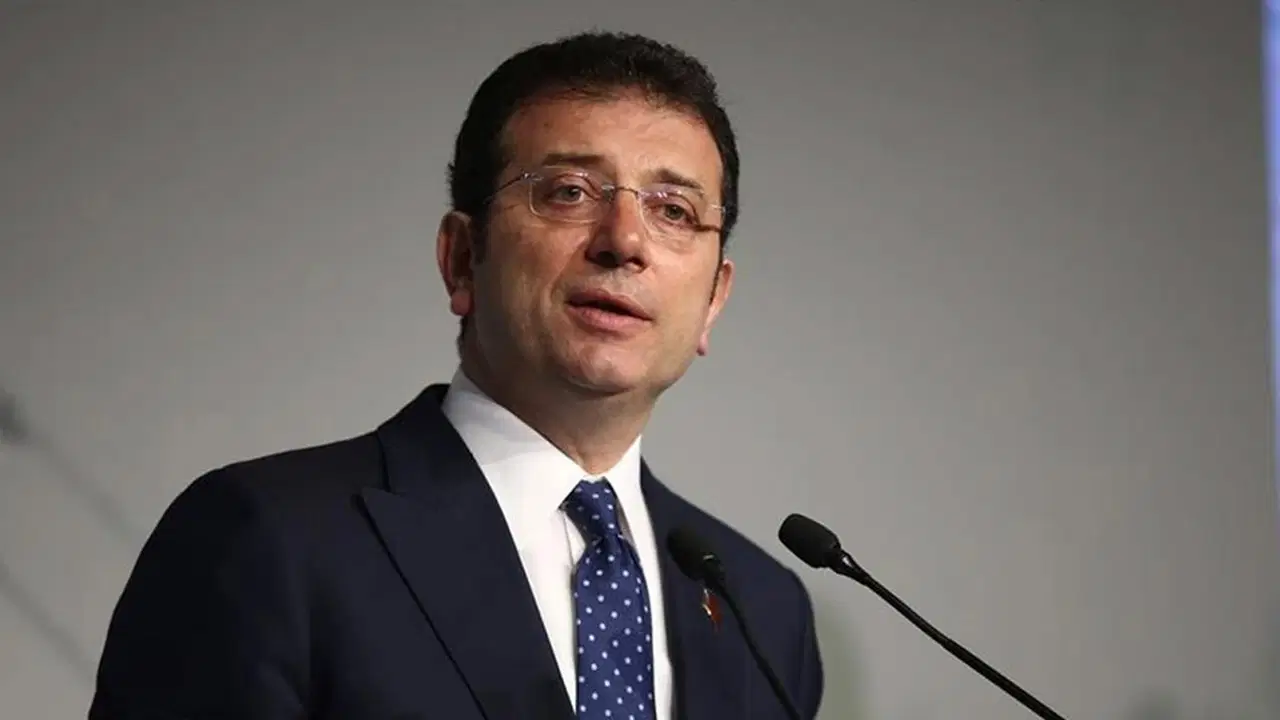
Jailed İstanbul Mayor Ekrem İmamoğlu has accused Turkey’s government of failing to turn renewed peace talks with the outlawed Kurdistan Workers’ Party (PKK) into a broader political process, saying the initiative is guided more by political self-interest than by a real effort to address the Kurdish issue, Turkish Minute reported.
In an opinion article published Tuesday by the Sözcü daily, İmamoğlu said the ruling Justice and Development Party (AKP) had once again responded with delay and silence rather than pursuing a democratic approach to one of Turkey’s most enduring political problems.
“Even in a process of historical importance, they failed to bring society together,” İmamoğlu wrote, adding that the government’s focus remained “not on a solution, but once again on holding on to power.”
The comments come amid a renewed peace initiative launched after the country’s far-right leader, Nationalist Movement Party (MHP) Chairman Devlet Bahçeli, urged jailed PKK leader Abdullah Öcalan in October 2024 to call for an end to violence. Öcalan issued such a call in February, and the PKK later announced it would lay down its arms and dissolve.
Turkey subsequently established a cross-party parliamentary commission tasked with preparing a legal framework for the process, but the body has yet to produce concrete proposals addressing long-standing Kurdish demands, including recognition of their identity in the constitution and education in their mother tongue.
It is not known whether this new process will succeed this time since another attempt launched in 2013 collapsed two years later, sparking renewed clashes between the PKK and the Turkish armed forces.
Founded by Öcalan in 1978, the PKK has led a bloody war in Turkey’s southeast since 1984. The group is designated as a terrorist organization by Turkey and its Western allies.
İmamoğlu said the government had opted for judicial pressure and the concentration of power instead of political compromise, preventing progress on democratic reforms.
“When they could not defeat their rival at the ballot box, we knew they would turn to the judiciary,” he wrote, commenting on the case that led to his arrest. He described the legal proceedings launched against him in March as “not a judicial process” but a politically motivated effort to sideline opponents.
İmamoğlu was detained in March 2025 as part of a corruption investigation targeting the İstanbul Metropolitan Municipality, a case opposition parties have described as an attempt to neutralize President Recep Tayyip Erdoğan’s strongest political challenger. His arrest days later triggered protests across Turkey and sparked criticism from international rights groups and foreign governments.
The 55-year-old politician, who rose to national prominence after defeating Erdoğan’s allies in İstanbul mayoral races three times, faces multiple charges, including corruption, bribery and “political espionage.” Prosecutors are seeking prison sentences that would amount to more than 2,000 years, according to court documents.
His arrest came after his main opposition Republican People’s Party (CHP) made significant gains in the 2024 local elections, dealing a major blow to Erdoğan and his political allies. Despite being jailed, İmamoğlu was later named the CHP’s presidential candidate in a symbolic primary vote that drew participation from more than 15 million people.
In his article, İmamoğlu also reflected on earlier political turning points, including the 2013 Gezi Park protests, which began as a small environmental sit-in in central İstanbul opposing an urban development plan but quickly grew into nationwide demonstrations against then-prime minister Erdoğan, posing one of the most serious challenges to his rule.
He also pointed to the introduction of the presidential system through a 2017 referendum, which reshaped Turkey’s system of governance by granting Erdoğan sweeping executive powers.
İmamoğlu claimed that these moments showed a consistent pattern of ignoring electoral signals and concentrating power at the expense of democratic accountability.
He said the current political climate was marked by a “fear-based order” in which judicial institutions had been weakened and public trust in justice eroded, warning that economic instability and social fragmentation were direct consequences of that approach.
He added that he was not intimidated by his imprisonment and would not step back because Turkey “is not a country that can be governed through fear or reduced to the interests of a single individual.”
He said change will come through the ballot box and described his struggle as one to restore democratic governance and the dignity of the republic, adding that the final decision belonged to the people.
Turkey is scheduled to hold the next general election in 2028.