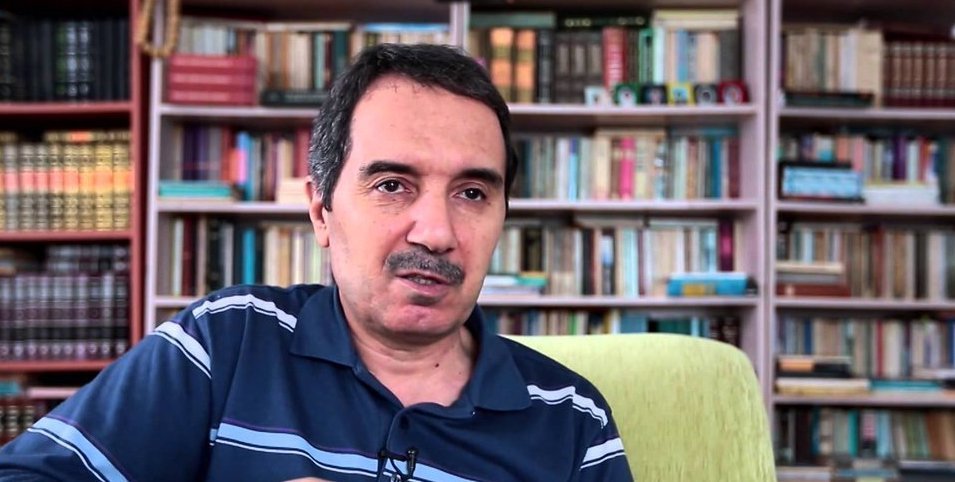
Calls for the release of Ali Ünal, a theologian and former columnist for the now-closed Zaman daily, have intensified as he approaches a decade in prison over alleged links to the faith-based Gülen movement, the Bold Medya news website reported.
Social media users have renewed calls for his release with hashtags #AliÜnalaTahliye (Release Ali Ünal) and #AliUnalEvineDonsun (Let Ali Ünal Return Home) circulating widely online.
His son, Mehmet Ünal, expressed frustration over his father’s continued imprisonment despite his age, now over 70. “You said he was a coup perpetrator, but your own courts acquitted him of that charge,” he wrote in an X post. “Why is my father in prison?”
Ünal was taken into custody on August 14, 2016, and was sentenced in November 2018 to 19-and-a-half years in prison on charges of “establishing and leading an armed terrorist organization.” He was acquitted of charges of “attempting to overthrow the constitutional order.” He is currently held in İzmir Prison.
The evidence presented by the prosecutor was 17 of Ünal’s articles published in the Zaman daily, his appearances on a program aired on Samanyolu TV, an interview he gave to Bugün TV in front of the İstanbul courthouse and two books he had written. Zaman, Samanyolu TV and Bugün TV were all shut down following a coup attempt in July 2016 due to their alleged affiliation with the Gülen movement, which the Erdoğan government accused of being behind the failed coup
The United Nations Working Group on Arbitrary Detention (WGAD) concluded in June 2023 that the arrest and detention of Ünal were arbitrary. WGAD urged the Turkish government to ensure a full and independent investigation of the circumstances surrounding the detention and to take appropriate measures against those responsible for the violation of his rights.
Following the coup attempt, President Recep Tayyip Erdoğan immediately accused the Gülen movement, inspired by the late US-based cleric Fethullah Gülen, of orchestrating the plot and significantly expanded a crackdown already underway on the movement’s supporters.
Erdoğan’s campaign against the movement began after corruption investigations in December 2013 implicated him as well as members of his family and inner circle, which he dismissed as a conspiracy, and formally designated it as a terrorist organization in May 2016. The movement strongly denies involvement in the coup attempt or any terrorist activity.
Since a state of emergency was declared on July 20, 2016, some 200 media outlets were shut down by emergency decrees. The main targets of the media closures have been media outlets affiliated with the Gülen movement as well as pro-Kurdish and far-left outlets.
According to Expression Interrupted, a press freedom monitoring group, 28 journalists are currently behind bars in Turkey. The country’s deteriorating media landscape was further pointed out in the 2025 World Press Freedom Index published by Reporters Without Borders (RSF), where it was ranked 159th out of 180 nations.