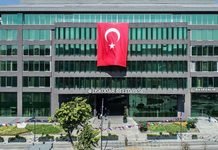

Turkey had the highest number of new applications filed at the European Court of Human Rights (ECtHR) in 2025, according to data from an annual report released Thursday by the Strasbourg-based court.
The report showed 6,743 new applications against Turkey were registered in 2025, up from 4,450 in 2024 but down from 8,341 in 2023. When adjusted for population, Turkey recorded 0.79 applications per 10,000 people in 2025, above the European average of 0.38.
The court issued 74 judgments in cases involving Turkey in 2025, finding at least one violation of the European Convention on Human Rights (ECHR) in 66 of them. It found no violations in six, while two were concluded by other means, it said. The highest number of violation rulings in Turkey-related cases were based on the right to a fair trial under Article 6, with 24 cases, followed by the right to liberty and security under Article 5, with 21.
Turkey also had the court’s largest backlog at year’s end, with 18,464 applications pending as of December 31, 2025. According to DW Turkish service, about 650 additional applications against Turkey have been recorded since the start of 2026, bringing the current figure to 19,110 pending applications.
A majority of the applications from Turkey were linked to detentions, arrests and trials tied to measures introduced after a coup attempt in July 2016.
The applications largely stem from arrests, detentions and trials linked to post-coup measures affecting groups across the military, police, judiciary and public sector, with many cases tied to alleged links to the faith-based Gülen movement.
President Recep Tayyip Erdoğan has been targeting followers of the Gülen movement, inspired by the late Muslim cleric Fethullah Gülen, since corruption investigations in December 2013 implicated him as well as some members of his family and inner circle.
Dismissing the investigations as a Gülenist coup and a conspiracy against his government, Erdoğan began to target the movement’s members. He designated the movement as a terrorist organization in May 2016 and intensified the crackdown on it following the abortive putsch in July of the same year that he accused Gülen of masterminding. The movement strongly denies involvement in the coup attempt or any terrorist activity.
Following the coup attempt, the Turkish government declared a state of emergency (OHAL) that remained in effect until July 19, 2018. During this period, the government carried out a purge of state institutions under the pretext of an anti-coup fight by issuing a number of government decrees, known as KHKs. Over 130,000 public servants, including 4,156 judges and prosecutors, as well as more than 24,000 members of the armed forces were summarily removed from their jobs for alleged membership in or relationships with “terrorist organizations” by emergency decree-laws subject to neither judicial nor parliamentary scrutiny.
Former public servants were not only fired from their jobs but also banned from working again in the public sector and getting a passport to seek employment abroad. The government also made it difficult for them to work formally in the private sector. Notes were put on the social security database about dismissed public servants to deter potential employers.
As a result, many purge victims have had to work in uninsured jobs with very little workplace safety. There have also been several cases where former public servants have died due to occupational accidents in physically demanding jobs.
In recent years, some of the people fired have been reinstated, yet this process has often come too late. Numerous cases have surfaced where dismissed individuals, facing severe emotional and financial strain, have died by suicide or otherwise passed away before their reinstatement.
Turkey was followed in the number of pending applications by Russia, which was expelled from the Council of Europe after its 2022 invasion of Ukraine, with 7,177, then Ukraine with 4,004, Poland with 3,517, Italy with 2,787, Greece with 2,562, Romania with 2,489 and Azerbaijan with 2,180, the court said. France had 703, Spain 186, the United Kingdom 139 and Germany 127.
DW Turkish service also said the court is bracing for a potential new wave of applications tied to dismissals of public officials after the 2016 coup attempt. The court said it will introduce special administrative processing measures for such cases from January 1, 2026.
Court sources said the European court could receive up to 30,000 applications by the end of 2026 linked to post-coup dismissals.