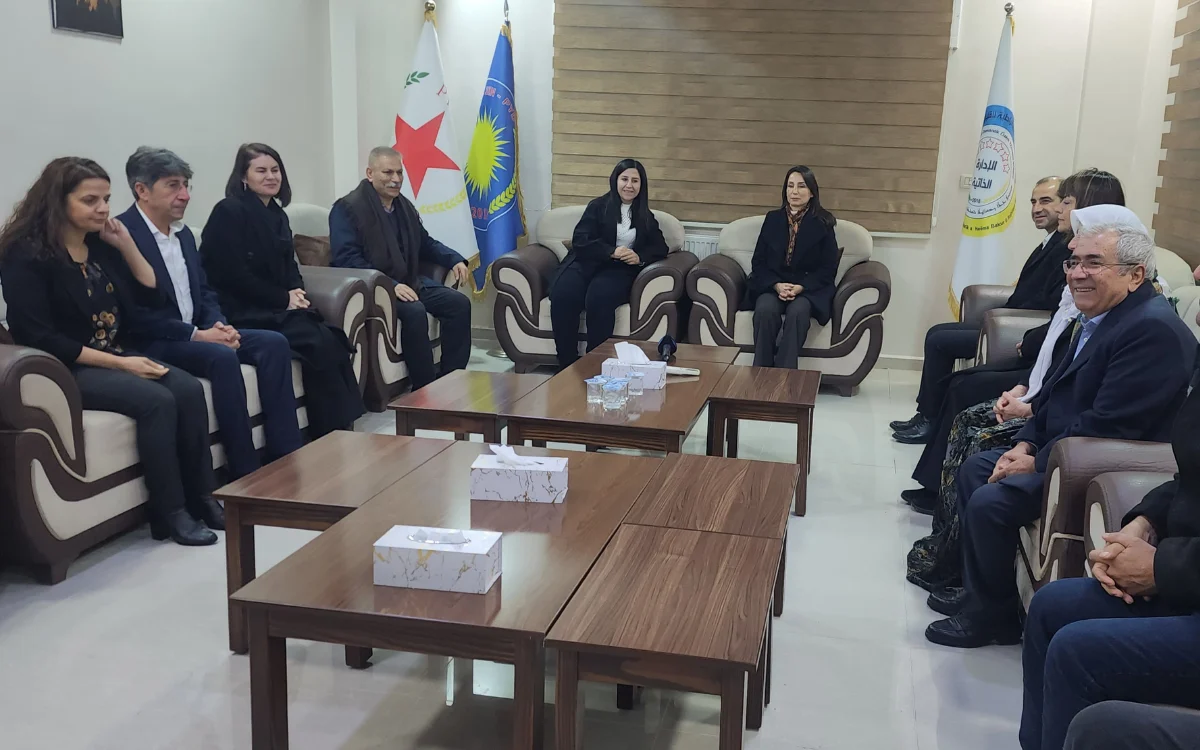
A delegation from Turkey’s pro-Kurdish Peoples’ Equality and Democracy Party (DEM Party) has traveled to Iraq’s Kurdistan region en route to Rojava in northeastern Syria, amid growing tensions over Damascus’s military campaign against Kurdish-led forces and growing protests inside Turkey, Turkish Minute reported.
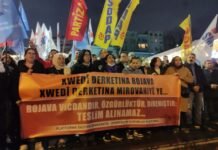
The delegation, which includes DEM Party co-chair Tülay Hatimoğulları, said the visit aims to protest attacks by Syria’s transitional authorities on areas controlled by the Syrian Democratic Forces (SDF) and to express solidarity with the Kurdish-led administration in Rojava.
The group traveled first to the Kurdistan Regional Government (KRG) in northern Iraq, where it had meetings with political parties and regional representatives before setting out for Rojava via the KRG.

The move comes as the party has intensified political and street-level mobilization along Turkey’s southeastern border in response to fighting in northern Syria.
Protest march in Nusaybin
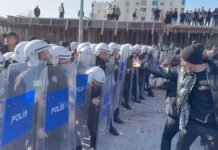
Earlier on Wednesday, the DEM Party organized a march in the border district of Nusaybin in Turkey’s Mardin province, near the Syrian city of Qamishli, to protest Damascus’s offensive against SDF-held areas.
The demonstration began near a local cemetery and drew party leaders and supporters, including DEM Party co-chair Tuncer Bakırhan.
Speaking after the march, DEM Party lawmaker Çiğdem Kılıçgün Uçar accused the Syrian campaign of targeting Kurdish freedom, identity and political demands.
“Kurdish people are asking for what belongs to everyone: freedom, language and recognition of their identity,” she said. “This has been our effort for years while engaging in democratic politics in Turkey. When Kurds gain their rights, no one loses any of their own.”
Uçar referred to recent statements by SDF commander Mazloum Abdi, who called for restraint, and said the opportunity for diplomacy should not be missed.
She also criticized the role of Hayat Tahrir al-Sham (HTS), which dominates Syria’s transitional authorities, describing its project as “dark.”
6 journalists detained
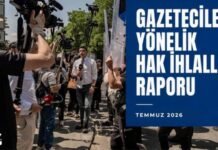
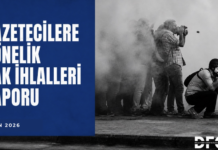
Meanwhile, police in southeastern Turkey detained six journalists and allegedly assaulted them while they were covering the protests on the Turkish-Syrian border in Mardin, according to the Dicle Fırat Journalists Association.
In a statement on X, the association said the journalists were taken into custody while filming and video footage recorded by the journalists shows a police officer seizing one journalist’s camera. The group described the action as unlawful.
The association said its co-chair, Kesira Önel, was also subjected to police violence after protesting the detentions and repeatedly identifying those taken into custody as journalists.
The group condemned what it described as unlawful conduct by the police and called on Turkey’s Interior Ministry to provide an explanation for the incident.
Regional crisis spills into Turkey
The DEM Party’s actions come against the backdrop of rapidly shifting dynamics in northern Syria, where clashes earlier this month intensified a long-running standoff between Damascus and the Kurdish-led SDF over the group’s future status.
Syrian government forces launched an operation on January 6 that expanded into areas long controlled by the SDF, triggering weeks of fighting.
A ceasefire and integration plan announced over the weekend was intended to bring SDF military and civilian structures under the Syrian state, but reports since then have pointed to renewed clashes and deep disagreements over implementation.
Turkey, the main foreign backer of Syria’s transitional authorities since the fall of Bashar al-Assad’s government in December 2024, has openly supported Damascus’s push to dismantle Kurdish-led self-rule along its border. Ankara views the SDF as an extension of the outlawed Kurdistan Workers’ Party (PKK), which it designates as a terrorist organization.
Turkish Foreign Minister Hakan Fidan said on Tuesday that Ankara backs the ceasefire and integration plan, describing it as a priority choice to preserve Syria’s unity and territorial integrity, even as fighting resumes on the ground.
The Syrian offensive has triggered protests across Turkey’s predominantly Kurdish southeast, where many fear that Ankara’s Syria policy could undermine a fragile peace process at home.
Turkey has been engaged in dialogue with jailed PKK leader Abdullah Öcalan as part of efforts to end a conflict that has lasted decades. But Kurdish politicians and activists warn that backing military action against Kurds in Syria risks eroding trust among Turkey’s Kurdish population.
Earlier this week, the DEM Party accused Ankara of “hypocrisy,” saying it cannot speak of peace with Kurds inside Turkey while supporting operations against them across the border.
Protests in cities including Diyarbakır have drawn hundreds of demonstrators, with clashes reported between police and protesters as security forces used tear gas and rubber bullets to disperse crowds, according to Agence France-Presse.