A well-known scholar of Kurdish politics has warned that Turkey’s latest attempt to revive peace talks with the outlawed Kurdistan Workers’ Party (PKK) is unlikely to succeed amid deep and unresolved disputes between Kurds’ demands for rights and Turkey’s insistence on security, Turkish Minute reported.
Professor Michael M. Gunter, a professor of political science at Tennessee Technological University who has studied Kurdish affairs for more than four decades, said the Turkish government continues to frame the conflict with the PKK primarily as a matter of “terrorism,” while Kurdish actors view it as a question of “constitutional rights.”
He made the remarks on the latest episode of the “Timeline” program hosted by journalist Abdülhamit Bilici and writer Jesse Waters on YouTube, posted Thursday.
According to Gunter, this fundamental divergence has undermined past initiatives and remains the core weakness of the current process, which was launched following a surprise call from the country’s far-right leader, Nationalist Movement Party (MHP) Chairman Devlet Bahçeli, in October 2024 and endorsed by his political ally President Recep Tayyip Erdoğan.
Bahçeli asked jailed PKK leader Abdullah Öcalan to instruct his group to renounce its armed campaign while hinting that the end of PKK violence could lead to Öcalan’s freedom.
As a result the PKK announced in May that it would lay down its weapons and dissolve itself.
Yet it is not known whether this new process will succeed this time as another attempt launched in 2013 collapsed two years later, sparking renewed clashes between the PKK and the Turkish armed forces.
While contacts continue behind the scenes, Gunter said, the PKK and the Turkish government are “not talking about the same issue,” making meaningful negotiations difficult.

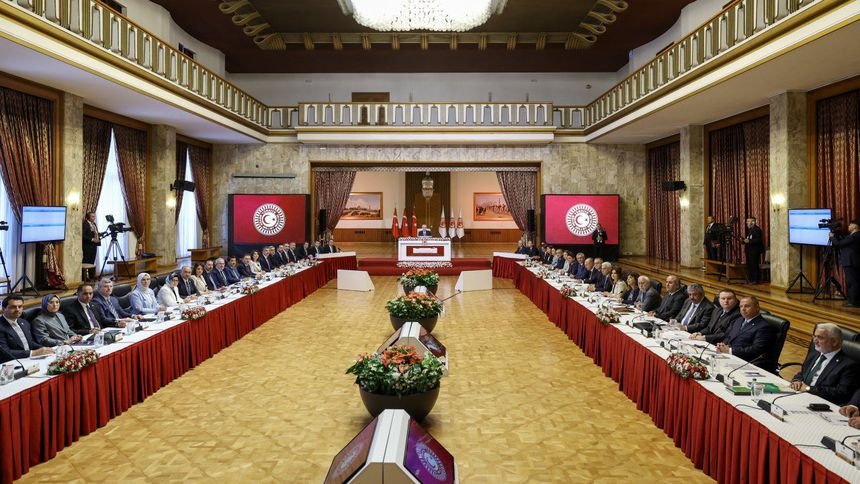
A commission was established in the Turkish Parliament in August to advance the peace efforts and propose legal steps aimed at the conclusion of the PKK’s dissolution and the fate of its militants.
However, no concrete steps have been taken so far regarding Kurds’ demands for the freedom of Öcalan, the fate of the former PKK militants and expansion of their cultural and political rights.
Long-demanded rights by the country’s Kurdish population is the recognition of their identity in the constitution and education in their mother tongue. Ankara has not signaled any willingness to move toward constitutional recognition or to allow Kurdish-language education in public schools.
Gunter claimed that Ankara’s reluctance to grant constitutional recognition to the Kurdish identity is rooted in a long-standing fear that such steps could encourage separatism, destroy Turkish unity and break up the Turkish state. Similar concerns, he noted, have shaped state policies toward Kurds across the Middle East.

He described Kurds as a distinct ethnic group with their own language, culture and history, while noting that Turks and Kurds have lived together for centuries and share deep social and religious ties. Despite that shared past, he said, Turkish authorities have long viewed Kurdish political recognition as a risk rather than a stabilizing factor.
Supporters of the peace talks see the initiative as a chance to end a conflict that has killed more than 40,000 people since the 1980s. Critics, however, remain wary of Öcalan’s role and the extent to which the government will allow genuine political and legal reforms to accompany the peace efforts.
Although pessimistic about the outcome, Gunter said the current process has not formally collapsed. “I don’t think it will ultimately be successful. I hope I’m wrong,” he added.
In his view dialogue continues, albeit weakly and without transparency and could still help prevent a return to full-scale conflict even if it fails to produce a comprehensive settlement.
Even without an agreement, he said, prolonged contact could make it harder for both sides to revert to the most destructive phases of the conflict.
Is PKK dissolution real?
Gunter approaches the PKK’s claim of dissolution with some skepticism. He said the group retains operational capacity and has a history of reorganizing under different names without abandoning its leadership or strategy.
“I can guarantee to you the PKK still has a lot more than 30 rifles ready to go, locked and ready,” he said, referring to a ceremony in which the militants burned their weapons in northern Iraq as a symbolic first step on July 30, following Öcalan’s message in February 2025 calling on the PKK to disarm and disband.

(Photo by Shwan Mohammed / AFP)
He suggested the PKK leader may be testing whether Turkey is willing to respond politically to unilateral gestures while preserving the option to reverse course if no meaningful concessions follow.
Despite his skepticism, Gunter claimed that a durable solution would require Turkey to take political risks by recognizing Kurdish rights constitutionally and integrating Kurds fully into the political system.
He described Turkey as the stronger party and said it could afford such steps without threatening the state’s integrity. Without that shift, he added, peace initiatives are likely to stall or collapse, repeating a cycle that has defined the conflict for decades.
Founded by Öcalan in 1978, the PKK has led a bloody war in Turkey’s southeast since 1984. The group is designated as a terrorist organization by Turkey and its Western allies.
Why Erdoğan’s far-right ally emerged as the face of the peace outreach
Gunter also dwelled on why the peace initiative might have been launched by MHP leader Bahçeli, a staunch opponent of the PKK.
He suggested this may be a deliberate political strategy designed to protect Erdoğan from accusations that he is negotiating with a group designated as terrorist.

“If the peace negotiations fail, Erdoğan wants to be at a distance. Therefore, it’s very convenient to have … Bahçeli to suggest this process,” he said. Allowing a hardline nationalist actor to take the lead, Gunter argued, gives the government room to step back if talks fail while reassuring nationalist voters that Ankara is not “giving in.”
Syria as a complicating factor
Gunter also pointed to developments in Syria as a major factor threatening to derail any Turkey–PKK accommodation.
He said Ankara not only wants the PKK to disarm but also expects the Kurdish-led Syrian Democratic Forces (SDF) to integrate into the Syrian state — a demand he described as unrealistic.
While acknowledging personal and historical links between PKK figures and some Syrian Kurdish leaders, Gunter rejected the idea that the SDF is simply an extension of the PKK, saying that it operates according to its own political and military logic.
Turkey, which considers the SDF an extension of the PKK, has backed Syria’s new authorities and has called on Kurdish forces to integrate into the Syrian state. Turkish officials have repeatedly said Syria’s security is inseparable from Turkey’s own, while Syrian Kurdish leaders warn that recent operations targeting Kurds endanger civilians and risk reigniting a wider conflict.
Gunter argued that Syrian Kurdish forces are unlikely to surrender their autonomy or military leverage without firm constitutional guarantees in a future Syrian system and that Ankara’s expectations regarding Syria could directly undermine talks at home.

Referring to a March 10 agreement between the SDF and Syria’s interim authorities, which implemented a country-wide ceasefire, envisaged equal representation for minorities in the political process and proposed integrating the SDF’s military and civilian structures into the new Syrian state, Gunter described it as largely symbolic and shaped by external pressure, particularly from the United States, rather than a binding political deal.
Key questions, including military integration, autonomy and constitutional rights, were postponed rather than resolved, he said, leaving the core dispute intact as the December deadline passed.
According to Gunter, United States remains a central but unpredictable actor. Washington continues to support the SDF in part due to concerns about the Islamic State in Iraq and the Levant (ISIL), but its long-term commitment is unclear.
This uncertainty, he warned, raises the risk of miscalculation among Turkey, Syrian Kurdish forces and Damascus, particularly if proxy clashes intensify. He also pointed to broader regional tensions, including those between Turkey and Israel, that could further destabilize northern Syria.
Gunter is the author or editor of 23 critically praised, peer-reviewed scholarly books on the Kurdish question and other subjects. He has also published more than 200 peer-reviewed scholarly book chapters and articles on the Kurds and many other issues in leading scholarly periodicals.
He also is secretary-general of the EU Turkey Civic Commission (EUTCC) headquartered in Brussels.