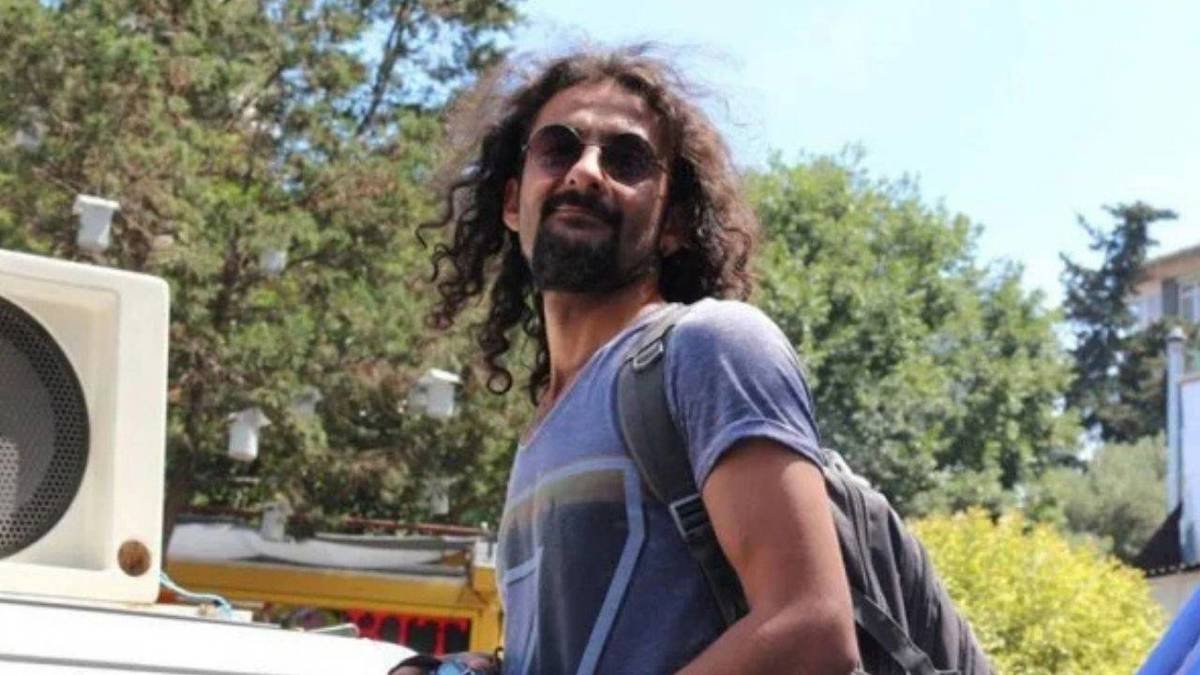
An autopsy has found that Turkish journalist and environmental activist Hakan Tosun died from severe head trauma caused by violence, sustaining multiple fractures and other injuries consistent with repeated assault, Turkish Minute reported, citing the Halk TV news website.
Tosun, 50, was attacked on the evening of October 10 in İstanbul’s Esenyurt district while on his way home. He was hospitalized with critical injuries and died on October 13 after several days in intensive care.
The forensic report, drafted by the Council of Forensic Medicine (ATK), found that Tosun sustained injuries to his face, head, neck, arms, chest, back and legs and documented extensive bruising across multiple parts of his body, along with fractures to the skull, eye socket and sphenoid bone.
Two suspects arrested in connection with the attack claimed during questioning that Tosun was intoxicated, verbally abusive and behaving inappropriately. They also alleged that drugs were found in his bag.
The ATK report and security camera footage contradicted those claims. The report said no narcotics or stimulants were found in Tosun’s body and that pills recovered from his bag were determined not to be illegal substances.
Halk TV said camera recordings reviewed by investigators show that Tosun was assaulted at two different locations. The ATK report details injuries consistent with repeated blows during both incidents.
Questions raised over third individual
Footage also showed the presence of a third individual, identified in the case file by the initials Y.Ö., who was questioned as a witness. Recordings indicate that Y.Ö. returned to the scene after the first assault, transported one suspect away from the area on a motorcycle following the second attack and later returned again.
Despite objections from Tosun family lawyers, prosecutors and police have maintained that Y.Ö. bears no criminal responsibility. Authorities said internal image analysis suggested he attempted to intervene, and prosecutors said no evidence of criminal conduct had been found.
Celal Fırat, an MP from the pro-Kurdish Peoples’ Equality and Democracy Party (DEM Party), submitted a parliamentary question asking whether a renewed investigation would be launched to determine the role of the third individual.
The Büyükçekmece Chief Public Prosecutor’s Office responded that no criminal elements had been identified and said no evidence pointed to an organized or gang-related attack.
Meanwhile, the two suspects currently in custody appeared in court on January 6 via video link, requesting release pending trial. The Büyükçekmece 4th Criminal Court of Peace rejected the request, citing the severity of the alleged offense and the absence of any change in the evidence, ordering their continued detention.
Tosun began his career as a radio technician in the early 1990s and later worked as a news editor and documentary filmmaker. He was known for his coverage and documentary work focusing on the struggle to protect the environment, urban activism and the fight against gentrification.
His death triggered widespread condemnation from journalists unions, environmental groups, rights organizations and opposition politicians, who called for full accountability and transparency in the investigation.
It is common for journalists to face physical violence and judicial harassment in Turkey while engaging in their profession.
Turkey, which has been suffering from a poor record of press freedom, was ranked 159th out of 180 countries in the 2025 World Press Freedom Index by Reporters Without Borders (RSF).