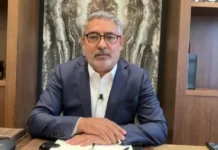

Ramazan Çınkır, a former civil servant who was dismissed by an emergency decree over alleged links to the faith-based Gülen movement and stripped of state-funded medical treatment despite a severe chronic illness, died on Thursday, drawing renewed attention to the human cost of purges that took place in Turkey following a 2016 coup attempt.
Çınkır, 45, was dismissed from his job at the provincial education department in Adana province under an emergency decree issued after a failed coup on July 15, 2016. He suffered from Paroxysmal Nocturnal Hemoglobinuria (PNH), a rare and life-threatening blood disorder that required regular treatment. After his dismissal state coverage for his medication was halted, and his treatment was halted. He was officially assessed as 96 percent disabled under Turkey’s medical disability classification, a level that qualifies as loss of working capacity.
Çınkır was removed from public service on the grounds that he had deposited money in the now-shuttered Bank Asya and was a member of a teachers union alleged by authorities to be affiliated with the Gülen movement. He was later tried on charges of “membership in a terrorist organization” but was acquitted.
In a recent interview on KHK TV, a YouTube channel dedicated to the stories of people dismissed by emergency decrees, Çınkır said the withdrawal of medical care and social assistance had left his family in extreme hardship. “They have effectively abandoned us to death, hunger and poverty,” he said.
He is survived by a wife and one child.
President Recep Tayyip Erdoğan has been targeting followers of the Gülen movement, inspired by the late Muslim cleric Fethullah Gülen, since corruption investigations in December 2013 implicated him as well as some members of his family and inner circle.
Dismissing the investigations as a Gülenist coup and a conspiracy against his government, Erdoğan began to target the movement’s members. He designated the movement as a terrorist organization in May 2016 and intensified the crackdown on it following the abortive putsch in July of the same year that he accused Gülen of masterminding. The movement strongly denies involvement in the coup attempt or any terrorist activity.
Since the 2016 coup attempt Turkish authorities have convicted Gülen supporters of terrorism-related charges based on activities that courts consider indicative of affiliation with the movement, including working at a private school affiliated with the movement, depositing money in the now-shuttered Bank Asya, witness testimony and the use of ByLock, an encrypted messaging application once widely available on Apple’s App Store and Google Play that Turkish authorities claim served as a secret communication tool for Gülen movement supporters.
Dismissed public servants were not only fired from their jobs; they were also prohibited from working again in the public sector and getting a passport. The government also made it difficult for them to work formally in the private sector. Notes were put on the social security database about dismissed public servants to deter potential employers.
As a result, many purge victims have had to work in uninsured jobs with very little workplace safety. There have also been several cases where former public servants have died due to occupational accidents in physically demanding jobs.