
A Turkish court on Friday sentenced academic Berfin Azdal to more than six years in prison on terrorism-related charges in a case linked to an investigation into the pro-Kurdish People’s Democratic Congress (HDK), the İlke TV news website reported.
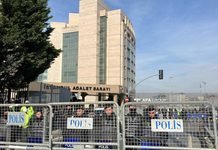
The İstanbul 14th High Criminal Court convicted Azdal of membership in a terrorist organization, citing her phone conversations and participation in political events as evidence.
Azdal was arrested on February 21 as part of a broader investigation into the HDK, an umbrella organization for left-wing and pro-Kurdish groups. She was released pending trial at the first hearing on June 26.
Prosecutors accuse the HDK of operating as a “legal front organization” for the outlawed Kurdistan Workers’ Party (PKK) and operating as an “alternative assembly” to the Turkish Parliament, alleging that it follows the orders of PKK executives. They also cited a 2020 ruling by Turkey’s Supreme Court of Appeals that found the Democratic Society Congress (DTK), an entity closely linked to the HDK, to be affiliated with the PKK.
Following the ruling, the HDK issued a statement claiming that the charges against Azdal were politically motivated. The organization said this case, which it described as “built on the logic of producing a crime,” focused on lawful activities between 2011 and 2014. It added that the HDK operates openly, has a registered address and includes political parties and civil society groups among its members, making it a legitimate and transparent structure.
Turkish authorities claimed that HDK members were involved in past civil unrest, including the 2014 Kobani protests and the 2015 clashes in southeastern Turkey following the collapse of Ankara’s peace talks with the PKK and alleged that some members facilitated recruitment efforts for PKK-linked militant groups.
Founded in the late 1970s by Abdullah Öcalan, the PKK launched an armed insurgency in 1984, a conflict that has claimed more than 40,000 lives. The group is designated as a terrorist organization by Turkey and its Western allies, including the European Union and the United States.
In May the PKK announced that it would lay down its arms to pursue a democratic struggle to defend the rights of the Kurdish minority, in line with a call by Öcalan. The Turkish Parliament in August established a special parliamentary commission to oversee the peace efforts.