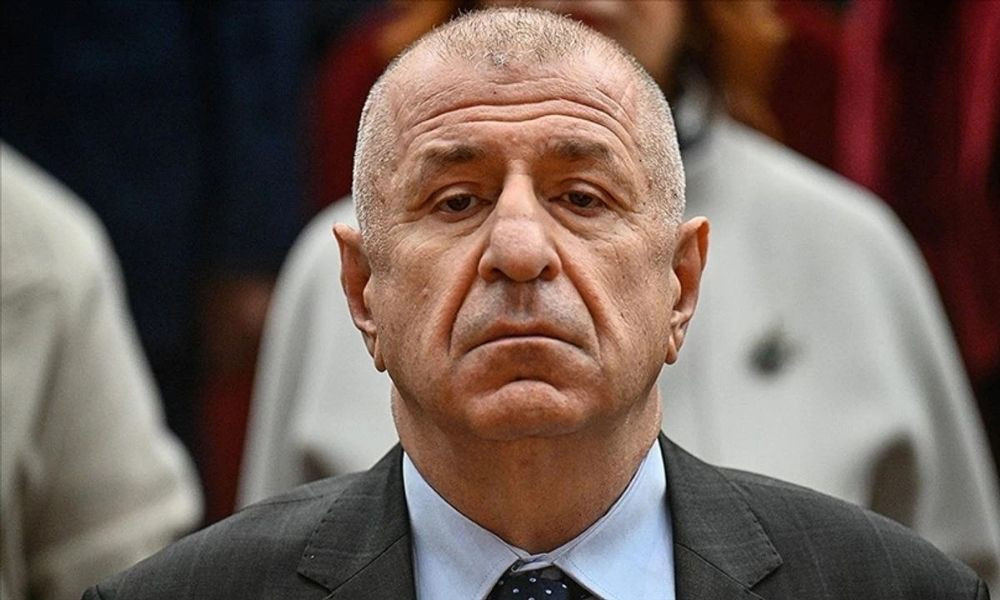
A Turkish court on Tuesday acquitted far-right opposition leader Ümit Özdağ in a case in which prosecutors had sought up to nearly five years in prison under a law that criminalizes insulting the president, the Birgün daily reported.
Özdağ, leader of the far-right, anti-immigrant Victory Party (Zafer Parti), had been charged over remarks he made about President Recep Tayyip Erdoğan during his party’s provincial chairpersons meeting in Antalya on January 19.
During his speech the party leader compared the damage caused by the Crusades, which targeted Muslims and the Ottoman Empire, to the damage caused by Erdoğan’s party.
“No crusade in history has caused as much harm to the Turkish nation and the Turkish state as Erdoğan and [his Justice and Development Party] AKP have,” he said.
The Crusades were a series of religious wars initiated by European Christians to reclaim the Holy Land — Jerusalem and surrounding areas considered sacred by Christians, Muslims and Jews — from Muslim control. They targeted regions such as Anatolia and the Levant, clashing with the Seljuks and other Muslim powers.
In his speech the Özdağ also accused Erdoğan of filling the Turkish state with spies, harming the beliefs of the Turkish nation, alienating them from Islam and turning people into deists, atheists and Christians through his government’s policies, dividing the state among religious sects and communities and destroying Turkish culture by allowing millions of refugees and illegal migrants into the country.
The case was brought under the controversial Article 299 of Turkey’s penal code, which makes insulting the president a criminal offense punishable by up to four years in prison, with longer sentences possible in some circumstances. Prosecutors had sought a sentence of four years, eight months.
The verdict was delivered by the 35th Criminal Court of First Instance in İstanbul after several hearings. Özdağ had previously appeared in court in September, when the trial was adjourned.
The law has long drawn criticism from human rights groups, which say it is used to curb freedom of expression and intimidate critics of the government. Thousands of people, including journalists, opposition politicians and private citizens, have been investigated or prosecuted under the provision in recent years, according to rights organizations.
President Erdoğan, who has ruled Turkey for more than two decades, first as prime minister and then as president, has faced repeated criticism from international watchdogs over restrictions on free speech, particularly since a coup attempt in 2016.