
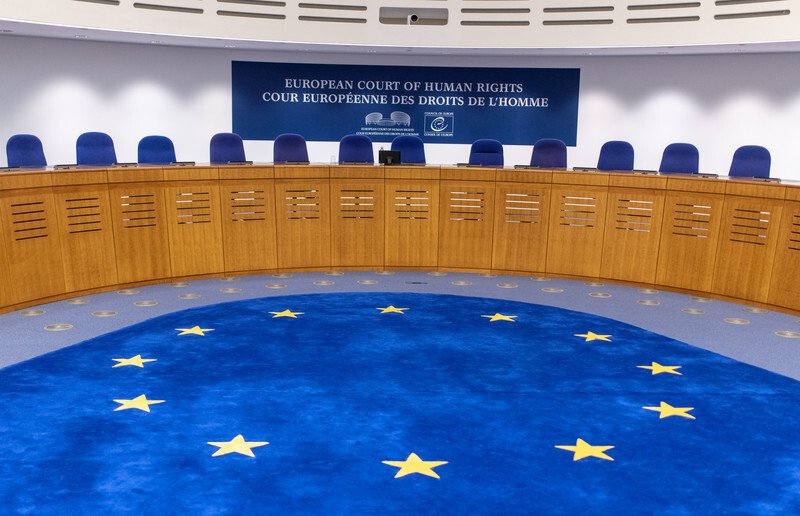
The European Court of Human Rights (ECtHR) has asked the Turkish government to clarify the legal grounds for an intimate body search conducted on a lawyer visiting her client in prison, amid broader debates in Turkey over the use of strip-searches of visitors and women detainees.
Lawyer Ayşe Nesibe Yazar reported that on December 7, 2022, she was subjected to an intimate body search, where she was requested to remove her top in the presence of prison officers and another lawyer while visiting her client at Batman Prison. She filed a complaint with the Batman Public Prosecutor’s Office, arguing that the search had violated legislation governing body searches. Her complaint was dismissed with a decision of non-prosecution.
The Batman Magistrate of Peace rejected her objection to the prosecutor’s decision. The Constitutional Court examined her application from the standpoint of the prohibition of ill-treatment alone and found it inadmissible for being ill-founded. In January Yazar applied to the ECtHR claiming ill treatment and the lack of an effective investigation by the domestic authorities.
The Strasbourg-based court sent a series of questions to the Turkish government on November 25 regarding Yazar’s case. The court requested that the government explain the legitimate purpose of the intimate body search and whether the search and the domestic investigation complied with the prohibition of torture and the right to respect for private life under Articles 3 and 8, respectively, of the European Convention on Human Rights (ECHR). The court also sought information on any official guidelines that must be followed during such searches.
Yazar’s account recalled widespread debates in Turkey over strip-searches of women detained on terrorism charges and claims that Turkish security forces use strip-searches unlawfully and systematically to humiliate detainees and visitors.
The ECtHR has found that strip-searches constitute degrading treatment when not justified by compelling security reasons and/or due to the way they were conducted.
According to Turkish legal regulations, strip-searches can only be conducted in exceptional cases, such as when there are credible indications that the person has contraband materials on their person. In such cases, the search must be conducted in a manner so as not to humiliate the individual and must be performed as quickly as possible. When there is a credible suspicion that something is hidden inside the person’s body, officers are required to ask the person to remove it themselves and inform them that if they disobey, the removal will be performed by the prison doctor.
The ECtHR’s inquiry comes amid growing concerns about systemic abuse in Turkey’s prison system. The Human Rights Association (İHD), a leading human rights organization, documented at least 26,632 rights violations in Turkish prisons in 2024. The United Nations Committee Against Torture has also urged Turkey to address the persistence of ill-treatment in its detention facilities and the lack of accountability for those responsible.