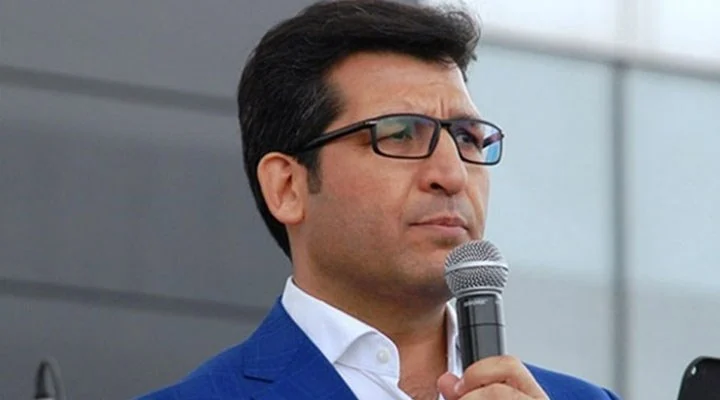
Human rights groups have launched a social media campaign urging Turkish authorities to release former judge Murat Arslan, allowing him to be with his 20-year-old son, who was critically injured in a motorcycle accident on November 1 in the US.
Arslan was sentenced to 10 years in prison by a high criminal court in Ankara in 2019 on alleged links to the Gülen movement and has been in jail since his arrest on October 18, 2016. In March 2022 Turkey’s Supreme Court of Appeals upheld the prison sentence handed down to Arslan. Despite meeting the legal requirements for release, Arslan remains behind bars.
Arslan previously served as chair of the Association of Judges and Prosecutors (YARSAV), one of thousands of institutions shut down by the Turkish government following an abortive putsch in July 2016.
President Recep Tayyip Erdoğan has been targeting followers of the Gülen movement, inspired by the late Muslim cleric Fethullah Gülen, since corruption investigations in December 2013 implicated him as well as some members of his family and inner circle.
Dismissing the investigations as a Gülenist coup and a conspiracy against his government, Erdoğan began to target the movement’s members. He designated the movement as a terrorist organization in May 2016 and intensified the crackdown on it following an abortive putsch in July of the same year that he accused Gülen of masterminding. The movement strongly denies involvement in the coup attempt or any terrorist activity.
Magistrats Européens pour la Démocratie et les Libertés (MEDEL) on December 6 shared an article by Günal Kurşun published on the Yeni Arayış opinion platform and titled “What Does the State Want from Murat Arslan?” noting that according to numerous legal organizations, Arslan’s trial was politically motivated.
In recognition of his commitment to human rights, Arslan was awarded the prestigious Václav Havel Human Rights Prize 2017 by the Parliamentary Assembly of the Council of Europe (PACE).
The Germany-based CrossBorder Jurists stated that the case against Arslan has been considered highly contentious by national and international legal organizations, calling for a reassessment in line with international legal standards.
The Brussels-based platform FreeJudges, which supports judges purged in Turkey, said, “The state’s action is not just punishment, it’s a message to all: be silent.”
Following the failed coup, the Turkish government declared a state of emergency and carried out a massive purge of state institutions under the pretext of an anti-coup fight. More than 130,000 public servants, including 4,156 judges and prosecutors, as well as 29,444 members of the armed forces were summarily removed from their jobs for alleged membership in or relationships with “terrorist organizations” by emergency decree-laws subject to neither judicial nor parliamentary scrutiny.
In addition to the thousands who were jailed, scores of other Gülen movement followers had to flee Turkey to avoid the government crackdown.