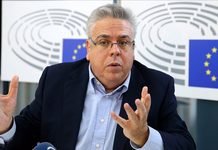

Nacho Sánchez Amor, the European Parliament rapporteur on Turkey, said the rule of law in Turkey is “a complete disaster,” at a press conference in Ankara that capped two days of meetings with government officials, opposition leaders and rights groups, Turkish Minute reported.
Speaking to reporters at the European Union Delegation office on Friday, Amor said Turkey’s political leaders only respect the parts of the constitution that protect their own power and ignore the parts that protect rights and courts. “You have a constitution, but it is applied only halfway,” he said, adding that “the constitution is not a menu, you cannot choose one part and leave the other.”
Amor is a Spanish member of the European Parliament and the assembly’s standing rapporteur on Turkey. He is in the country from December 3 to 7 on a fact-finding visit for the next annual European Parliament report on Turkey, with stops in Ankara and İstanbul.
He told journalists that he met with Finance Minister Mehmet Şimşek, Deputy Foreign Minister and EU Affairs official Mehmet Kemal Bozay, the heads of the main opposition Republican People’s Party (CHP) and the pro-Kurdish Peoples’ Equality and Democracy Party (DEM Party), ambassadors of EU member states and the head of Turkey’s Human Rights and Equality Institution as well as journalists and human rights groups.
Amor said the Turkish judiciary uses “double standards,” treating cases against the ruling Justice and Development Party (AKP) very differently from cases against the opposition. As one example, he said that when online disinformation targets the ruling party it is often ignored, but when it targets the main opposition it can lead to prosecution.
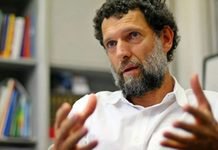
He warned that Turkey’s refusal to implement binding judgments from the European Court of Human Rights on jailed Kurdish politician Selahattin Demirtaş and businessman Osman Kavala, among others, blocks any serious progress in relations with the European Union. Implementing those rulings, he said, would be the first signal that Ankara is serious about its stated wish to move closer to Europe.
Amor also said he planned to travel to prisons over the weekend to visit Demirtaş in the northwestern city of Edirne, as well as İstanbul’s high security campus at Silivri to see jailed İstanbul Mayor Ekrem İmamoğlu, philanthropist Kavala and opposition lawmaker Can Atalay, if the authorities allow those meetings to go ahead.
On Saturday he confirmed that at least part of that plan had been approved.
“I just visited @hdpdemirtas in Edirne prison. I found him in very good spirits & shape,” Amor wrote on X, in a post at around midday local time.
Amor said Demirtaş asked him to pass on a message that “despite all difficulties & shortcomings, Turkish EU accession talks should be resumed, as this will trigger action & create leverage for all stakeholders.”
In a followup post, Amor wrote that he is taking note of Demirtaş’s views “and those of my other interlocutors” as he prepares his new report on Turkey, and that he hopes to continue their conversation “soon outside prison.”
On Thursday Amor went to the DEM Party headquarters in Ankara and met with Co-chair Tuncer Bakırhan and his team. The party said they discussed what it calls the “Peace and Democratic Society Process,” its name for a new phase of talks on Kurdish rights and the laying down of arms as well as disbanding of the outlawed Kurdistan Workers’ Party (PKK), after the group declared this year that it would end its armed campaign.
Amor told reporters this new effort to end the decades-long conflict with the PKK could open a window for better relations between Turkey and the European Union, but only if the state guarantees the rights of Kurdish citizens and respects court rulings in terrorism cases.
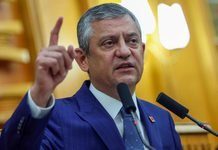
On Friday the rapporteur met with CHP Chairman Özgür Özel at party headquarters in Ankara. The CHP faces a wave of court cases that could remove elected mayors and even challenge Özel’s leadership, part of a broader crackdown on the party since last year.
Amor said Turkey’s leaders cannot expect investors or European partners to ignore such steps. He argued that even strong economic policy under Şimşek cannot repair Turkey’s standing if courts remain politicized and if the government continues to ignore both its own constitution and international court rulings.