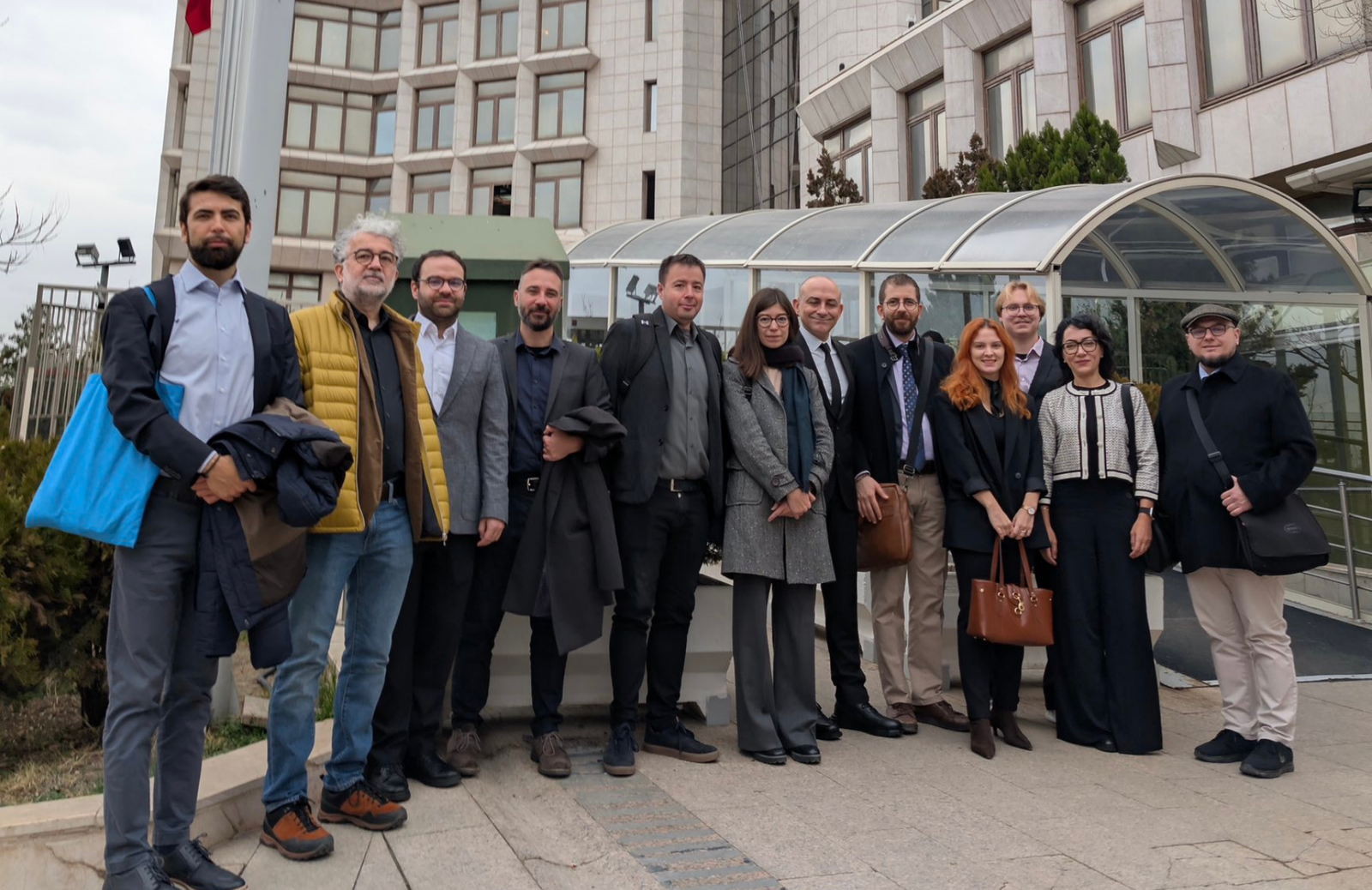
Press freedom in Turkey has deteriorated further in 2025, posing a serious threat to democracy and fundamental rights, eight leading international press freedom organizations warned on Wednesday after a joint mission to Ankara.
Following a series of high-level meetings in Ankara from November 24 to 26, the mission said escalating political pressure, judicial harassment and censorship have moved Turkey further from democratic standards, stressing that a free and pluralistic media is essential to democracy, the rule of law and human rights.
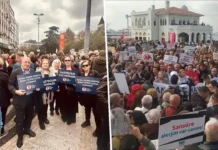
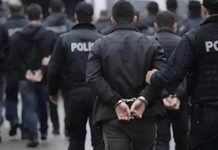
The mission pointed to intensified political interference and repression targeting journalists, during a crackdown on the Republican People’s Party (CHP), especially following large-scale protests after the detention of İstanbul Mayor Ekrem İmamoğlu on March 19, which led to mass detentions and sweeping restrictions on coverage. “Journalists documenting the events faced early-morning police raids, physical assaults and attempts by authorities to silence them,” the declaration said.
İmamoğlu, a senior member of the CHP and considered to be the strongest political rival of President Recep Tayyip Erdoğan, was detained on March 19 along with dozens of İstanbul city officials. He was named his party’s presidential candidate in March for the next general election scheduled for 2028.
His detention sparked widespread protests — the largest in Turkey since 2013. During the demonstrations nearly 2,000 people, including teenagers, students, lawyers, journalists, union leaders and human rights defenders, were detained nationwide. İmamoğlu was arrested on March 23 days later on corruption charges.
The delegation also noted a “a troubling pattern of punitive actions” against critical media, including prolonged arbitrary pretrial detention, politically motivated prosecutions and persistent violations of due process.
Regulatory bodies were found to be instrumentalized to stifle dissent. The Radio and Television Supreme Council (RTÜK) imposed heavy fines and broadcast bans on critical television channels, while the Press Advertising Agency (BİK) applied selective criteria in allocating public advertising, further straining independent outlets.
The mission urged Turkish authorities to end the judicial harassment of journalists, enforce Constitutional Court decisions on freedom of expression, halt arbitrary regulatory sanctions and restore unrestricted digital access. It also called on the government to revise overly broad criminal and counterterrorism provisions used to suppress dissent.
The organizations said Turkey must “reverse the current trajectory” and engage meaningfully with domestic and international stakeholders to protect press freedom and freedom of expression.
The delegation met with the Constitutional Court, RTÜK, the EU Delegation to Turkey, representatives of several foreign diplomatic missions and lawmakers from the CHP and the Peoples’ Equality and Democracy Party (DEM Party). However, the presidency’s Directorate of Communications, the justice and interior ministries and representatives of the ruling justice and Development Party (AKP) and its ally the Nationalist Movement Party (MHP) either declined to meet or did not respond.
The participating organizations were the International Press Institute (IPI), Amnesty International, ARTICLE 19 Europe, the Committee to Protect Journalists (CPJ), the European Centre for Press and Media Freedom (ECPMF), Osservatorio Balcani Caucaso Transeuropa (OBCT), Reporters Without Borders (RSF) and the South East Europe Media Organisation (SEEMO).
According to Expression Interrupted, a press freedom monitoring group, 27 journalists are currently behind bars in Turkey. The country’s deteriorating media landscape was further pointed out in the 2025 World Press Freedom Index published by Reporters Without Borders (RSF), where it was ranked 159th out of 180 nations.