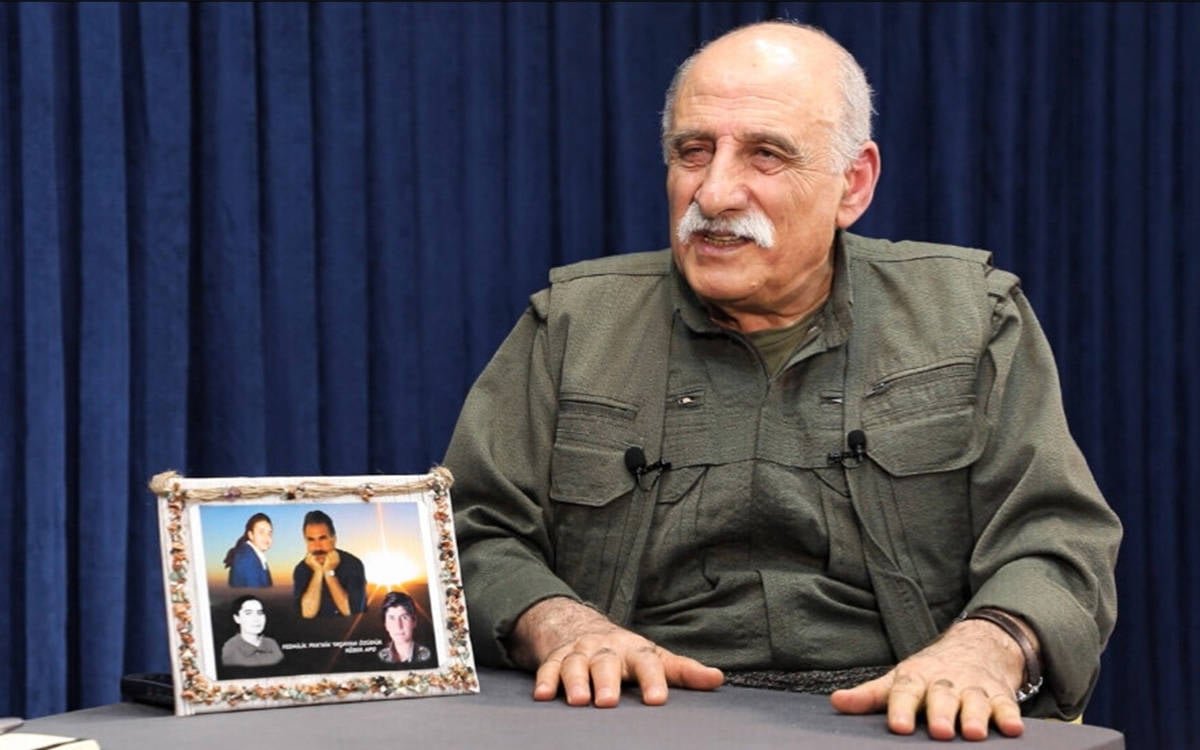
A senior leader of the outlawed Kurdistan Workers’ Party (PKK) has ruled out any return to the militant group’s former structure, saying it has effectively ended its existence and that “there will definitely be no return to the old PKK,” Turkish Minute reported.
In an interview with Medya Haber TV on Tuesday, Duran Kalkan, a member of the PKK’s executive council, said the group has “ended its organizational existence and halted all activities.”
The PKK, designated as a terrorist organization by Turkey and its Western allies, announced its decision to lay down arms and dissolve itself in May in line with a call from its jailed leader, Abdullah Öcalan, in February.
“The PKK no longer operates under its previous structure,” he said, stressing that the decision to dissolve the group was final. “Opponents should not worry and friends should not have expectations. It will not happen, and things have changed for the good. We are firmly determined on this.”
The PKK’s decision to dissolve itself came in line with a renewed peace process with the group launched last year. The group began to withdraw its militants from Turkey to northern Iraq in late October.
Kalkan described the current phase as part of a continued political struggle rather than an armed one.
He said the Kurdish movement had taken “unilateral steps of goodwill” to pave the way for negotiations with the Turkish government, referring to the group’s withdrawal of its armed units from Turkish soil.
He added that Öcalan’s “physical freedom” remains essential to the peace process. “Without Öcalan’s physical freedom, without changing his working and living conditions toward freedom, how can the Kurdish side move this process forward?” Kalkan said.
Öcalan has been held in a prison on İmralı Island in the Sea of Marmara since 1999.
The PKK leader also criticized President Recep Tayyip Erdoğan and Devlet Bahçeli, head of the far-right Nationalist Movement Party (MHP), for what he described as “positive rhetoric without concrete action.”
He warned that failure to sustain the peace process would mean “disaster” but said the Kurdish movement remained determined to see it succeed.
The renewed peace process was launched in October 2024, when Bahçeli publicly called on Öcalan to urge the PKK to disarm. In February Öcalan issued a message calling on the group to disarm and disband, describing it as a historic turning point.
In May the PKK declared that it had completed its historic mission and would end its four-decade-long armed campaign. Two months later around 30 PKK militants symbolically burned their weapons in northern Iraq, marking the first visible step toward disarming.
The PKK began its insurgency in 1984, seeking an independent Kurdish state in southeastern Turkey. It later shifted its demands to autonomy and greater political and cultural rights for Kurds.
More than 40,000 people have been killed since the conflict began.