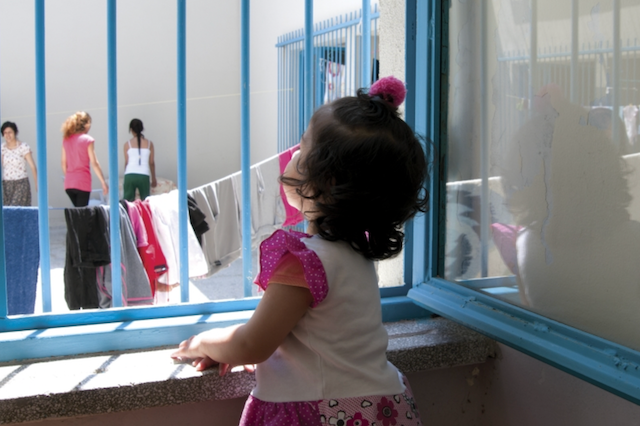
A recent report by the Civil Society in the Penal System (CISST) has revealed a growing number of children living behind bars with their mothers, while the inmate numbers continue to rise in Turkey’s overcrowded prisons.
According to CISST, as of October 1, 822 children under the age of six are living with their mothers in prison, up from 759 a year ago. There are also 4,561 minors between the ages of 12 and 18 in detention, including 187 young women.
The total prison population in Turkey has reached 420,904, exceeding the official capacity by 38 percent. This represents a 4.4 percent increase over the last six months, and a sevenfold rise since 2002, when the ruling Justice and Development Party (AKP) came to power.
The report also states that there are 19,290 incarcerated women across the country.
Turkey was by far the leader in the number of prisoners in Europe, according a 2023 report released by the Council of Europe. The country witnessed a 439 percent surge in its prison population between 2005 and 2023, surpassing all other European countries in terms of the rate of increase.
In response to this growth, Turkish government continues to expand the prison system. Six new prisons are expected to open in the next three months, followed by nine in 2026, five in 2027 and two in 2028. With these 22 new facilities, the total number of prisons in Turkey will reach 424 by the end of 2028.
The number of children accompanying their mothers in prison in Turkey skyrocketed in the aftermath of a coup attempt on July 15, 2016, when thousands of women were arrested due to their alleged links to the faith-based Gülen movement.
Turkish President Recep Tayyip Erdoğan has been targeting followers of the Gülen movement, inspired by the late Muslim cleric Fethullah Gülen, since corruption investigations in December 2013 implicated him as well as some members of his family and inner circle.
Dismissing the investigations as a Gülenist coup and a conspiracy against his government, Erdoğan began to target the movement’s members. He designated the movement as a terrorist organization in May 2016 and intensified the crackdown on it following an abortive putsch in July of the same year that he accused Gülen of masterminding. The movement strongly denies involvement in the coup attempt or any terrorist activity.
Under Turkish law, women who are pregnant or who have given birth within the past 18 months cannot be made to serve prison sentences. Article 16(4) of the Law on the Execution of Sentences stipulates that incarceration must be postponed for the duration of pregnancy and until the child is 18 months old.
However, these protections apply only after a sentence has become final. In practice, courts have ordered the pretrial detention of pregnant women while their cases are still under appeal, arguing that the postponement rule does not extend to pretrial custody.
Critics say this interpretation undermines both the spirit of the law and international standards such as the United Nations’ “Bangkok Rules,” which call for non-custodial measures for pregnant women and mothers with young children.
Founded in 2006 in İstanbul, CISST advocates for the protection of prisoners’ rights and freedoms. The organization is dedicated to ensuring that prison conditions, practices and policies in Turkey uphold human dignity and adhere to universal human rights standards.