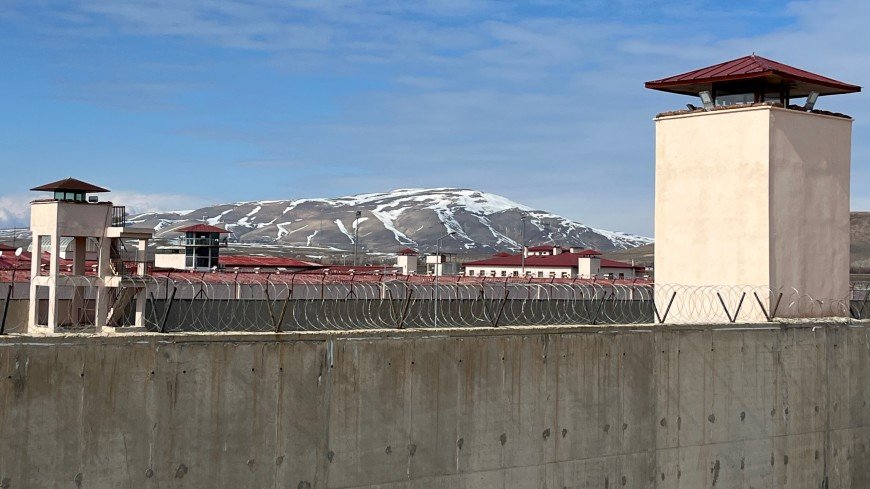
Approximately 4,800 minors in Turkey aged 12 to 18 are being held in juvenile detention facilities, of which some 70 percent have not been sentenced by a court of law, Turkish Minute reported, citing the Cumhuriyet daily.
The report said many minors who are released return to detention after failing to get support in basic areas such as education, jobs and housing.
The data was discussed as the Youth Re-autonomy Foundation of Turkey, a civil society group working with at-risk children, released monitoring findings from its Youth Center Program (GEM).
The foundation said the program helps keep children from entering the justice system and reduces risky behavior through regular case followup, psychosocial support, group activities and family-focused work, according to the report.
The issue has attracted attention as populations of both in juvenile detention facilities and adult prisons rise and overcrowding worsens.
A 2025 report by the Civil Society in the Penal System (CISST) also said 822 children under the age of six were living in prison with their mothers as of October 1, up from 759 a year earlier.
The number of children accompanying their mothers skyrocketed after a 2016 coup attempt, when thousands of women were jailed over allegations of ties to the Gülen movement, a faith-based network the Turkish government blames for the coup attempt and designates as a terrorist organization. The movement denies any involvement with the coup attempt and any terrorist activity.
In recent years rights advocates and international monitors have also raised concerns that minors have been swept into terrorism investigations linked to their families or social circles.
United Nations special rapporteurs have warned that Turkey was using terrorism designations in a way that can lead to raids, arrests and long pretrial detention for people whose conduct involves education, family life and peaceful religious activity.
The UN experts pointed to police operations on May 7, 2024, and May 6, 2025, and said they formed part of a wider pattern of arbitrary detention of people accused of Gülen links, including students and minors.
In the May 2024 operation in İstanbul, the UN experts said authorities opened a terrorism investigation and approved surveillance that included minors as young as 12 and 16 on suspicion of “membership in an armed terrorist organization.”
They said police carried out coordinated dawn raids, detained adults and “apprehended” 15 minors aged 13 to 17, many of them the children of the detainees, describing the minors as being treated as criminal suspects during the process.
A court later convicted 19 people on terrorism charges in the trial of those minors, sentencing them to prison terms ranging from three to seven years.
Turkey formally designated the Gülen movement as a terrorist organization in May 2016, months before the attempted coup, and expanded the crackdown after July 2016.
According to the latest figures from the Justice Ministry, more than 126,000 people have been convicted for alleged links to the movement since 2016, with 11,085 still in prison. Legal proceedings are ongoing for over 24,000 individuals, while another 58,000 remain under investigation nearly a decade later.
In addition to the thousands who were jailed, scores of other Gülen movement followers had to flee Turkey to avoid the government crackdown.