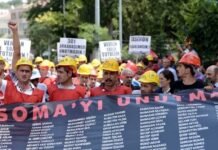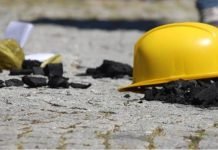
A total of 1,267 miners have died in work-related accidents in Turkey since 2013, according to a new report by the Health and Safety Labour Watch Turkey (İSİG).
Coal mines accounted for the largest share of fatalities, with 682 deaths (55 percent). Marble quarries followed with 178, while stone quarries recorded 132 deaths.
Crushing and cave-ins were the leading cause of death, accounting for 40 percent of all mine fatalities. Poisoning and suffocation made up 19 percent of deaths, while explosions and fires accounted for 8 percent.
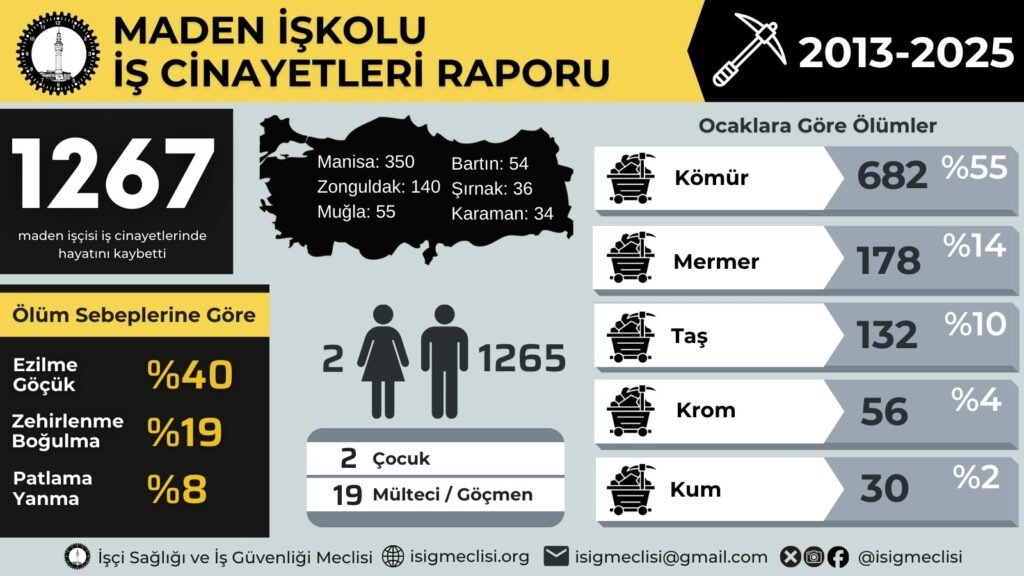
Manisa, the center of lignite coal mining in Turkey, recorded the highest number of work-related deaths with 350. The province was the site of the 2014 Soma disaster, in which 301 miners were killed. It was followed by Zonguldak, the center of hard coal mining, where 140 miners have lost their lives.
The deceased included two minors aged 16 and 17, as well as 19 migrant workers. The report also said 68 percent of the workers were not members of any labor union.
İSİG dedicated the report to miners at the POLYAK Mining Company in İzmir province as a show of solidarity. Some 1,243 miners at the company stopped work on February 20 after the mine was sold to a Chinese company six months earlier, with workers saying they had not received one-and-a-half months of back pay or other benefits arising from the transfer and from the collective bargaining agreement.
İSİG said miner deaths have continued to rise since the Justice and Development Party (AKP) came to power in November 2002, citing disasters in Küre (2004), Mustafakemalpaşa (2009), Dursunbey (2010), Kozlu (2013), Soma (2014), Ermenek (2014), Şirvan (2016), Şırnak (2017), Amasra (2022) and İliç (2024).
Despite aligning its occupational health and safety legislation with EU standards after 1999 and ratifying relevant International Labour Organization (ILO) conventions in 2005, Turkey has a poor track record of implementation and enforcement, with workplace accidents remaining a chronic problem.
According to İSİG data, nearly 35,000 workers have died in workplace accidents since 2002, with growing economic instability and rising informal employment further undermining workplace safety in recent years.