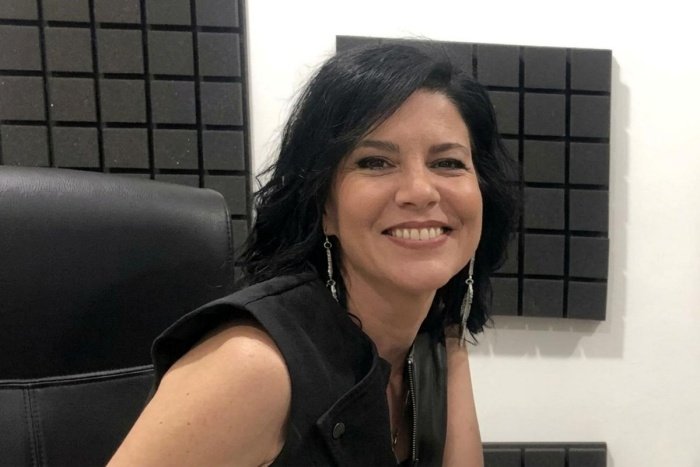
Turkish journalist Oya Lale Arslan was detained Friday as part of an investigation into her social media posts and YouTube broadcasts on suspicion of publicly disseminating misleading information and spreading terrorist propaganda, the TR724 news website reported.
The Ankara Chief Public Prosecutor’s Office is investigating Arslan over her social media posts and YouTube broadcasts.
Police searched her home following her detention and seized digital materials for examination.
Authorities have not disclosed which posts or broadcasts are the subject of the investigation or identified the terrorist organization Arslan is accused of promoting. It was also not immediately clear whether prosecutors would seek her arrest pending trial.
Arslan had recently been targeted by pro-government figures and social media accounts after hosting Germany-based Turkish journalist Erk Acarer on her YouTube program, the Cumhuriyet daily reported. There has been no official statement linking that particular broadcast to the investigation into Arslan.
Some pro-government media outlets, however, highlighted Arslan’s broadcasts with Acarer while reporting on her detention, claiming the programs were connected to the accusations against her. Prosecutors have not publicly confirmed those reports or provided evidence identifying the content considered criminal.
Arslan is a veteran journalist, television presenter and broadcaster whose media career began in the early 1990s. She worked in radio and television before joining state broadcaster TRT Ankara Radio, where she worked as a producer and presenter between 2004 and 2009. She subsequently joined opposition broadcaster Halk TV as a news presenter and remained there until 2019.
After leaving Halk TV, Arslan helped establish Bizim TV, a YouTube-based news outlet, and continued hosting political and current affairs programs online.
One of the offenses cited in the investigation, “publicly disseminating misleading information,” was introduced in 2022 under Article 217/A of the Turkish Penal Code as part of legislation commonly referred to as Turkey’s “disinformation law.”
The provision allows for prison sentences of one to three years for people who publicly disseminate what authorities consider misleading information concerning the country’s internal or external security, public order or general well-being with the aim of causing fear, anxiety or panic and in a manner capable of disturbing public peace.
The Council of Europe’s Venice Commission warned when reviewing the legislation that the provision was written in overly broad terms and could apply to a wide range of expression, including social media posts, “likes” and reposts. It also said statements of opinion should not fall within the provision because opinions cannot be objectively proven true or false.
Journalists and press freedom groups say Article 217/A has increasingly been used against news reporting since it took effect.
A 2026 report by the Journalists Union of Turkey (TGS) found that at least 88 journalists had been subjected to 113 investigations under Article 217/A since its introduction. Twenty-nine journalists had been detained and six arrested pending trial in cases involving the provision, according to the report.
The union said 20 of the 67 journalist detentions it documented between April 2025 and April 2026 were based on accusations under Article 217/A.
Arslan is also being investigated on suspicion of spreading terrorist propaganda, an accusation frequently brought against journalists, politicians and activists in Turkey. Authorities had not released details Friday about the basis of that accusation in Arslan’s case.
Reporters Without Borders (RSF) ranked Turkey 163rd out of 180 countries in its 2026 World Press Freedom Index, down from 159th the previous year. The organization said counterterrorism legislation as well as accusations of disinformation, insulting the president and denigrating state institutions are regularly used against journalists and media workers.