Turkish authorities issued an arrest warrant in 2024 on terrorism charges for a Kurdish man who has been missing since he was allegedly taken into custody by police officers in İstanbul in 1995, a response by Turkey’s interior minister to a parliamentary question revealed.
In his November 18 written response Interior Minister Mustafa Çiftçi said the İstanbul 8th Criminal Magistrate of Peace had issued the order for the arrest of Fehmi Tosun on charges of membership in a terrorist organization, 29 years after his disappearance, according to the T24 news website.
Çiftçi also said the İstanbul Chief Public Prosecutor’s Office had previously investigated Tosun for alleged membership in an armed terrorist organization but had decided in February 2007 not to prosecute him because the statute of limitations had expired.
The minister said Tosun’s disappearance was among the cases under consideration by the UN Working Group on Enforced or Involuntary Disappearances, adding that Turkish authorities had no record of his detention.
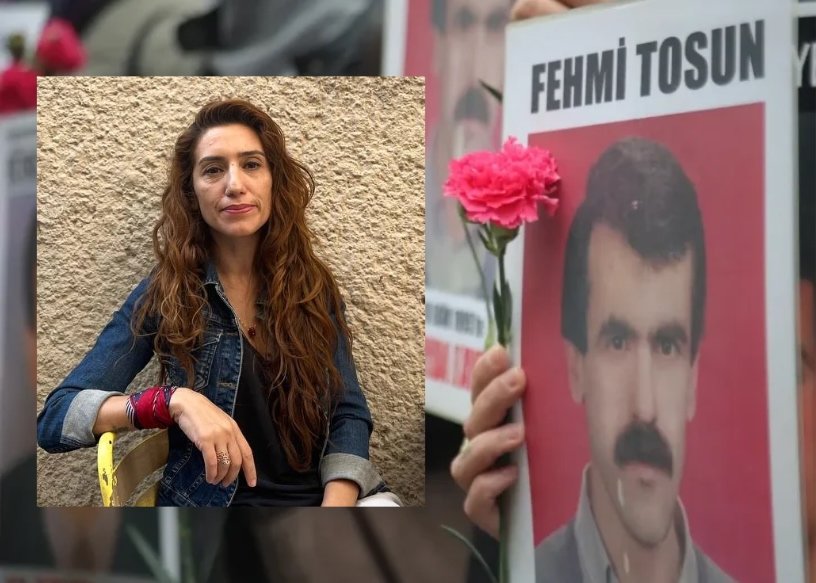
Besna Tosun, the daughter of the missing man, said the family was shocked by the minister’s response and could not understand why her father was being sought on terrorism charges as if he were still alive.
She said the family had learned that an investigation launched in 2023 led to a criminal case in 2024, with a confidentiality order imposed on the case file.
The parliamentary question, submitted in September 2025 by Okan Konuralp, then a lawmaker from the Republican People’s Party (CHP), sought information about the investigation into Tosun’s enforced disappearance, the possibility of reopening it and the identity of the owner of the vehicle in which Tosun was taken away. Çiftçi did not directly address any of those questions.
Konuralp’s initiative followed Besna Tosun’s testimony on August 20, 2025, before a parliamentary commission established to oversee efforts to resolve Turkey’s decades-long conflict with the outlawed Kurdistan Workers’ Party (PKK). The PKK, which launched an armed insurgency in 1984, announced in May 2025 that it would lay down its arms to pursue a democratic struggle for the rights of the Kurdish minority.
Besna Tosun, who was 11 when her father disappeared, told the commission that the family had provided police with the vehicle’s license plate number but had been unable to identify its owner. She also said prosecutors had never taken witness statements from either her or her brother Ali, despite their requests.
Fehmi Tosun, a 36-year-old Kurdish construction worker from the southeastern province of Diyarbakır and a father of five, was forcibly taken away by three men in civilian clothes outside his home in İstanbul’s Avcılar district on October 19, 1995, in front of his family and neighbors. Amnesty International identified the men as plainclothes police officers in an urgent appeal issued on November 7, 1995.
In a 2003 friendly settlement before the European Court of Human Rights (ECtHR), the Turkish government acknowledged that its inadequate investigation into Tosun’s disappearance violated Article 2 of the European Convention on Human Rights, which protects the right to life, and pledged to ensure effective investigations.
Despite this commitment, prosecutors closed the investigation into Tosun’s disappearance after the statute of limitations expired. The family’s subsequent legal challenges, including an application to Turkey’s Constitutional Court, were unsuccessful.
The Tosun family has been campaigning for justice for 31 years along with the Saturday Mothers, a group of relatives of victims of enforced disappearance and human rights activists who have been holding weekly vigils in İstanbul since 1995.
The group devoted its 1,125th weekly vigil on October 17 to Tosun’s disappearance, renewing calls for his fate to be established and those responsible brought to justice.