A Syriac community newspaper in southeastern Turkey has been excluded from a state-administered aid program for minority publications under rules limiting the support to Istanbul-based Armenian, Greek and Jewish newspapers, the Agos news website reported, prompting a lawmaker to allege discriminatory treatment of minority media outside Istanbul.
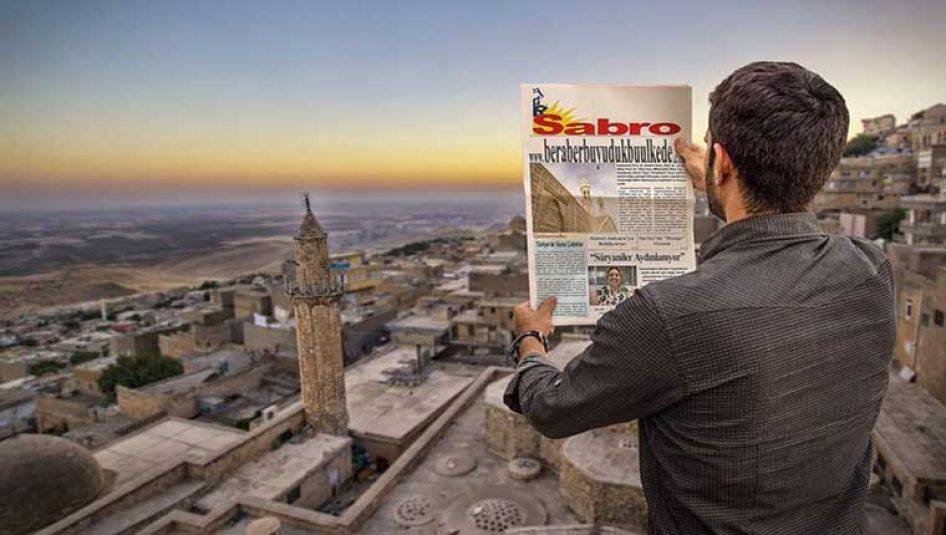
Turkey’s Press Advertisement Agency (BİK), which distributes official notices and advertising revenue to newspapers, limited its 2026 aid for minority publications to Armenian, Greek and Jewish community periodicals whose management offices are in Istanbul. The rule leaves out Gazete Sabro, a newspaper based in the southeastern province of Mardin, serving Turkey’s Syriac Christian community.
Mustafa Yeneroğlu, an Istanbul lawmaker from the Democracy and Progress Party (DEVA), raised the issue in a written parliamentary question to Turkish Vice President Cevdet Yılmaz, asking why Sabro was excluded and what legal basis BİK had for applying an Istanbul requirement.
Sabro said BİK rejected its application in March, citing the requirement that a publication’s management office be in Istanbul. The newspaper later objected to the decision, saying the rule violated the constitutional principle of equality and was inconsistent with the purpose of supporting minority media.
Yeneroğlu said BİK repeated the Istanbul condition in a June 8 response to Sabro’s information request but did not provide a legal justification.
“This condition directly excludes minority press outlets publishing outside Istanbul,” Yeneroğlu said in the parliamentary question.
BİK is a public legal entity that oversees the distribution of official advertisements and public notices, a key source of revenue for many newspapers in Turkey. It also provides limited financial support to some publications.
BİK’s general assembly decided on February 13 to allocate 471,000 Turkish lira (about $11,700) in aid for minority newspapers in 2026. Its board later ruled that the aid would be available only to periodicals published by Armenian, Greek and Jewish communities and whose management offices are in Istanbul.
That formulation excludes Sabro, which is published in Mardin, a historically multiethnic province near Turkey’s border with Syria and home to one of the country’s oldest Syriac Christian communities.
Yeneroğlu said minority newspapers should not be seen only as news outlets but also as institutions that preserve the language, culture and collective memory of their communities.
“Considering the declining populations of non-Muslim communities, the existence of these newspapers is also important for the protection of cultural pluralism and democratic society,” he said.
The 1923 Treaty of Lausanne includes protections for Turkey’s non-Muslim minorities. Syriac Christians, also known as Assyrians, have argued that they should receive equal treatment in minority-related rights, a dispute reflected in Sabro’s challenge to the Istanbul-based aid rule.
Sabro argued in its objection that rights linked to minority status and equal treatment should apply across Turkey, not only in Istanbul.
“Restricting aid only to Istanbul-based publications puts minority press operating in Mardin at a disadvantage and damages the constitutional principle of equality,” the newspaper said in its objection letter.
The newspaper said Mardin’s historic role as a multilingual and multicultural center made the exclusion especially problematic. It said limiting the support to Istanbul-based publications restricted the ability of Syriac citizens in southeastern Turkey to access news and preserve their culture.
Sabro asked BİK to reverse the rejection and approve its application, saying it has been published from Mardin for 13 years and reaches readers in various parts of Turkey.
In his parliamentary question Yeneroğlu asked the government to disclose how much cash aid and official advertising support minority publications have received since 2012, broken down by year.
He also asked which newspapers and magazines received support, which were excluded and why. He specifically asked why Sabro was not included, whether the Istanbul condition was based on any concrete need and whether BİK considered the situation of minority publications outside Istanbul before adopting the rule.
Yeneroğlu said BİK has provided cash support to minority newspapers since 2011 but that payments were skipped in some years and sharply reduced in others.
He also asked whether the government plans to introduce rules to support excluded minority publications, including Sabro, and to establish objective criteria to prevent discrimination.