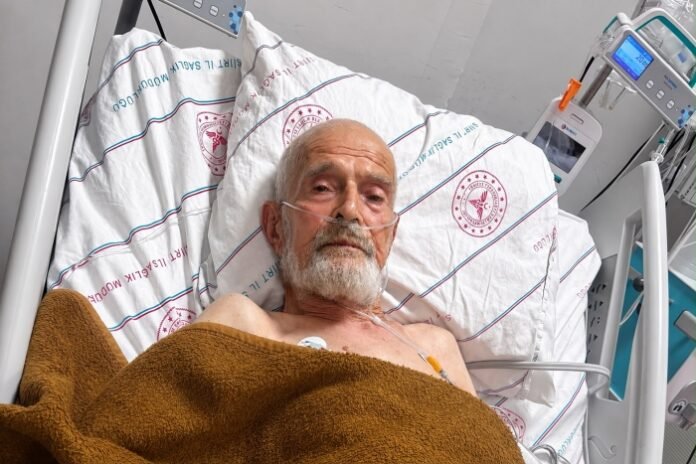
Abdülalim Kaya, an 83-year-old seriously ill Kurdish man whose requests for suspension of his sentence were repeatedly rejected despite a medical report finding him 93 percent disabled, died in a hospital in Siirt on July 20, the TR724 news website reported.
Kaya passed away after he was hospitalized with kidney failure and fluid buildup in his lungs, 17 months after his release on probation.
Kaya was released on February 28, 2025, after spending nearly 23 months in prison, during which authorities repeatedly rejected requests to suspend his sentence. He suffered from dementia, kidney failure, heart disease and prostate problems as well as severe hearing and vision loss.
Kaya was sentenced in 2009 to five years in prison on charges of disseminating terrorist propaganda when he took part in a demonstration in Siirt the previous year. The conviction was upheld by the Supreme Court of Appeals in 2011.
After remaining at large for years, Kaya began serving the sentence in October 2020, shortly after undergoing prostate surgery. He was held in solitary confinement for 60 days and suffered gastrointestinal bleeding before his sentence was suspended for six months on health grounds in January 2021.
A medical board at a hospital in Siirt issued a report in October 2022 finding Kaya 93 percent disabled, unable to live independently and at clear risk of death due to his illnesses.
Turkey’s Council of Forensic Medicine (ATK), however, subsequently found him fit to remain in prison. He was returned to prison on March 31, 2023, and later transferred between several facilities.
His family said Kaya’s health deteriorated sharply in prison. By the time of his release, he could no longer walk or attend to his basic needs without assistance and sometimes failed to recognize relatives due to advanced dementia.
During one prison visit, Kaya repeatedly told his children that he could no longer endure the conditions and feared he would die behind bars.
Turkey’s Law on the Execution of Sentences and Security Measures allows the suspension of a sentence when a seriously ill or disabled prisoner cannot manage prison life independently and does not pose a serious and concrete danger to society. Rights groups say the provision is frequently not applied in practice.
The ATK has frequently faced criticism over its reports finding seriously ill prisoners fit to remain incarcerated. Rights advocates question its independence and accuse it of contributing to the prolonged imprisonment of political prisoners.