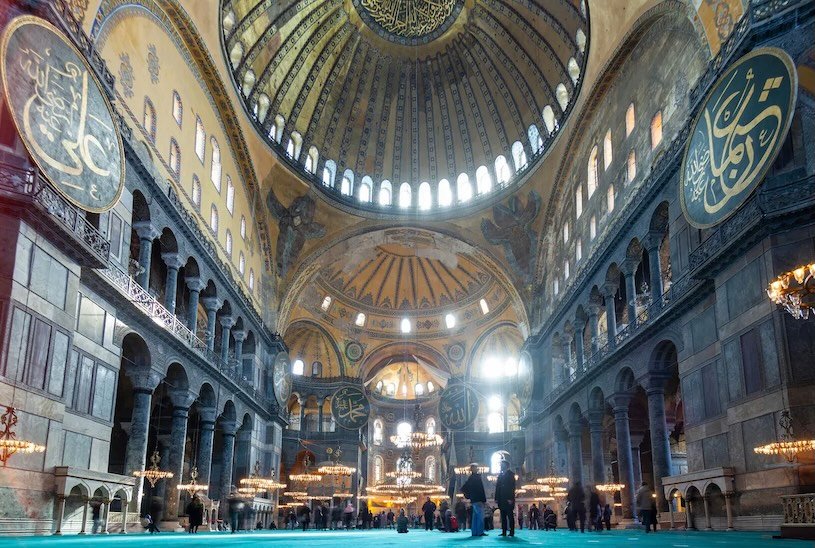
Two Russian tourists were detained in İstanbul after one of them allegedly read aloud from the Bible at Hagia Sophia, the sixth-century Byzantine cathedral reconverted into a mosque in 2020, Turkish Minute reported.
The couple, identified by Russian media as Igor and Viktoria Filonov, were detained on July 14 in the visitor section of Hagia Sophia after arriving in İstanbul from Moscow the previous day.
The state-run Anadolu news agency identified the tourists only by their initials and said they were 32 and 36 years old. Police detained them after determining that they had been reading the Bible aloud, according to the agency.
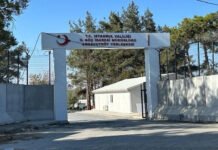
Police launched proceedings against them on suspicion of “inciting the public to hatred and hostility” under Article 216 of the Turkish Penal Code before transferring them to the İstanbul Provincial Directorate of Migration Management.
Russian media reported that the couple had been taken to a deportation center and could face removal from Turkey. The Russian Consulate General in İstanbul said its diplomats were in contact with their lawyer and Turkish officials.
The case came about three months after two Greek tourists were detained for displaying a flag bearing a Byzantine double-headed eagle and the Orthodox Christian slogan “Orthodoxy or death” on the upper floor of Hagia Sophia.
An İstanbul court later handed down 10-month suspended sentences to the pair on conviction of insulting a segment of society, after which the couple was released.
Hagia Sophia was built in the sixth century under Byzantine Emperor Justinian I and served for centuries as one of Christianity’s most important churches. It was converted into a mosque following the Ottoman conquest of Constantinople in 1453, and the secular Turkish republic turned it into a museum in 1934.
President Recep Tayyip Erdoğan ordered Hagia Sophia reopened for Muslim worship in 2020 after a Turkish court annulled the 1934 decree that had established it as a museum.
The conversion fulfilled a longstanding demand among Turkey’s Islamists and nationalists but drew criticism from Greece, Orthodox Christian leaders and cultural heritage organizations, which described it as a blow to Turkey’s secular legacy and the monument’s status as shared world heritage.
Hagia Sophia is part of the UNESCO World Heritage-listed Historic Areas of İstanbul.