Turkey should adopt a mental health law and avoid detaining migrant families with children, according to reports published Monday by the Council of Europe’s anti-torture committee.
The European Committee for the Prevention of Torture and Inhuman or Degrading Treatment or Punishment (CPT) examined psychiatric hospitals and care homes in April 2018, followed by immigration detention facilities and İmralı Prison in September 2022.
Both reports and the government’s responses were released at Turkey’s request, eight years after the first visit and four years after the second.
The 2018 inspection covered five psychiatric establishments and three care centers.
The absence of a mental health law left gaps in rules on hospitalization against a patient’s will, consent to treatment and restraints, the committee found.
Many patients and residents listed as receiving care voluntarily were confined without the legal protections required for involuntary confinement.
Buildings and living conditions were generally satisfactory, but some hospital patients had no access to outdoor exercise for weeks or months.
Staff workloads and shortages also limited treatment and activities, while the government’s response outlined instructions to improve outdoor access, staffing and care.
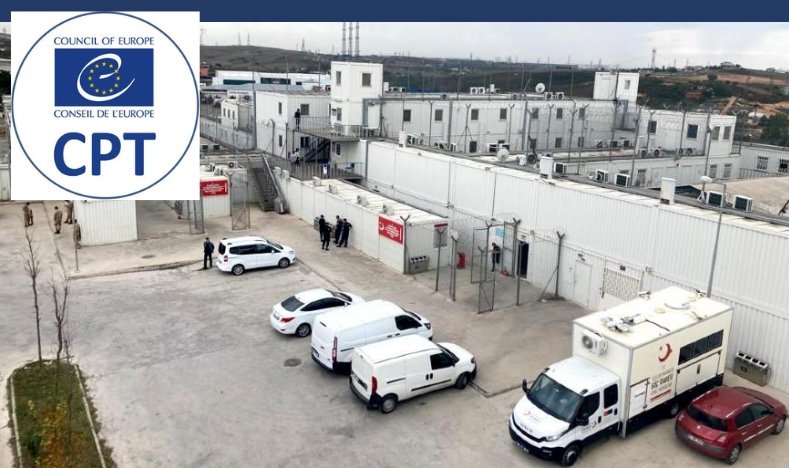
The 2022 inspection examined centers used to detain foreign nationals awaiting deportation.
Most detainees interviewed did not allege abuse, but some described punches by staff in the southeastern city of Gaziantep and excessive force with batons by gendarmes performing policing duties in İstanbul’s Silivri district.
Complaints of verbal abuse at those centers and İstanbul’s Tuzla center prompted a call for sanctions against staff responsible for mistreatment.
Detainees at Tuzla were usually locked in containers for more than 23 hours a day, with access to the outdoors limited to 20 to 30 minutes, the committee found.
Detention of families with children should be avoided and any confinement of children should last as little time as possible, the CPT urged.
Children were not issued detention orders and stayed in centers at their parents’ request, the government maintained in its response.
The delegation also visited the four prisoners then held at İmralı, an island prison in the Sea of Marmara where Abdullah Öcalan has been imprisoned since 1999.
Öcalan founded the Kurdistan Workers’ Party (PKK), which Turkey and its Western allies designate as a terrorist organization and which fought the Turkish state in a conflict that killed more than 40,000 people.
All four prisoners had spent years in solitary confinement and could socialize for only nine hours a week, the committee found.
Healthcare and living conditions were generally satisfactory, but family visits had been blocked since August 2019, with one exception, and lawyers had also been barred.
The combined restrictions could violate Article 3 of the European Convention on Human Rights, which prohibits torture and inhuman or degrading treatment, the CPT warned.
The findings predate a peace initiative in which the PKK announced in May 2025 that it would disband and end its armed campaign.
Family contact has since resumed, with Öcalan receiving a visit from relatives on October 9, according to his lawyers.
This article is republished from Turkish Minute.