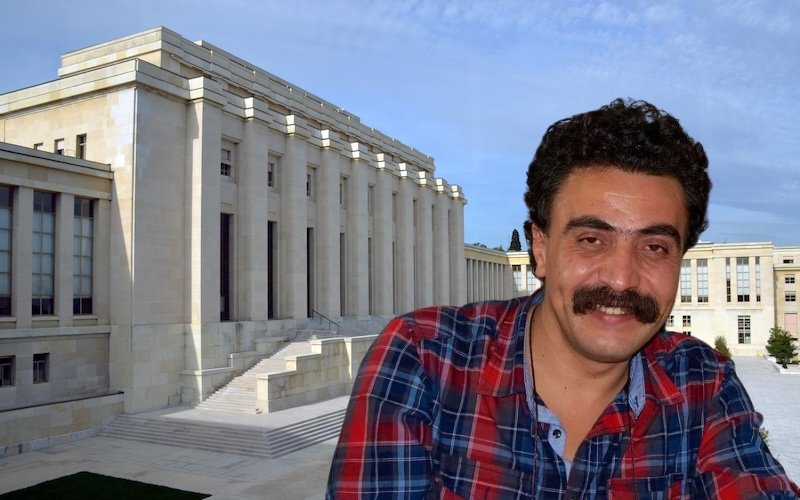
The UN Working Group on Arbitrary Detention has found that Turkey arbitrarily kept prominent human rights lawyer Selçuk Kozağaçlı in prison after he became eligible for conditional release, calling for his immediate release.
In its opinion adopted on September 3, the working group found that authorities had unlawfully applied conditional-release rules, penalized Kozağaçlı for exercising his fundamental freedoms, denied him effective procedural safeguards and discriminated against him because of his opinions and status as a human rights defender. The Progressive Lawyers’ Association (ÇHD) publicized the opinion on November 23.
The working group also called for Kozağaçlı to receive compensation and for an independent investigation into the violations of his rights.
Kozağaçlı became eligible for conditional release in February 2025 and was released on April 16 following a favorable prison board assessment. He was rearrested less than 24 hours later after prosecutors challenged the decision.
Kozağaçlı, the honorary president of the ÇHD, was arrested in November 2017 during a crackdown on lawyers affiliated with the association and the People’s Law Office. In November 2022 an İstanbul court convicted him of membership in the outlawed Revolutionary People’s Liberation Party-Front (DHKP-C), designated as a terrorist organization by Turkey, the United States, the EU and several other countries, and sentenced him to 12 years in prison.
Turkey’s Supreme Court of Appeals reduced his sentence to more than 11 years and upheld the conviction in April 2024. Kozağaçlı and his colleagues have maintained that the prosecution was politically motivated and linked to their professional activities.
The Working Group did not examine the validity of his original conviction, limiting its findings to his imprisonment after he became eligible for conditional release in February 2025.
The panel found that authorities had continued to rely on a conduct score reduced by a disciplinary penalty that had already been lifted. It also criticized an unwritten requirement that Kozağaçlı demonstrate that he had severed alleged organizational ties. The panel said the reversal of his release without any new evidence lacked the predictability required under international law.
The panel further concluded that Kozağaçlı’s continued imprisonment violated his rights to freedom of opinion, expression, peaceful assembly and association. It found that disciplinary penalties for peaceful protests, including hunger strikes and chanting slogans, had been used to prolong his imprisonment, while his release was also conditioned on disavowing activities connected to his legal work and professional association.
The working group raised concerns about the independence and impartiality of prison review boards chaired by prosecutors, who could also challenge decisions granting release. It also cited inadequate reasoning in judicial decisions and ineffective legal remedies, noting that Kozağaçlı’s application to Turkey’s Constitutional Court challenging his rearrest had been pending since May 2025.
The panel said requiring Kozağaçlı to demonstrate a change in his beliefs as a condition of release amounted to discriminatory treatment rather than a legitimate assessment of his eligibility for conditional release.
Kozağaçlı has represented clients in politically sensitive cases, including the families of 301 miners killed in a 2014 mine disaster and dismissed teachers Nuriye Gülmen and Semih Özakça, who went on a hunger strike to protest their dismissal following a coup attempt in 2016.
In the latest global Rule of Law Index released in October 2026 by the World Justice Project, Turkey was ranked 117th out of 143 countries overall, with declines in fundamental rights, criminal justice, freedom of expression and judicial checks on government power.