
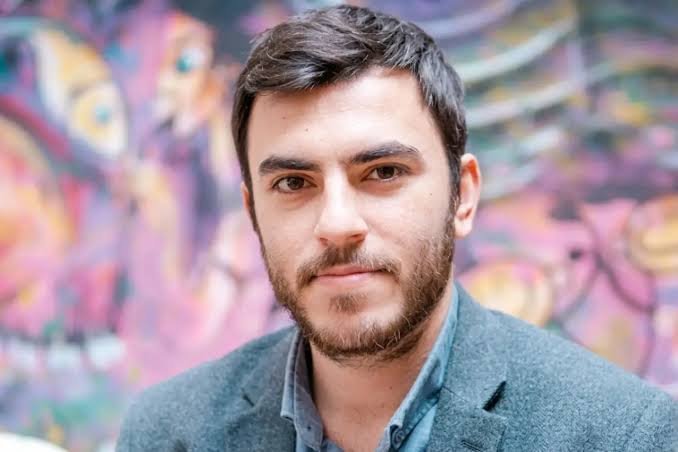
A Turkish court on Wednesday jailed journalist İsmail Arı pending trial on a disinformation charge over a complaint by the former head of the country’s broadcasting regulator, the Birgün daily reported.
Arı, a reporter for the opposition-aligned Birgün daily known for investigating alleged corruption and irregularities in public institutions, was detained on October 20 after reporting to the Ankara Police Department to give a statement.
The investigation was launched following a complaint by Ebubekir Şahin, former chairman of the Radio and Television Supreme Council (RTÜK), Turkey’s broadcasting regulator, which oversees television and radio stations and has frequently imposed penalties on opposition broadcasters.
Arı was detained on allegations of insulting a public official in connection with his duties and publicly disseminating misleading information. After spending the night in police custody, he appeared before prosecutors on October 21 and was referred to a criminal magistrate of peace with a request for his pretrial detention on the disinformation charge.
The court ordered his arrest.
After the ruling, Arı said the judge had not listened to his lawyers and that he was being jailed on a charge that would not require him to serve time even if convicted.
The detention prompted criticism from opposition politicians and journalists organizations, which accused authorities of targeting Arı over his reporting on alleged nepotism involving Şahin.
Murat Emir, deputy parliamentary group leader of the opposition New Party, said in a post on X that Arı had documented the appointment of Şahin’s relatives to positions at RTÜK.
Emir accused Şahin of turning the broadcasting regulator into an instrument of censorship against opposition television stations while using the institution to provide jobs for his associates. He suggested that Arı’s detention was intended to protect public officials from scrutiny.
Arı had previously reported allegations that Şahin appointed relatives to management positions at RTÜK during his tenure. In a September 2 post on X Arı said he was facing a separate criminal case for allegedly harassing Şahin by calling and messaging him to seek comment on the allegations. Arı said the charges were brought two years after his reporting and that contacting the subject of a news story for comment is standard journalistic practice.
According to Arı, prosecutors treated his attempts to offer Şahin an opportunity to comment as evidence against him.
Şahin, who now heads the Türk Telekom telecommunications company, has also taken legal action against Arı over separate reporting about his daughter’s appointment to Turkey’s Competition Authority without a competitive civil service examination.
An earlier investigation was launched in February following a complaint by Şahin accusing Arı of insult. Şahin subsequently filed a lawsuit for damages against the journalist and BirGün, saying the reporting violated his personal rights. The newspaper has defended the accuracy of its reporting.
It was not immediately clear which specific reports or statements formed the basis of the latest criminal investigation.
The Press Workers Union (DİSK Basın-İş), affiliated with the Confederation of Progressive Trade Unions of Turkey (DİSK), condemned Arı’s detention and demanded his release.
In a statement posted on X on October 20, the union accused the government of increasingly restricting press freedom through criminal investigations, detentions and arrests targeting journalists.
The union said Arı was already standing trial in one case when he was detained in connection with another investigation. “Journalism is not a crime,” the union said, calling for an end to practices it described as attempts to intimidate journalists and silence critical reporting.
The Journalists Union of Turkey (TGS) also condemned Arı’s detention, saying such measures criminalized journalism and threatened constitutional protections and the public’s right to access information.
Both unions called for demonstrations in 10 cities on October 24 to protest censorship and demand press freedom.
Arı previously spent 75 days in pretrial detention after his arrest on March 22 over accusations of spreading disinformation through his reporting on alleged irregularities at public institutions and foundations linked to family members of President Recep Tayyip Erdoğan.
Prosecutors subsequently indicted him on charges of publicly disseminating misleading information and violating confidentiality, seeking a prison sentence of more than eight years.
He was released pending trial on June 5 at his first hearing without being placed under judicial supervision.
Turkey’s disinformation law, enacted in October 2022, provides for prison sentences of one to three years for publicly spreading false information concerning national security, public order or public health with the intention of causing fear, panic or anxiety.
Press freedom advocates have criticized the legislation, warning that its broadly worded provisions can be used to criminalize reporting critical of the government. Turkish authorities maintain that the law is intended to combat deliberately false information.
According to Expression Interrupted, a press freedom monitoring group, 25 journalists are currently behind bars in Turkey. The country’s deteriorating media landscape was further pointed out in the 2026 World Press Freedom Index published by Reporters Without Borders (RSF), where it was ranked 163rd out of 180 nations.