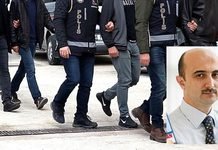
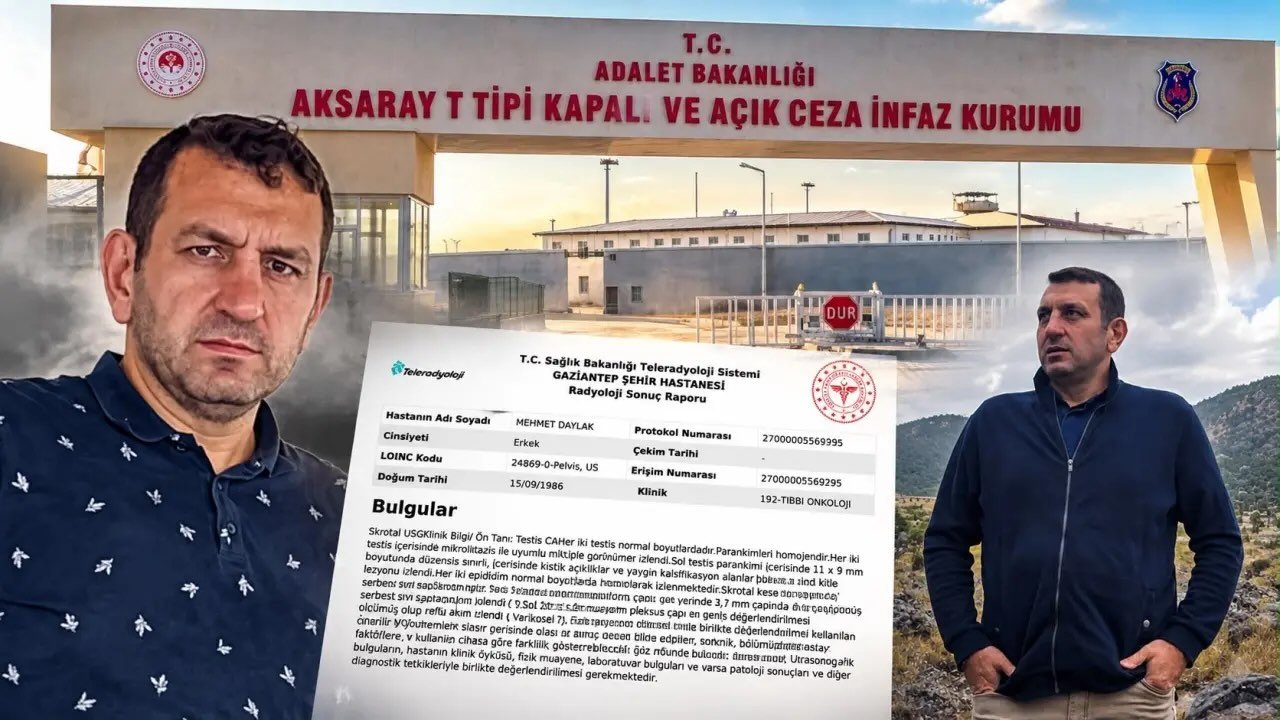
A former Turkish teacher who underwent extensive treatment for advanced cancer has been jailed again over alleged links to the faith-based Gülen movement 13 days after his release, preventing him from undergoing a medical examination for a possible recurrence of the disease, the TR724 news website reported.
Mehmet Daylak, who has been assessed as 86 percent disabled under Turkey’s medical disability classification, indicating a severe loss of bodily function, was taken into custody on October 7, a day before he was scheduled to undergo a PET scan, according to his wife.
The Gaziantep 2nd High Criminal Court sentenced Daylak to more than seven years in prison on September 24 for membership in an armed terrorist organization over alleged links to the Gülen movement but ordered his release pending appeal. His conviction is not yet final.
Daylak was arrested on May 5, 2025, as part of an investigation into the alleged restructuring of the Gülen movement.
His wife said recent MRI and CT scans had shown abnormalities suggesting the cancer might have returned. After his release in September, Daylak visited Hacettepe University Hospital in Ankara, where a PET scan was scheduled for October 8.
Police detained Daylak in the central province of Aksaray following a prosecutor’s objection to a court order for his release. His wife said the family had submitted medical reports and requests for examinations to the authorities but had been unable to secure his release. Daylak is currently being held at Aksaray Prison.
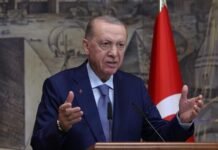
Turkish President Recep Tayyip Erdoğan has targeted the faith-based Gülen movement, inspired by Muslim cleric Fethullah Gülen, who died in 2024, since corruption investigations in December 2013 implicated Erdoğan as well as some members of his family and inner circle. He dismissed the probes as a Gülenist conspiracy and designated the movement as a terrorist organization in May 2016, intensifying a sweeping crackdown after a coup attempt in July of the same year that he accused Gülen of orchestrating. The movement denies involvement in the coup attempt or any terrorist activity.
Daylak was diagnosed with testicular cancer in 2014, which later progressed to stage four and spread to several parts of his body. According to his wife, he underwent multiple surgeries, intensive chemotherapy and a stem cell transplant. His treatment included the removal of his left kidney, gallbladder and part of his liver.
Daylak also suffers from diabetes and gout, which sometimes leave him unable to walk for extended periods, his wife said. She expressed concern that his health could deteriorate further in prison and called for uninterrupted access to medical examinations and treatment.
Pro-Kurdish Peoples’ Equality and Democracy Party (DEM Party) lawmaker and human rights defender Ömer Faruk Gergerlioğlu criticized the decision to return Daylak to prison despite his serious health problems, accusing authorities of disregarding the health of seriously ill prisoners and adding to overcrowding in prisons.
Following his cancer treatment, Daylak was appointed as a mathematics teacher in 2015 through a government recruitment program for people with disabilities and began working in Osmaniye.
Daylak was first jailed in 2017 over alleged links to the Gülen movement and released seven months later on health grounds. He was subsequently sentenced to more than eight years in prison on terrorism charges based on activities including depositing money in Bank Asya, a now-closed bank linked to the movement. The Supreme Court of Appeals overturned the conviction, and the case remains pending.
According to the latest figures from the justice ministry, more than 127,000 people have been convicted of alleged links to the movement since 2016, with 10,485 still in prison and legal proceedings ongoing against 83,404 individuals.