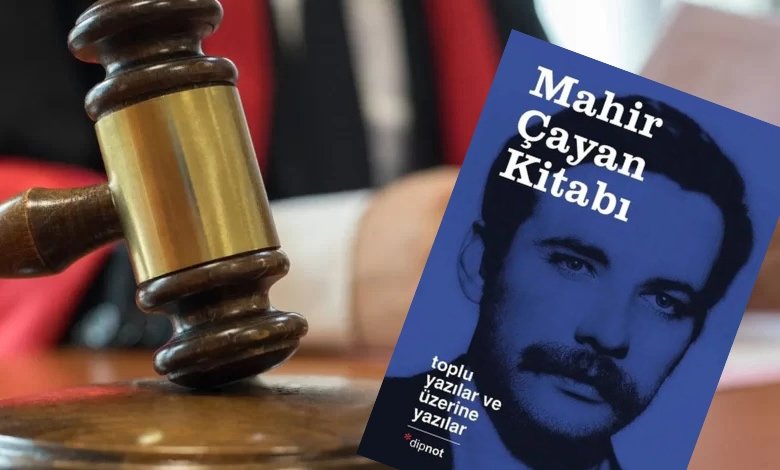
A Turkish court has ordered the seizure of a book combining the writings of 1970s left-wing militant leader Mahir Çayan with essays about his political ideas and legacy, while its editor faces trial on charges of spreading terrorist propaganda, the Cumhuriyet daily reported on Thursday.
The Ankara 8th Criminal Magistrate of Peace ordered the seizure of all copies of “Mahir Çayan Kitabı: Toplu Yazılar ve Üzerine Yazılar” (The Mahir Çayan Book: Collected Writings and Essays about Him) published by the Ankara-based Dipnot Publishing, over allegations that it contained propaganda for a terrorist organization.
The 480-page book brings together Çayan’s writings with essays examining his political ideas and legacy, including a contribution by Abdullah Öcalan, the imprisoned leader of the outlawed Kurdistan Workers’ Party (PKK). Çayan founded the People’s Liberation Party-Front of Turkey (THKP-C), a Marxist–Leninist guerrilla group designated as a terrorist organization by Turkey.
The first hearing in the case against Emir Ali Türkmen, the publishing director who prepared the book, is scheduled for February 23, 2027.
In a statement, Dipnot Publishing condemned the seizure order as an infringement on freedom of thought and expression, saying it restricted public access to historical and political debate.
“Books are not instruments of crime, and ideas are not evidence of crime,” the publisher said.
The company also cited Article 19 of the Universal Declaration of Human Rights, which protects freedom of expression, including the right to seek, receive and impart information and ideas.
The available reports did not identify the specific passages alleged to constitute terrorist propaganda or the legal provisions cited in the prosecution.
In a ruling published in September, Turkey’s Constitutional Court found that seizure orders affecting books and other publications had violated freedom of expression and press freedom because temporary restrictions had effectively become permanent bans. The ruling concerned separate cases, and its relevance to the seizure of the Çayan book remains unclear.