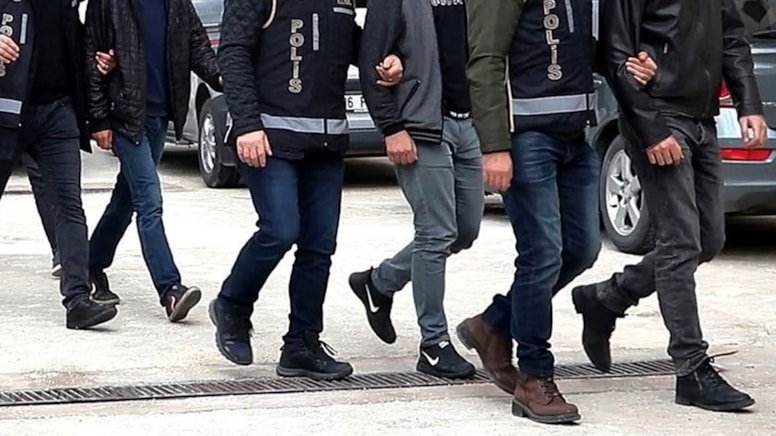
Turkish authorities have detained six people in Ankara and Edirne over alleged links to the faith-based Gülen movement, including four accused of attempting to flee the country, according to the state-run TRT Haber.
Police stopped a car in Edirne’s Uzunköprü district on September 23 and detained four passengers accused of preparing to leave the country illegally. Two of the passengers, identified only by the initials İ.A. and M.A., had been convicted of membership in an armed terrorist organization over links to the Gülen movement.
İ.A., a former administrator at Turkey’s state-run student housing agency, and M.A., a map engineer, both of whom had been dismissed from public service, had each been sentenced to more than eight years in prison.
The other two passengers, H.Ç., a dismissed industrial engineer, and M.Ş.A., a dismissed army first lieutenant, had been convicted of the same charge, with their cases pending before an appeals court.
Turkish President Recep Tayyip Erdoğan has targeted the faith-based Gülen movement, inspired by Muslim cleric Fethullah Gülen, who died in 2024, since corruption investigations in December 2013 implicated him as well as some members of his family and inner circle. He dismissed the probes as a Gülenist conspiracy and designated the movement as a terrorist organization in May 2016, intensifying a sweeping crackdown after a coup attempt in July of the same year that he accused Gülen of orchestrating. The movement denies involvement in the coup attempt or any terrorist activity.
In a separate operation on September 22, gendarmerie officers detained two people in Ankara’s Etimesgut and Gölbaşı districts over alleged links to the Gülen movement. The two, identified as T.K. and N.Ü., had each received a final prison sentence of more than six years for membership in an armed terrorist organization. They were transferred to prison after processing.
Following the coup attempt, the Turkish government declared a state of emergency (OHAL) that remained in effect until July 19, 2018. During this period, the government carried out a purge of state institutions under the pretext of an anti-coup fight by issuing a number of government decrees, known as KHKs. A total of 113,290 civil servants and 4,006 judges and prosecutors were dismissed over alleged links to terrorist organizations, while more than 26,206 members of the armed forces were expelled from the military for alleged membership in or relationships with “terrorist organizations” by emergency decree-laws.