Turkey ranked 126th out of 145 countries in the World Economic Forum’s Global Gender Gap Index 2026, remaining among the bottom 20 despite improving its score from last year.
Turkey closed 64.9 percent of its overall gender gap, up from 63.3 percent in 2025, when it ranked 135th among 148 countries, according to the report, released on September 16.
The country rose nine places, but the comparison is not exact because the number and composition of countries included in the index changed. Turkey’s score increased by 1.6 percentage points.
The index measures disparities between women and men rather than their overall living conditions. It covers four areas: economic participation and opportunity, educational attainment, health and survival and political empowerment.
Turkey’s widest gender gap was in politics. It closed only 11.8 percent of the political empowerment gap, ranking 117th globally.
Women currently have 118 of the 592 occupied seats in Turkey’s 600-seat parliament, or 19.9 percent, according to a tally based on parliamentary records and updated on August 14. Eight seats are vacant.
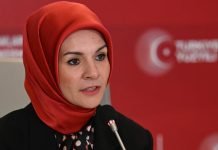
The imbalance is even greater in the cabinet. Mahinur Özdemir Göktaş, the minister of family and social services, is the only woman among the 17 ministers listed by the presidency.
The WEF ranked Turkey 101st for women’s representation in parliament and 134th for representation in ministerial positions.
Political empowerment nevertheless improved considerably from 2025, when Turkey scored 5.9 percent and ranked 139th in the category.
Women also remained far behind men in economic life. Turkey ranked 130th in economic participation and opportunity, closing 52.5 percent of the gap. It ranked 130th in labor force participation, 126th in estimated earned income, 119th for legislators, senior officials and managers and 96th for professional and technical workers.
Official data from the Turkish Statistical Institute (TurkStat) showed a similarly large divide in the labor market. In June the seasonally adjusted labor force participation rate was 35.4 percent for women and 70.7 percent for men. The employment rate stood at 32 percent for women, compared with 66.1 percent for men.
Turkey came closest to gender parity in education and health. It closed 98.7 percent of the education gap, ranking 93rd, and reached parity in primary and tertiary education enrollment.
The country scored 96.8 percent in health and survival, ranking 81st.
Turkey also remained one of Europe’s lowest-performing countries. Europe closed 75.7 percent of its overall gender gap, compared with Turkey’s 64.9 percent. About 95 percent of European economies scored above 70 percent, while Turkey and Romania were the region’s two lowest performers.
Globally, 69.2 percent of the gender gap has been closed across the 145 countries covered by the index. Health and education were closest to parity, at 96.9 percent and 96.2 percent, respectively. The global scores for economic participation and political empowerment were much lower, at 61.7 percent and 22.1 percent.
Iceland topped the index for the 17th consecutive year after closing 93 percent of its gender gap. Finland ranked second, followed by Norway, Namibia and the United Kingdom.
At the pace recorded over the past two decades, the WEF estimates that full global gender parity remains 120 years away.
President Recep Tayyip Erdoğan’s Justice and Development Party (AKP), which has roots in political Islam and has governed Turkey since 2002, has faced criticism from women’s rights groups over its policies and rhetoric. Erdoğan has repeatedly emphasized motherhood and urged families to have at least three children.
Turkey withdrew from the Istanbul Convention in 2021 despite protests from women’s groups and criticism from the international community. The Council of Europe treaty is aimed at preventing and combating violence against women and domestic violence.
Femicide and violence against women remain chronic problems in Turkey. The We Will Stop Femicide Platform recorded 294 women killed by men in 2025, while another 297 women died under suspicious circumstances. Women’s rights groups accuse the government of failing to enforce protective measures effectively and allowing perpetrators to escape accountability.
This article is republished from Turkish Minute.