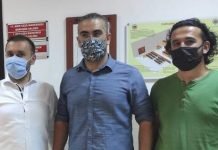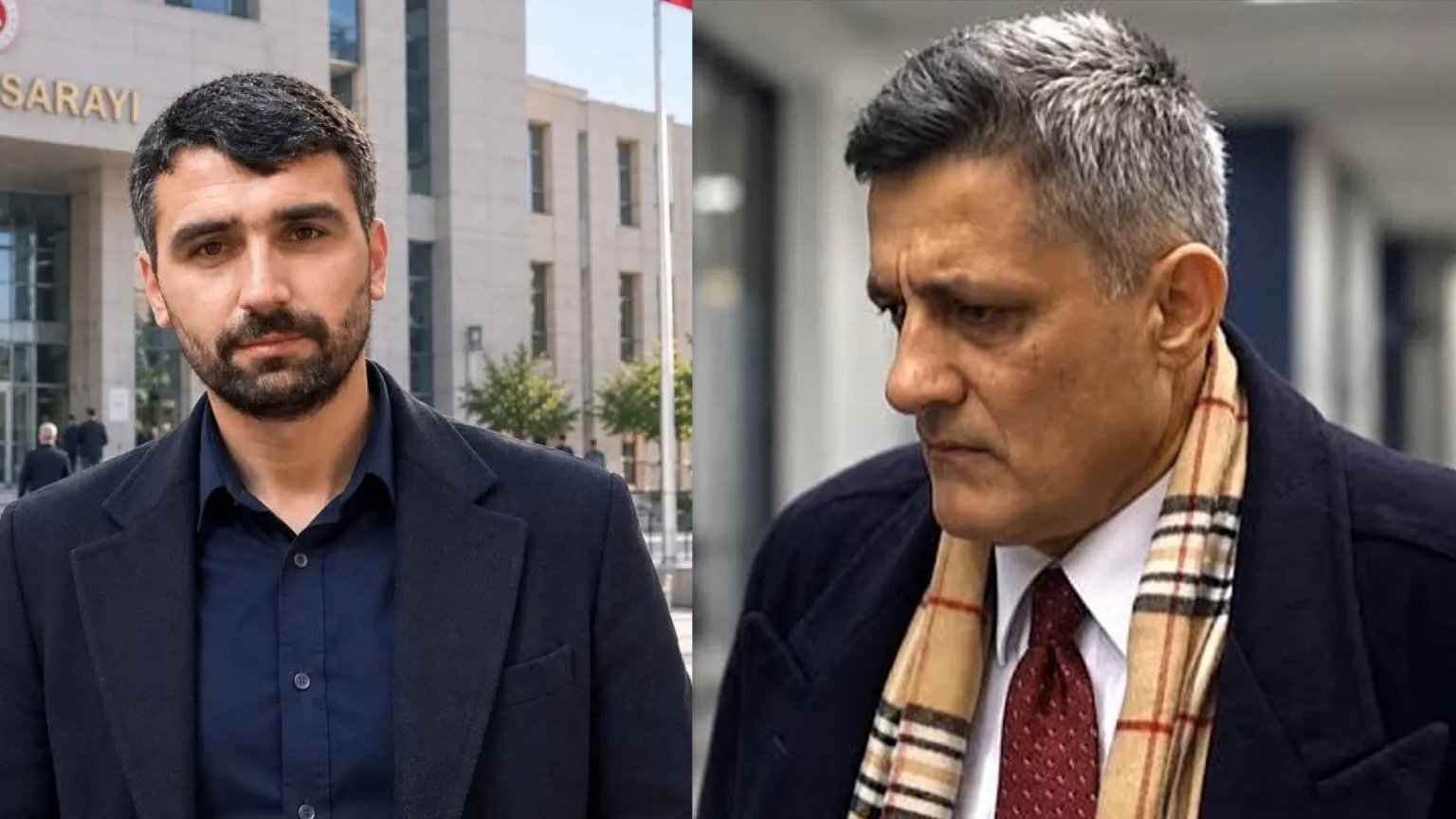
A Turkish court on Monday jailed former Cihan News Agency reporter Osman Arslan pending trial over footage he shot 15 years ago of intelligence officer Kaşif Kozinoğlu arriving at an İstanbul courthouse, the state-run Anadolu news agency reported.
Arslan was questioned as part of a reopened investigation by the Silivri Chief Public Prosecutor’s Office into Kozinoğlu’s death in prison in 2011 and is accused of disclosing of prohibited information and membership in a criminal organization.
Arslan was working as a courthouse reporter for Cihan and was among reporters from several Turkish media outlets waiting to photograph Kozinoğlu as he arrived at the Beşiktaş Courthouse on March 10, 2011.
In a 2012 account, Arslan described spotting Kozinoğlu outside the courthouse, filming his arrival and later sharing the footage with Selahattin Günday, then a reporter for the Doğan News Agency (DHA).
Günday was also jailed pending trial on September 13 after being questioned about the same footage. He told prosecutors that Arslan had filmed Kozinoğlu and provided it to him.
Günday was accused of disclosing information related to intelligence activities and unlawfully obtaining or disseminating personal data.
A second arrest order was subsequently issued for Günday on an accusation of forming an organization for the purpose of committing crimes. His lawyers said the intelligence law provision cited against him was not in force when the footage was recorded in 2011 and argued that the statute of limitations had expired.
Arslan lost his job after Cihan News Agency was shut down under an emergency decree in July 2016 shortly after a coup attempt, and began working as a truck driver. A court had appointed trustees to the news agency in March over its alleged ties to the faith-based Gülen movement.
Turkish President Recep Tayyip Erdoğan has targeted the Gülen movement, inspired by Muslim cleric Fethullah Gülen, who died in 2024, since corruption investigations in December 2013 implicated Erdoğan as well as some members of his family and inner circle. He dismissed the probes as a Gülenist conspiracy and designated the movement as a terrorist organization in May 2016, intensifying a sweeping crackdown after the coup attempt in July of the same year that he accused Gülen of orchestrating. The movement denies involvement in the coup attempt or any terrorist activity.
Kozinoğlu, a former officer with Turkey’s National Intelligence Organization (MİT), was arrested in March 2011 as part of the OdaTV investigation, which was conducted within the broader Ergenekon trials, in which a number of people, mainly military officers, were prosecuted for allegedly plotting against the Justice and Development Party (AKP) government. Kozinoğlu denied the accusations against him.
He died at Silivri Prison on November 12, 2011, 10 days before the first hearing of the OdaTV trial. An autopsy attributed his death to cardiovascular disease and found no evidence of physical violence or poisoning. Prosecutors closed the investigation into his death in 2012 after finding no criminal wrongdoing or negligence.
A criminal magistrate of peace overturned the 2012 decision not to prosecute on August 26, prompting prosecutors to reopen the ongoing investigation.
Since the investigation was reopened, seven people have been jailed pending trial, including Arslan and Günday. Two emergency medical technicians, Özlem Uslu and Emre Atmaca, were jailed on accusations of intentional killing, while former Silivri chief public prosecutor Ali İşgören and former prison prosecutor Necip Doğan were jailed on accusations of membership in a criminal organization.
Two of Kozinoğlu’s former cellmates, retired colonel Hasan Atilla Uğur and retired naval officer Hasan Ataman Yıldırım, were placed under house arrest. Kozinoğlu’s remains were also exhumed earlier this month for new forensic testing.
According to Expression Interrupted, a press freedom monitoring group, 21 journalists are currently behind bars in Turkey. The country’s deteriorating media landscape was further pointed out in the 2026 World Press Freedom Index published by Reporters Without Borders (RSF), where it was ranked 163rd out of 180 nations.