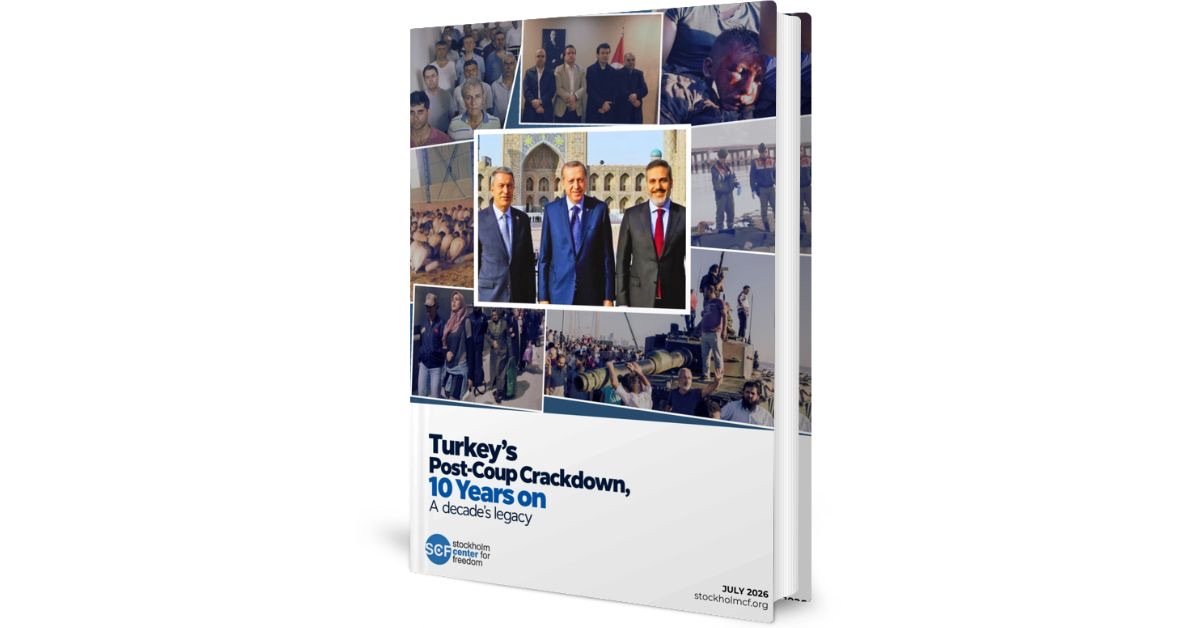
This report examines how the sweeping measures introduced in Turkey following the coup attempt of July 15, 2016 evolved over the next decade into a lasting system of repression, becoming embedded in state institutions and reshaping the country’s political order, while weakening the rule of law and protections for fundamental rights.
Practices initially used primarily against people accused of links to the faith-based Gülen movement were later extended to Kurdish politicians, journalists, lawyers, human rights defenders and other government critics.
Drawing on official records and statistics, court judgments, findings by United Nations and Council of Europe bodies and other documented evidence, the report first examines the coup attempt and unresolved questions surrounding the events of July 15 and its aftermath before tracing the ensuing transformation through five main areas: the mass purge of public servants and military personnel, torture and ill-treatment, the suppression of independent media, hate speech and dehumanization and transnational repression.
Official data underscore both the scale and continuing nature of the crackdown. According to Justice Minister Akın Gürlek, Turkish authorities had initiated legal proceedings against 720,338 people over alleged links to the Gülen movement by July 2026 and secured 127,102 convictions. Investigations or trials involving another 83,404 people remain ongoing, while 10,485 people accused or convicted of involvement in the coup attempt or membership in the movement remain in prison.
The purge also transformed Turkey’s public institutions. A total of 125,678 people were dismissed from public service under emergency decrees, while the Turkish Armed Forces expelled 26,206 members. The judiciary was especially affected. More than 4,000 judges and prosecutors, roughly a quarter of the judiciary at the time, were dismissed in the aftermath of the coup attempt. The large-scale recruitment that followed substantially changed its composition. By 2023, 45 percent of judges in Turkey had less than five years of experience, according to the Council of Europe.
The report also traces how repression became entrenched across other areas of public life. Torture and ill-treatment resurged after the coup attempt amid persistent impunity, while nearly 200 media outlets were shut down and Turkey became the world’s worst jailer of journalists as independent media came under sustained legal, regulatory and digital pressure.
The crackdown has also extended far beyond Turkey’s borders through a system of transnational repression involving abductions and forcible returns, diplomatic surveillance and profiling, the misuse of extradition and international policing mechanisms, restrictions on consular services and financial pressure. As of 2025, Turkey’s National Intelligence Organization (MİT) had publicly acknowledged 128 operations to forcibly return people accused of links to the Gülen movement. SCF has also documented Turkish diplomatic missions in 115 countries compiling information on critics, schools, associations and businesses, with some profiles later transmitted to prosecutors in Turkey.
Ten years after the coup attempt, the report concludes that measures once presented as temporary and exceptional have become part of the ordinary functioning of the state. Their legacy is reflected not only in the hundreds of thousands of people directly affected but also in expanded executive power, weakened institutional safeguards and methods of repression that have become normalized and continue to shape Turkey’s political and civic life.
About the Stockholm Center for Freedom
SCF is a non-profit advocacy organization that promotes the rule of law, democracy and human rights with a special focus on Turkey.
Committed to serving as a reference source by providing a broad perspective on rights violations in Turkey, SCF monitors daily developments, documents individual cases of the infringement of fundamental rights and publishes comprehensive reports on human rights issues.