Turkey’s Constitutional Court has ruled that seizure orders targeting books, magazines, a newspaper and political pamphlets violated freedom of expression and the press after measures meant to be temporary remained in force for years, in some cases even after criminal investigations had ended, the Bianet news website reported.
The court said the seizure and publication restrictions had effectively become permanent bans independent of criminal proceedings, turning temporary legal measures into final sanctions. The ruling was issued by the court’s General Assembly on December 16, 2025, and published in the Official Gazette on September 17, 2026.
The ruling covered 13 individual applications filed separately over different publications and court orders. The Constitutional Court consolidated them because they raised related legal questions and examined them under the oldest application, filed by journalist and author Hasan Cemal in 2016.
The applicants included Cemal and writers Tuğçe Tatari, Rojvin Perişan and Yavuz Ekinci; the Aram, Gelenek, İmera, Payiz and Avesta publishing companies; the opposition Republican People’s Party (CHP); and the pro-Kurdish Peoples’ Democratic Party (HDP).
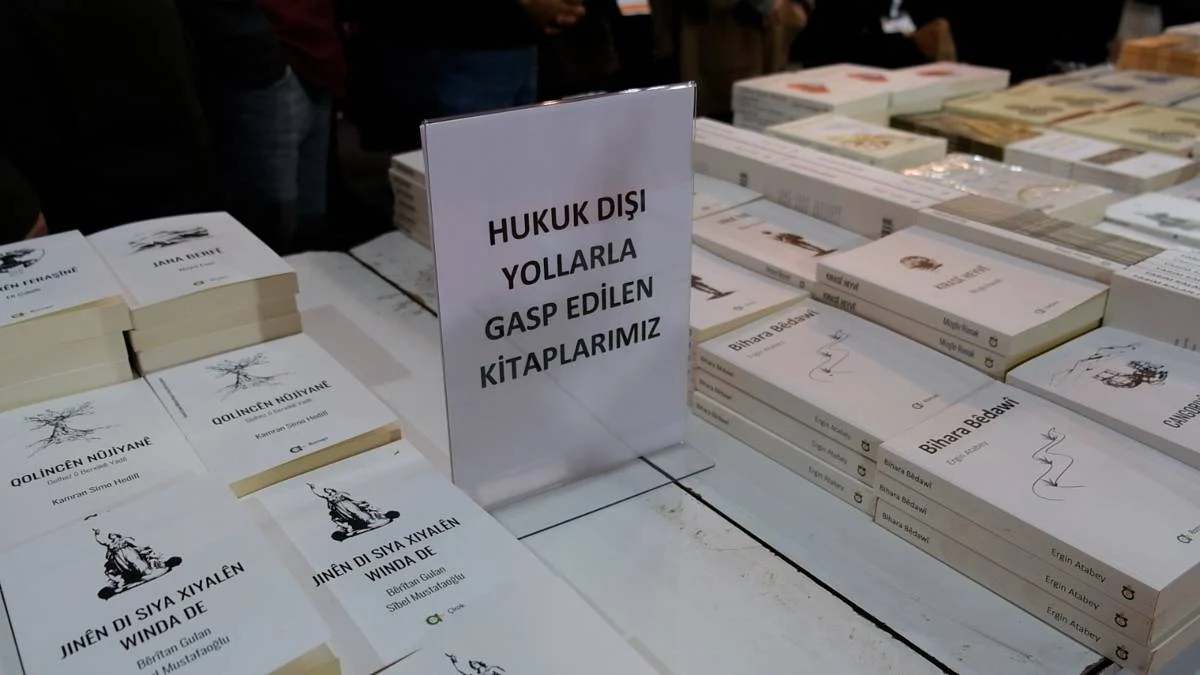
The cases involved orders to seize publications or prohibit their printing, reproduction, distribution and sale over allegations including terrorist propaganda and incitement to hatred. The publications included books on Kurdish history and politics and other subjects; the weekly magazine Boyun Eğme; five issues of Xwebûn, a Kurdish-language newspaper published by Diyarbakır-based İmera; HDP pamphlets prepared for the International Day for the Elimination of Violence against Women; and a CHP pamphlet alleging past political ties between the Gülen movement and President Recep Tayyip Erdoğan’s ruling Justice and Development Party (AKP).
Turkish President Recep Tayyip Erdoğan has targeted the faith-based Gülen movement, inspired by Muslim cleric Fethullah Gülen, who died in 2024, since corruption investigations in December 2013 implicated him as well as some members of his family and inner circle. He dismissed the probes as a Gülenist conspiracy and designated the movement as a terrorist organization in May 2016, intensifying a sweeping crackdown after a coup attempt in July of the same year that he accused Gülen of orchestrating. The movement denies involvement in the coup attempt or any terrorist activity.
The Constitutional Court found that the legal provisions used to impose the restrictions did not provide an adequate basis for the measures.
One of those provisions, Article 25 of Turkey’s Press Law, regulates the distribution and sale in Turkey of certain publications printed abroad. The court noted that all the publications involved in the applications had been printed in Turkey and said the provision therefore could not serve as a legal basis for seizing them or banning their printing, reproduction, distribution or sale.
The court also focused on how long the restrictions had remained in effect. It said all the seizure orders at issue were still valid and had outlived their original purpose as temporary measures connected to criminal investigations or prosecutions.
In cases involving books by journalist and author Cemal and writer Tatari, prosecutors decided in June 2016 not to pursue charges because a six-month legal deadline for bringing a prosecution had expired. The publication restrictions nevertheless remained in force for nearly nine years after that decision.
A similar problem arose over the 190th issue of Boyun Eğme. Prosecutors investigating people who had distributed the magazine decided in January 2020 not to bring charges, finding that its contents did not amount to incitement to hatred. The seizure order remained in effect.
The Constitutional Court said the continued restrictions had exceeded the scope of temporary precautionary measures and acquired the character of final sanctions with an effect comparable to destroying the publications. It concluded that the orders had effectively become bans independent of criminal proceedings.
The court also identified problems with the way the orders were communicated to those affected. It said none of the reasoned decisions imposing the seizures or related publication bans had been formally served on the applicants, who instead obtained them through other means or learned of them when the measures were enforced.
Authors, publishers and others affected by such decisions must be promptly informed so they can challenge them effectively, the court said. It also criticized blanket seizure orders covering numerous publications found during searches, saying courts should provide separate reasoning for each work.
The ruling illustrated that issue with the Xwebûn case. Five issues of the newspaper — Nos. 89, 93, 105, 106 and 107 — were found during a search of the home of a person who was under investigation for alleged membership in a terrorist organization. Prosecutors sought their seizure on suspicion that the issues contained terrorist propaganda, and a Diyarbakır court in February 2022 ordered them seized and prohibited their printing, distribution and sale.
The Constitutional Court ruled, with Judge Ömer Çınar dissenting, that the measures violated freedom of expression and freedom of the press protected under Articles 26 and 28 of Turkey’s Constitution.
The court ordered the cases sent back to the relevant lower courts for new proceedings aimed at remedying the violations and awarded the applicants compensation and legal costs.
The ruling also distinguished between temporarily seizing a publication during a criminal investigation and permanently confiscating it. The court said confiscation could still be ordered when the production, possession, use, transport or sale of a publication itself constitutes a crime, but such a decision must follow a hearing, be open to appeal and give people with rights over the publication an opportunity to present evidence and respond to the allegations.