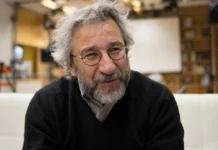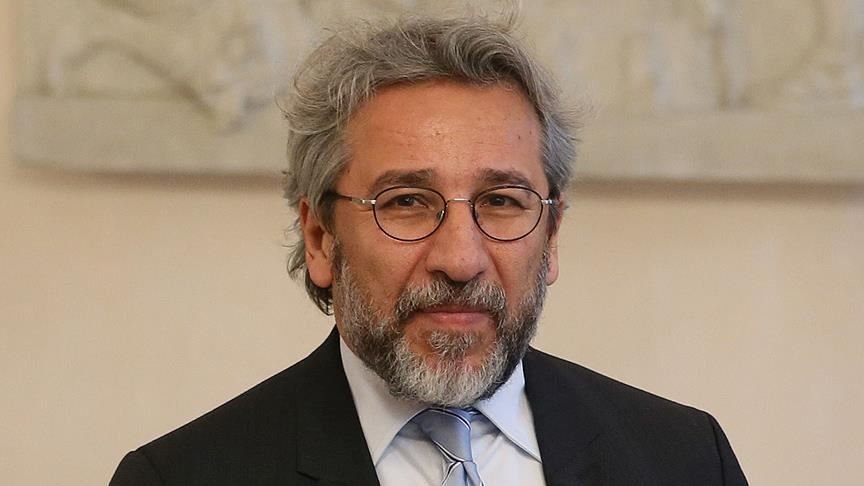
Turkey’s Savings Deposit Insurance Fund (TMSF) has revealed details of five properties confiscated from journalist living in exile Can Dündar, including their locations, rental income and management under a court-ordered trusteeship, Turkish media reported on Monday.
The properties are located in İstanbul’s Üsküdar district, the southwestern resort town of Bodrum and the capital of Ankara, the fund said.
The İstanbul 14th High Criminal Court ordered the confiscation of Dündar’s property on October 7, 2020, after declaring him a fugitive for failing to appear before the court. A higher court rejected an appeal by his lawyers two weeks later.
The TMSF was subsequently appointed as trustee to manage the assets.
According to the fund, Dündar’s share of the monthly rent from a property in İstanbul’s Çengelköy neighborhood in Üsküdar is TL 95,000 ($1,975).
Renovation and repair costs are covered by the tenant and deducted from the rent. The TMSF said rental income corresponding to Dündar’s shares in rented properties is deposited into an escrow account where it is held pending the legal resolution of the case.
The fund has also initiated legal proceedings to increase the rent on a villa in Bodrum. The process is being conducted in coordination with Dündar’s wife, who is a co-owner of the property.
Two properties in Ankara were inherited, according to the statement. Dündar’s mother lives in one, while she collects the rental income from the other.
The TMSF did not provide information about the fifth property despite saying it had identified five in total.
The statement followed Turkish media reports about renovations at Dündar’s property in Çengelköy. It did not indicate that any of the properties would be sold and concerned only their identification, rental income and day-to-day management under the trusteeship.
Dündar, the former editor-in-chief of the Cumhuriyet daily, has lived in Germany since 2016.
An İstanbul court sentenced him in absentia in December 2020 to 27-and-a-half years in prison in a trial concerning a report on National Intelligence Organization (MİT) trucks allegedly transporting weapons to rebels in Syria.
The court sentenced Dündar to 18 years, nine months for obtaining state secrets for political or military espionage and an additional eight years, nine months for assisting an armed terrorist organization without having membership in that organization.
The case concerned a report published by Dündar and Cumhuriyet’s then-Ankara bureau chief, Erdem Gül, on May 29, 2015, under the headline “Here are the weapons Erdoğan said don’t exist.”
The report included footage that the newspaper said showed weapons in MİT trucks stopped by gendarmes near the Syrian border. It sparked a political controversy over the Turkish intelligence agency’s alleged role in arming rebel groups in Syria.
President Recep Tayyip Erdoğan reacted angrily to the report and publicly vowed that Dündar would “pay a heavy price.”
Dündar and Gül were arrested in November 2015 on espionage and terrorism-related charges. They were released in February 2016 after Turkey’s Constitutional Court ruled that their pretrial detention had violated their rights.
Dündar was initially sentenced to almost six years in prison for disclosing confidential state information. The Supreme Court of Appeals overturned the conviction in March 2018, leading to a retrial.
Dündar’s lawyers boycotted the hearing at which the 27-and-a-half-year sentence was handed down, saying they did not want to legitimize what they described as a predetermined political verdict.
Dündar survived an armed attack outside an İstanbul courthouse in May 2016 and later moved to Germany amid a growing government crackdown on critical journalists.
He and press freedom groups have described the prosecution as politically motivated retaliation for his journalism.
Property and asset seizures became widespread during the crackdown that followed a failed coup in July 2016, with courts and emergency decrees used to take control of bank accounts, companies, media organizations and other assets belonging to people accused of terrorism-related links.
Human Rights Watch documented the government takeover or closure of scores of media organizations during the crackdown.
Journalists were also individually targeted.
In December 2016 an İstanbul court ordered the seizure of all assets and bank accounts belonging to 54 suspects, including dozens of journalists and media workers formerly affiliated with the faith-based Gülen movement, among them Ekrem Dumanlı, Bülent Keneş, Şahin Alpay, Ali Bulaç and Sevgi Akarçeşme.
Erdoğan has accused the Gülen movement of orchestrating the failed coup, an allegation the movement strongly denies.