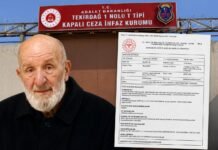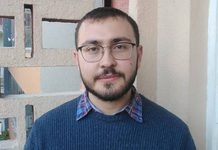
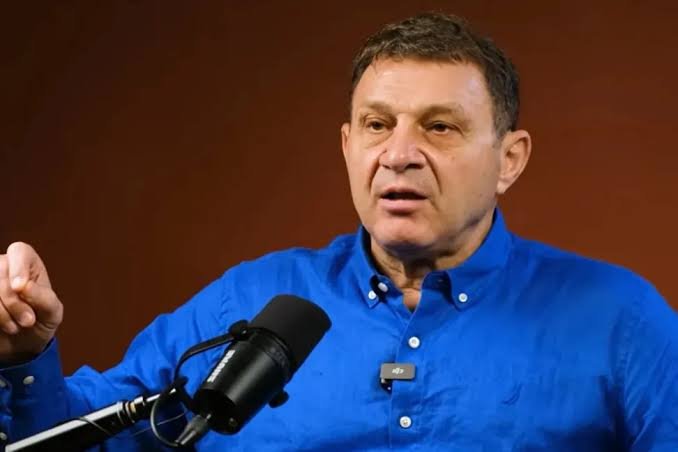
An İstanbul court has arrested retired admiral Türker Ertürk and jailed him pending trial over remarks from 2023 in which he said the government would change “painfully or painlessly,” one day after police detained him when the old video resurfaced on social media, BBC Turkish reported.
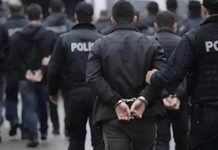
Ertürk was detained on Monday as part of an investigation by the Bakırköy Chief Public Prosecutor’s Office on suspicion of publicly making threats against people’s lives, health or physical safety with the aim of causing fear and panic as well as incitement to commit a crime.
After questioning him, prosecutors referred Ertürk to a criminal magistrate judge in Bakırköy and requested his arrest. The judge ordered him jailed pending trial on the threat allegation but not on the alleged incitement offense.
Ertürk denied threatening violence, telling prosecutors that his comments were a political assessment and had been shared out of context.
The investigation concerns remarks Ertürk made during a television appearance on March 20, 2023, before Turkey’s presidential and parliamentary elections.
“Look, the government is going to change now. Painfully or painlessly, the government is going to change. That is why everyone needs to come to their senses. You, me … everyone, of course, everyone,” Ertürk said.
“That is why we expect the Supreme Election Board to make its decisions according to its conscience and the law. Otherwise, I think we as a country will face difficulties in the future.”
Ertürk denies making a threat
Ertürk told prosecutors that the excerpts had been taken out of context and that his remarks contained no criminal elements, according to BBC Turkish.
He said he meant that Turkey would continue to suffer unless the ruling Justice and Development Party (AKP) was removed through elections and that his words should be treated as a political assessment, not a threat.
Ertürk also referred to the government’s current peace initiative with the outlawed Kurdistan Workers’ Party (PKK), saying the talks supported his view that continued AKP rule had harmed the country.
The PKK is designated as a terrorist organization by Turkey and its Western allies.
Lawyer questions timing
Ertürk’s lawyer, Ayhan Yıldızel, criticized the arrest, saying that the remarks at the center of the case were made about three-and-a-half years ago.
“We believe that even law students would have difficulty understanding how any criminal element could be derived from these statements,” he said.
The lawyer also questioned how quickly prosecutors acted after the old video was recirculated.
According to Yıldızel, an X user reposted the clip shortly after midnight on Monday and called on either the Bakırköy or Ankara chief public prosecutor’s office to investigate Ertürk. About eight hours later, reports emerged that the Bakırköy prosecutors had opened an investigation on their own initiative.
“While criminal complaints by ordinary citizens remain unprocessed for months or even years, it requires an explanation as to how this post, which amounted to an instruction, led to an investigation being launched within eight hours, most of which were nighttime hours,” Yıldızel said.
He argued that the sequence raised questions about judicial independence, citing Article 138 of the Turkish Constitution, which prohibits authorities and individuals from instructing courts or judges in the exercise of their duties.
Yıldızel also questioned how remarks that caused no reported fear or panic when they were made in 2023 could suddenly be treated as a threat to the public.
Similarity to Erbakan remarks
Ertürk’s choice of words attracted attention because it resembled a controversial statement made by former prime minister Necmettin Erbakan in 1994.
Speaking about the possible rise to power of his Islamist Welfare Party (RP), Erbakan said the transition to what he called a “just order” was inevitable and that its opponents would determine whether the change was “harsh or soft, bloody or bloodless.”
İsmail Hakkı Karadayı, chief of general staff during the military pressure campaign that forced Erbakan’s government from power in 1997, later told a parliamentary commission that the statement was among the developments that had alarmed military commanders.
The February 28, 1997 intervention, widely described as a “postmodern coup,” did not put the military directly in power. Commanders instead used decisions taken by the National Security Council, public statements and sustained pressure to force Erbakan’s resignation four months later.
Turkey’s military once played a dominant role in politics, carrying out coups in 1960 and 1980 and intervening in 1971 and 1997. Its political power has declined significantly under President Recep Tayyip Erdoğan, who survived an attempted coup in July 2016.
This article is republished from Turkish Minute.