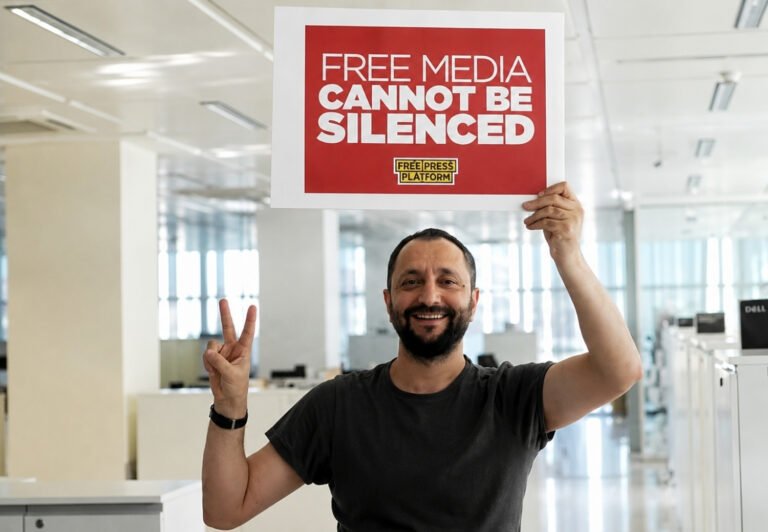
Turkish journalist Haşim Söylemez, who was sentenced to more than six years in prison over alleged links to the faith-based Gülen movement following a coup attempt in 2016, died of brain cancer in Bursa on Saturday, the International Journalists Association reported.
Söylemez, who had been released shortly after his detention in 2016 due to a brain tumor, underwent seven operations, after which he was partially paralyzed, and had begun chemotherapy. He was reportedly unable to stand or walk without assistance.
Known for his reporting for the now-closed Aksiyon magazine and Zaman daily, both of which were shut down in May 2016 after being taken over by government-appointed trustees, Söylemez covered security issues and conflict zones and reported extensively from predominantly Kurdish southeastern Turkey.
Söylemez was among dozens of journalists detained shortly after the coup attempt on July 15, 2016, as part of investigations targeting media outlets allegedly affiliated with the Gülen movement. He was detained on July 26 and released 10 days later due to his serious health problems.
His lawyer filed an appeal after an İstanbul court in June 2019 sentenced him to prison for membership in a terrorist organization.
Turkish President Recep Tayyip Erdoğan has targeted the Gülen movement, a worldwide civic initiative inspired by the ideas of Muslim cleric Fethullah Gülen, who died in 2024, since corruption investigations in December 2013 implicated him as well as some members of his family and inner circle. He dismissed the probes as a Gülenist conspiracy and designated the movement as a terrorist organization in May 2016, intensifying a sweeping crackdown after the coup attempt in July of the same year that he accused Gülen of orchestrating. The movement denies involvement in the coup attempt or any terrorist activity.
Söylemez also came under scrutiny over financial assistance he received while undergoing treatment. In 2022 journalist Adem Yavuz Arslan, a former colleague at Zaman and Aksiyon who lives in the United States, said Turkish authorities had prepared a report on money he had sent to Söylemez to help cover his living and medical expenses while Söylemez was unable to work.
Following the coup attempt, the Turkish government declared a state of emergency that remained in effect until July 19, 2018. The post-coup crackdown also targeted Turkey’s media, with some 200 media and publishing organizations shut down by emergency decree during the two-year state of emergency.
According to the latest figures from the justice ministry, more than 127,000 people have been convicted of alleged links to the movement since 2016, with 10,485 still in prison and legal proceedings ongoing against 83,404 individuals.